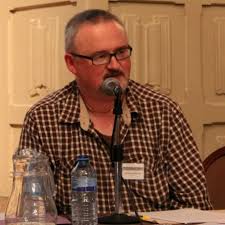
Those Guilty of PIRA Genocide Should Stand Trial: David Nicholl

This article first appeared on ulsternews@live .com

Those Guilty of PIRA Genocide Should Stand Trial

Crimes Against Humanity

      Crimes Against Humanity

Guest writer, David Nicholl, former UDP political advisor for Londonderry & North Antrim, puts forward the case for war crimes’ charges against the PIRA leadership. 

“War must be, while we defend our lives against a destroyer who would devour all; but I do not love the bright sword for its sharpness, nor the arrow for its swiftness, nor the warrior for his glory. I love only that which they defend.” .  J.R. Tolkien

Geneva Convention states:

Genocide is “the deliberate and systematic destruction, in whole or in part, of an ethnic, racial, caste, religious, or national group”, [Article 2 of this convention defines genocide as “any of the following acts committed with intent to destroy, in whole or in part, a national, ethical  racial or religious group, as such: killing members of the group; causing serious bodily or mental harm to members of the group; deliberately Inflicting on the group conditions of life, calculated to bring about its physical destruction in whole or in part.

Now having read the above, what do you think has been happening to the Protestant Unionist People of Northern Ireland over the course of the past 4 decades and more? Is it not the case that the leaders of Sinn Fein/Provisonal IRA are and have been involved in acts that have the intent to destroy, in whole or in part, our nation; which contains our ethical , racial and religious ways, indeed the substance  of our being on this island?

I am sure, like me, many of you will agree that they have indeed engaged in such acts and continue to wage war against our people. This being the case, the question has to be asked, “why are these war criminals in Government and not on trial for offences against Humanity?”  Raphael Lemkin, in his work Axis Rule in Occupied Europe (1944), coined the term “genocide” by combining Greek genos (γένος; race, people) and Latin cīdere (to kill).

Lemkin defined genocide as follows:

“Generally speaking, genocide does not necessarily mean the immediate destruction of a nation, except when accomplished by mass killings of all members of a nation. It is intended rather to signify a coordinated plan of different actions aiming at the destruction of essential foundations of the life of national groups, with the aim of annihilating the groups themselves. The objectives of such a plan would be the disintegration of the political and social institutions, of culture, language, national feelings, religion, and the economic existence of national groups, and the destruction of the personal security, liberty, health, dignity, and even the lives of the individuals belonging to such groups.”

The Nuremberg Trails brought charges of crimes against the peace which sought and obtained convictions on the grounds of an unethical war,  waged on criminal grounds. These were based on a number of principles that are now enshrined in international law. They are:

Nuremberg principles

Principle I states, “Any person who commits an act which constitutes a crime under international law is responsible therefore and liable to punishment.”

Principle II states, “The fact that internal law does not impose a penalty for an act which constitutes a crime under international law does not relieve the person who committed the act from responsibility under international law.”

Principle IV states: “The fact that a person acted pursuant to order of his Government or of a superior does not relieve him from responsibility under international law, provided a moral choice was in fact possible to him”.

(a) Crimes against peace:

(i) Planning, preparation, initiation or waging of a war of  aggression or a war in violation of international treaties,  agreements or assurances;

The war that was rage on the people of Northern Ireland, regardless of their background, was done so in breach of all aspects of international law and, as such, those who pursued such a war a guilty of infringement on the articles set out. The fact that those who now sit in government are guilty of:

(ii) Participation in a common plan or conspiracy for the accomplishment of any of the acts mentioned (i).

And of using that conspiracy to murder large numbers of civilians in breach of Rome Statute of the International Criminal Court Article 8(2)(b)(iv), which “prohibits actions where the anticipated civilian damage outweighs the anticipated military advantage.”

What is now needed is a full investigation into the actions of the Irish Government and the leadership of the PIRA.  This would have to be an international body as the British and Irish governments are unwilling and unable to search out the truth

Share

Man In The Moon: A Review by Billy Joe

Man In The Moon:A Review by Billy Joe


Suicide isn’t an easy subject to tackle at any time and one that playwrights might tend to shy away from.  Pearse Elliott obviously felt strongly enough about the impact suicide has had on society here—particularly in his native West Belfast –to pen Man In The Moon.  In dealing with the issues Elliott has written a sharp—at times manic-comedy that while making us roar with laughter can also stop us dead in our tracks when confronted with the reality of the matter.
The teaming of Elliott and star of this one man show—the wonderful Ciaran Nolan—is nothing new.  Previously they collaborated for television with Pulling Moves and on stage with The Christening—and here they have teamed up with Tony Devlin and Brassneck to produce a very deserving piece of theatre.  Nolan is currently getting plenty of exposure on stage and quite rightly so—he is a rising star with a penchant for comedy.  Elliott needs no introduction and is the master of West Belfast vernacular and idiom.  Bravely he treats a serious subject with dark humour and works to great effect.  Throughout the two hour play we are treated to a series of set pieces and vignettes relating to those friends of Sean Dolan’s—Nolan—who have shared his life—and died—many by their own hand.
Half Moon Lake is an oasis of sorts set improbably in Lenadoon and the playground of Sean Doran and his childhood friends—and two brothers.  We first meet Sean coming back to the lake now in adulthood to reminisce and recall those halcyon days shortly after a break up with his girlfriend—who takes their baby girl with her—and in the wake of losing his job which was trying to find a sponsor for one eyed and one armed Ugandan war child!!  Over the next couple of hours Sean tries to make sense of his life to date—to find the reasons why so many of his former friends and relatives have succumbed to “the monster”.
At times the play is hilarious—at others very moving, loaded with pathos, but is always thoughtful.  During any Pearse Elliott play you will be guaranteed laughs—or as Sean Doran would put it—All Day Long—and here he doesn’t disappoint.  Whether it is the appearance of Sean at the “wrong wake”—his feeble attempt at internet dating or the escapade around the sale of 200 pallets laughs aren’t difficult to find.  And on a personal note, the title is a great excuse to have REM’s Man On The Moon as part of a great soundtrack.   I believe Elliott has struck gold in using comedy as the vehicle to carry the serious subject matter and Nolan was an inspired choice as Sean Doran.  He expertly plays the nonchalant, jack-the-lad type but also has the ability to show himself as a caring and thoughtful survivor.  Ultimately, in the glow of the Half Moon Lake, this is what the play is really about—survival.
Man in the Moon finishes its run in the Grand Opera House this Saturday before going on a run to different theatres throughout Northern Ireland during the rest of October.  Catch it if you can.

https://brassneck.eventbrite.co.uk/

Share

Talking at Newtowncunningham: Dr. Anthony McIntyre

An analysis on the state of modern day Republicanism through the eyes of journalist and commentator Anthony McIntyre.  This speech was delivered to an audience in Netowncunningham Orange Hall on Thursday 26th September and certainly makes for very interesting reading.


What is it to be an independent republican? It merely underscores the point that within republicanism there is no one size fits all pigeon hole into which everyone can be neatly and conveniently slotted. There is a wide range of republican independents who hold to the view that partition should be ended, Ireland should be united, that the British state should have no presence other than diplomatic in the country, and that while the British remain it is wrong for republicans to become part of the British administrative system. It does not follow that they believe in armed struggle as a means to achieving those objectives. Since the Omagh bombing in particular there has been a lazy but often conscious attempt to create a discourse which would characterise all republicans opposed to the peace process as being in favour of armed strategies. While that has certainly been ruptured by the sheer diversity of republican voices critical of the peace process it nevertheless needs to be stressed that many republicans are supportive of the peace but not the process. Frequently, they object to the peace process because all too often the process has been strategically used to subvert the peace.


Read more »

Share

UVF Exhibition: Spectrum Centre


If anyone hasn’t been lucky enough to catch the wonderful display of original UVF memorabilia currently on view in the Spectrum Centre–it is open until the end of the week.

Share

The Belfast Story–A Review by Primo.

The Belfast Story.


The main problem with watching and reviewing a film like the Belfast Story is me. As an ex combatant,  ex prisoner and Belfast born I was intrigued to watch this. I had no idea of what the film was about as my better half wanted to go and see it. I quickly realised that this was entertainment and made no pretence at being historical or factual. There was however an interesting moral underlying the whole film. More of that later.

At first I thought it was confused, disjointed and muddled. It does take time for the plot to come together and the pieces fall into place. As a loyalist ex prisoner it was with some shock that I realised that the First Minster was a Shinner. Shades of Gerry, except he’s gone south. It is interesting as a Belfaster to spot the streets and scenes used in the film. The story picks up with the slaughter of old and retried IRA combatants. As the film progresses I think of Dirty Harry meeting Star Chamber (with a bit of Seven thrown in). Maybe even shades of Bronson sorting out the bad boys. Ex justice people evening up old scores with a bit of violent retaliation. The killings are too slick and well organised to be loyalist so it has to be the army or the police. Note to film makers- portrayal of scenes without any witnesses or passers-by are very far from reality.  I did not think that the new political make up of N. Ireland was clear until too late in the film. The police are too flat and unrealistic in this film. The main man Detective played by Colin Meaney  is a good enough character but why bring in old school RUC to investigate IRA men getting bumped off? As I said above the film is entertainment and a bit of ‘what if..’  The film is not centred primarily on  combatants but rather victims. Victims who stand up in an extreme way which Is not unlike the female victim portrayed in Lynch’s Menin gate. Victims, ex combatants, the legacy. It’s a unresolved minefield and a difficult subject to tackle so some credit to Mr Todd for trying.

I felt the underlying message was around morality and the never ending question of right and wrong. Were the executed rebels in 1916 right or wrong in their initial actions? If political events and people voting dictate what is right then they surely had the moral authority to oust what they seen as an invading force – the British.  But politics, like morality, is never simple.  This story is different in that, it is not the old British vs Irish thing or nationalist vs unionist. The twist comes late on and changes the whole dynamic of the story.  (It comes at an appropriate time when ‘Slab’ is about to get some block therapy.) The people eliminating the old IRA activists are ordinary Catholics who have suffered under the PIRA organisation while the Shinners took the moral high ground as they fought the British. So an unusual victim slant, and one as far as I know, has not been covered before, in this way. I wonder what the American audience will make of this?

The film revolves, for me, around one of the last lines of dialogue in the film when one of the killers is explaining his rationale to the detective in a letter. He feels he would rather go and kill the killers, the terrorists,  rather than let his son think that it’s OK to kill and maim–and then walk around as if nothing bad happened.  However,  we are back to the basic ‘eye for an eye’ argument. And if the IRA violence was wrong and nasty, why are the new killers doing it?  Is straight revenge ever justified? Is that not a bad example for ones children? If something is wrong then it is wrong. And there’s the rub. Morality is not absolute. Applying in all cases, at all times and situations. It doesn’t. Morality is fluid in the real world.  In N. Ireland.  In all conflicts. There is no better example today than that of Syria. Killing people by nerve gas including children is reprehensible. But America and the UK would not do one thing about it because Russia stands behind Syria. More like realism than idealism.  The real shocker for unionists comes right at the end. There is a United Ireland. Children play together and we all live happy ever after.  I love happy endings.


Primo.


Share

Newtowncunningham 1063: Dr. Anthony McIntyre

This article was originally posted on 27th September on www.thepensivequill.am

Anthony McIntyre is a former IRA life sentence prisoner who currently works as a journalist and researcher.  Upon release from Long Kesh in the early 1990’s he studeid at Queens University eventually gaining a PhD in History.  He is highly critical of the modern Sinn Fein and is the author of the book The Good Friday Agreement: The Death of Irish Republicanism published in 2008.
Anthony is the moderator of the blog The Pensive Quill.


I don’t recall having been inside an Orange Hall before. Unless somebody surprises me with something I have completely forgotten about childhood jumble sales or the like being held in these places, NewtownCunningham would, I am certain, be my first visit to one.

I had been invited there to speak at a seminar as part of the Creating Space for Learning and Sharing Programme, put together by the Community Foundation for Northern Ireland, and financed by the International Fund for Ireland. These days I try to speak at public events as little as possible, much the same for TV appearances. Unfortunately the Boston College affair intervened, compelling me to rise from my self-imposed torpor and go and bat at the crease. I have been told I have a good face for radio so I don’t mind doing that so much.

Since moving South the value of anonymity has made itself felt. There is much to be said for a quiet life, free from rows and controversy: a setting where children can walk the streets or go to school and not be made to feel uncomfortable because their parents don’t vote Sinn Fein.

Seeing no future for the republican project as an answer to the question of partition – and having grown disenchanted by the amount of energy and resources expended by so many in flogging a single dead horse – the need to further comment on republicanism just never seemed as pressing. Even post-Blanket blog writing was rarely carried out with the same enthusiasm or rigour: a certain lackadaisical property had embedded itself in the psyche, and in my mind my own writing had gone off the boil.   These days it is a rare occasion that I put in an appearance at much: my dubious logic for being an inveterate funeral evader is that as I won’t be going to theirs because they won’t be going to mine.

But yesterday I did turn up at Newtowncunningham Orange Hall, having been invited to speak there on the topic of independent republicanism.  I arrived after a four hour bus journey the previous evening from Dublin to Letterkenny during which I finished off Midwinter Sacrifice by Mons Kallentoft and then immediately started a review copy of You are Mine Now by Hans Koppel. On the blurb the husband of the central character is called Lukas, whereas in the book he is Magnus. Unproofed but hardly unread.  My passion for Scandinavian crime fiction remains unbounded. The thought of meeting Donegal Orangemen was not going to prevent me from going down my traditional reading route.

That evening in the Donegal home of a friend he and I drank whiskey and chewed the fat on all manner of things, even theology. I told him I hadn’t seen him in years to which he responded I had seen him in Belfast in January. Memory and its vagaries! I no longer trust it as I once did.

I had no sense of trepidation about speaking in an Orange Hall. If they listened, they did; if they hooted and tooted, they would do that too. Either way I would deal with it. Ultimately I anticipated no hostility and was not proved wrong. The hosts were graciously hospitable, brimming with rural charm and bonhomie. They served up a scrumptious breakfast before the business of the day began.

After a brief introduction to the history of Orange Lodge 1063 by two of its members, I took the podium. I gave a 20 minute talk which I had prepared in advance. It was a collection of ideas that I had given expression to over the years but had not pulled together in one piece. I sought to address what I considered to be the redundancy of the republican meta narrative and to outline one, inter alia, independent republican position. It seemed to go down well enough if the question and answer session that followed was anything to go by. I sensed that the Orange Order in Donegal felt it was tolerated rather than accepted as part of the community; that discrimination was insidious.

I was followed by Quincey Dougan, a marching bandsman from Armagh’s Markethill. He explained something of the culture of these bands of which he had been a member for 27 years. He readily acknowledged that he was a loyalist, even an extreme one, although what he had to say was delivered without any of the venom we have come to associate with extreme loyalism. Here was an articulate advocate of loyalism making arguments that republicans and nationalists at least need to hear before they decide to deconstruct and dismiss.

While listening to Quincey I got a phone call from the Irish News, which sort of surprised me as I thought they were not talking to me these days. While I might have problems with policy and procedures at the paper I would never snub its journalists and remain prepared to talk to all at the paper if they talk to me but not down at me. The journalist in question wanted to talk about Priory Hall. While not expecting to be treated fairly by the paper these days, I still spoke to her.  I see no reason not to talk to any particular journalist if they are news gathering. Later I was told I should have given it a miss as they would stitch me up. That remains to be seen. I am more than capable of battling my corner. But I didn’t feel I could stand speaking in an Orange Hall and get all high and mighty when asked to speak to a journalist from a paper I have some as yet unresolved difficulties with.

After feasting on some tasty Orange cuisine for lunch I wondered how it was possible that there could be any slim Orangemen. I was tempted to ask facetiously if we were simply the papists being fattened up for the kill that afternoon by a blood curdling mob screaming ‘for God and Ulster.’ The staff for the day were the essence of hearth and home.

Tommy McKearney took to the podium immediately after lunch addressing from a different angle the theme of independent republicanism that I had tried to cover in the first session of the morning. His argument while not altogether dissimilar to my own was more upbeat, stressing the plurality of key strands within republicanism; that it was not partition fixated. His emphasis was shaped by his strong affinity with the Left. I wondered to what extent some people were eager to speak rather than listen, if they even followed the news or simply wallowed in their own prejudices. Tommy was told that his party, to which he has never actually belonged, had only 2% of the vote. Some people might not always go back as far as 1690 but they seem to prefer the past to the present.

The last speaker of the day was Gary Moore, a former UDA prisoner. A somewhat pronounced Ballymena accent and an affected shambling demeanour did not disguise a very astute intellect that outlined the work he was doing in the loyalist community, much of it in the area of Ulster Scots. It was easy to detect a disdain in him for big house unionism as he narrated his impoverished upbringing.  One point that struck me was when he spoke of the killing of Robert Bradford and how that had impacted on perceptions. He fully understood how republicans viewed Bradford and his death but 2 elderly women, one of whom was his granny, if I am right, said that ‘if they will kill a pastor they will kill us all.’

The impact of that on a child growing up can only be formative. From that moment on life in an armed loyalist body was the pathway he felt destined to tread along. Republicanism will be enhanced by trying to understand the multiplicity of factors that feed into the motivation behind people embracing loyalism.

Time to leave, when it came, was hopefully only a temporary parting of the ways. I had met too many unionists in my day to think they were all monsters impervious to reason. I am as easy in their company as I am in the company of others I disagree with politically. There are many from the unionist community who happen to be much more liberal in outlook than some I have come across on the nationalist side. No side can claim a monopoly on tolerance and intellectual pluralism.

Apart from the virgin territory of an Orange Hall there was nothing new in it to me. I have been exchanging views with loyalists and unionists for two decades and have spoken to unionist audiences. The Orange were probably less familiar with it than ourselves. They had agreed to welcome two former IRA prisoners into their hall, and then found they got two atheists as well. If it was a bit much for god fearing, devil dodging Ulster Protestants they didn’t show it, bantering and joking with the rest of us. What did strike me perhaps more than anything else was the sense of humble pride they took in their own history: proud of their family and proud of their lodge. Neither brash nor boastful, they were people I could feel absolutely no enmity towards.

On departure, rather than spend four hours on the bus from Donegal I took a lift over to Monaghan Town where I could catch the Letterkenny bus on its return leg to Dublin later in the evening. On our way there I asked Tommy to show me the Omagh street where the effects of armed republicanism were all too poignantly felt in 1998.  I had visited many republican graves in Tyrone with Tommy shortly after my release from prison and curiosity rather than any sense of balance prompted my request on this occasion. Yet, visiting the street where republicans had wreaked so much devastation, I felt that if ever there was a spot to anchor the never again sentiment it was surely there. Perhaps the greatest besmirchment to the memory of the dead of Omagh was that physical force republicanism did not die the very same afternoon.

The events of Newtowncunningham Orange Hall reminded me not to mistake the margins for the centre. Northern society is a wide ocean where each side looks across at the other, seeing the turbulent waters that separate them as being of either an orange or a green hue with each trying to dilute the colour not to its liking. Yesterday’s seminar sends only a small ripple into the vast turbulence, and one that might as easily be forced back to shore come the next tide carrying a surfing flag waver of whatever colour.  Peace there might well be, but it is far from tranquil.

Still, I thought it worth a shot … of a different type.

Share

We’ll Mourn If Labour Doesn’t Organise Over Here: Dr. John Coulter

John Coulter

We’ll mourn if Labour doesn’t organise over here

Monday, September 23rd, 2013

Memo to Ed Miliband: please contest elections in Northern Ireland because the centre is split, the right is in disarray and Labour has the chance to score a remarkable success.

It took generations for Northern Ireland socialists to convince the British Labour leadership to organise in Ulster. We were fobbed off, with our membership cheques returned, and told to join the soft republican, inappropriately named Social Democratic and Labour Party.

The Southern Irish Labour Party – one of the oldest socialist movements on the island and now part of the partnership government in Dublin – has consistently refused to organise in Northern Ireland.

The most successful attempt at establishing a socialist movement in Ulster was the now defunct Northern Ireland Labour Party, eventually swallowed up in the 1970s by the centrist Alliance Party.

Other attempts by the left to establish political movements were too closely linked to terrorist groups. These included the Workers’ Party (Official IRA, the Irish Republican Socialist Party (INLA), Progressive Unionist Party (UVF and Red Hand Commando) and the Ulster Democratic Party (UDA).

With a series of elections in Ulster in the coming three years, British Labour has been presented with the best opportunity in years to establish an effective electoral presence in Northern Ireland.

Ironically, the peace process has had a devastating effect on the loyalist working class. Its traditional voice, the Democratic Unionists have remodelled themselves as a middle-class Unionist movement and have been accused of shunning the Protestant working class.

The left-leaning Progressive Unionists have seen an increase in support, but their paramilitary past makes to attract the pro-Union middle classes.

In the nationalist camp, to remain ahead of its main rival, the SDLP, Sinn Fein may concentrate on the Catholic middle class, perhaps at the expense of its traditional working class heartlands.

On the centre-right, there is a four-way split between Alliance, the DUP, Northern Irish Tories and the new kids on the block – NI21, formed by two former Ulster Unionist Assembly members.

Alliance, often seen as a “soft U” unionist party and dubbed the “wine and cheese brigade” could go into electoral free-fall because of its role in the Union flag debacle at Belfast City Hall.

Many Alliance politicians relied on transfer votes from mainly Unionist parties to get elected. If those same Unionists snub Alliance, it would effectively put the party out of business.

The Tories, trying to present themselves as a pluralist, movement endorsed gay marriage. But Northern Ireland has a huge Christian population who oppose to it.

In an increasingly secular mainland Britain, gay marriage may be a vote winner, in Northern Ireland it is not. If the Tories contest the 2014 European elections here, they will be lucky to save their deposit.

The NI21 party was spawned from the civil war which has been raging in the Ulster Unionist Party since the then leader David Trimble signed up to the Northern Ireland Assembly.

Launched with much media hype, it has yet to be tested at the polls, but is expected to crash and burn, and is already being written off as little more than a two-fingered salute to the current UUP leadership.

The Democratic Unionist Party, led by First Minister Peter Robinson, is on the receiving end of backlash from working-class Protestants who feel republicans have benefited more from the peace process than they have.

Such is the disillusionment among working-class loyalists that they have formed their own hardline party, the Protestant Coalition. A few years ago, similar disillusionment led to the creation of Traditional Unionist Voice.

In spite of being battered at elections since 2003, the Ulster Unionists could still rebrand themselves as a solid right-wing Unionist organisation, although the UK Independence Party is lurking on the wings.

This year is the 50th anniversary of Martin Luther King’s “I have a dream” speech. Ulster socialists have a dream that at this Labour conference Ed Miliband will announce his party will contest elections in Northern Ireland.

Share

Down Capacity Building Initiative:New Offices

 MP Mike Penning Minister of State for Northern Ireland recently visited the Down Capacity Building Initiative offices at Railway Court Bangor. The group welcomed the Minister to their newly established office along with MP’s Lady Sylvia Hermon and Jim Shannon, MLA’s, local Councillors  and other invited guests.
Those gathered where welcomed and  addressed by David Mahaffey a member of the DCBI who explained the on going work and planning for the future the group has engaged in and having produced a report on Renewing Communities Building a positive future with Professor Peter Shirlow are now developing the Renewing Communities II Communities in Transition Plan 2013 – 2016, the audience also heard praise of the groups activities from guest speakers Martin Snodden from Northern Spring and Catherine Mallon Good Relations Officer of North Down Borough Council.
The two local MPs also said a few words before the Minister spoke to the room and thanked the group for their invitation to visit  Ards and North Down and gave the DCBI encouragement to continue the good work they are doing for the local communities.

Share

Martin McGuinness: Ex Chief of Staff-or just Northern Commander?

On the day when Martin McGuinness–Deputy First Minister–is asked to speak at a ceremony in Warrington remembering thos killed by an IRA bomb we post a revealing interview given some years back to reporter Tom Mangold.
This article first appeared in www.thebrokenelbow.com .


New post on The Broken Elbow


“As The Officer Commanding The Derry Part Of The         IRA…?” – That Tom Mangold Interview With Martin McGuinness Now         On YouTube

by The Broken Elbow

Many thanks to       “Wicklow” for this tip that the famous Tom Mangold interview       with a young Martin McGuinness is now on YouTube, the one which begins       with the celebrated question: “As the officer commanding the Derry       part of the IRA Provisionals….?

It was, allegedly,       the threat that this interview would be used against him that persuaded       him both to give evidence to the Saville Tribunal confirming his IRA       membership at the time of Bloody Sunday and to refine the description of       his IRA career so that he supposedly left the organisation back in 1974.

Up until then the       report in the London Independent       below was how he normally dealt with the matter, which       more or less accorded with the traditional stance of IRA members when       confronted by the membership question, i.e. a non-denial denial. Given       his conviction in a Dublin court for IRA offences and his courtroom boast       of his pride at being an IRA activist he could hardly do anything else.       Unencumbered by such baggage, Gerry Adams is on the other hand able to       issue flat denials of IRA associations.

Wearing a moustache, Martin McGuinness in Garda custody       prior to one of his court appearances in Dublin

The report, which was       published in August 1993, appeared after a screening of the Cook Report       on ITV which claimed that he was “the man in charge of the       IRA”. McGuinness’ assertion that he was not the Chief of Staff was       actually correct. Tom ‘Slab’ Murphy held that job. But his claim that he       was not a member of the IRA was untrue. He was Northern Commander in 1993,       or just had been, and since the IRA’s war was fought largely in the North       one could argue that he was a very important member of the IRA at least,       if not the man actually in charge. Here is the relevant part of The Independent       report:

Mr McGuinness did not       appear on the programme, but yesterday gave a series of interviews in       which he denied its claims. He told a BBC interviewer that as a young man       he ‘took up a particular stance which I’m not prepared to elaborate on in       this programme’.

Asked if he had ever       been a member of the IRA, he replied: ‘I’m not stating any opinion at all       about what I was in the past. What I’m saying is I’m not a member of the       IRA. I’m not chief of staff of the IRA and I’m not Britain’s number one       terrorist.’

After his appearance       at the Saville Tribunal, McGuinness’ narrative was polished so that while       he was not denying IRA membership in the early 1970’s, he insisted he had       left the organisation in 1974 or thereabouts. For reasons that defy       understanding his half-lie is paraded by some in the media as evidence of       his ethical superiority to Gerry Adams when in fact it is qualitatively       no different and arguably is worse.

Anyway here is the       YouTube video. The Mangold part is about half way through and starts at 4       minutes 30 seconds. Enjoy:

The Broken Elbow | September 12,       2013 at 10:59 am | Categories: Uncategorized | URL: http://wp.me/p1iwpM-Da

Comment    See all comments


Unsubscribe or change your email settings at Manage Subscriptions.

Trouble     clicking? Copy and paste this URL into your browser:
http://thebrokenelbow.com/2013/09/12/he-celebrated-line-as-the-officer-commanding-the-derry-part-of-the-ira-tom-mangold-interview-with-martin-mcguinness-on-youtube/


Share

The Extermination of Innocence: Charlie Freel

It is difficult to see what benefits the Haass talks could possibly hold for working class Loyalist’s or the genuinely innocent victims of the conflict, all of whom will be totally unrepresented at these meaningless talks.


The Extermination of Innocence


Was there ever a Cause worth the life of a child?
Could conscience ever justify such a price?
Is the innocence laid bare, by a child’s helpless stare,
Not more precious than all selfish rights?

If we had to shovel the remains of that child
Whose young body was scattered by hate.
Would we still be so sure that our motives were pure?
Or would we just slink away in the night?

What excuse have we left for a cause that is deaf?
To the anguish of innocence slaughtered
What excuse to be blind, to that sad endless line
Of young lives that our causes have ended.

So to hell with your cause, false religion and laws
To hell with false patriots and martyr’s
We have all broke God’s Laws, for the sake of a cause
That has nothing but death left to barter.

Charlie Freel


Share