ULSTER VOLUNTEERS: 100 YEARS ON

Saturday 20th April was the date chosen to commemorate to 100th anniversary of the formation of the Ulster Volunteer Force.  It was many months in the planning and the end product lived up to all the expectation.  What we seen was a spectacle and a re-enactment of how are forefathers mobilised in the face of errant danger.  There was colour–paegentry–organisation–discipline and above all, a sense of pride in the festivities.  Many thanks are due to many people but its best to congratulate all those who took part both in the procession or as spectators.  The weather held up on a day when many thousands took to the streets to witness this spectacular.  The massed ranks consisting of many Loyalist organisations right across the spectrum ensured a gala atmosphere for the jubliant onlookers, and they were’nt disappointed.  From the first steps on the Ravenhill Road to the prepared field at Craigavon House–and back–the massed throngs played their part on cheering the ranks along.  It was reminiscent of any 12th day and to me even surpassed the mini twelfth.  And how ironic that the crowds were abundant on the Belmont Road–a timely contradiction to those who queried the erection of flags a few days previously.  A studiously organised and incident free parade was also a slap in the face of those who cast aspersions on it beforehand.  Indeed the twin tabloids on Sunday had to resort to the ludicrous suggestion that the parade had been “hijacked” by the modern day UVF.  At least, in their respective reports both gutter newspapers got the size of the procession right in terms of the amountof people taking part!!  Hard to try and say anything else–as the many thousands of photographs produced would hardly lie.  There were many highlights on a extraordinary day–a day that will live long in the memory.  However, for me it was with some poignancy that I stood on the slopes below the imposing building that has its in place in history as the birth place of the Ulster Volunteers.  I couldnt help but wonder what the thinking is behind the non action of the Unionist Party in addressing the delapidated state of Craigavon House?  It is indeed shameful that it has been allowe to fall into such disrepair.  14 years ago I was part of a small focus group who lobbied the same party–for they supplied the bulk of trustees on the Craigavon House board–to no effect.  At best we were ignored.  Our S.O.S.–Save Our Somme–pleas fell on deaf ears.  Those same ears still refuse to listen to the clamour to restore the House to its former glories.  The truth is that if Craigavon House had the same historical value to Republicans as it did for Loyalists it would now be a museum, attracting tens of thousands of visitors–it would be an icon.  It’s not too late to save it.  So hopefully the diligence and fortitude of the small number of volunteers who decorated the House for Saturday’s parade will serve as a lesson to those who are actually in a position to do something about it.


Share

On Behalf of Class–The Officials and The UVF: Connal Parr

Connal Parr is a PhD candidate, teaching assistant and freelance writer based at Queens Ubiversity, Belfast.  Since completing his undergraduate Modern History BA at Oxford University and MA with Distinction at Queen’s, he has been published in academic journals ( Irish Political Studies, Irish Studies Review ) and printed and online media ( Fortnight, the detail ).  Connal is the Grandson of former SDLP politician and Westminster MP Paddy Devlin.

On Behalf of Class – The Official IRA and UVF


Introduction


Relations between Loyalists and Republicans should not be romanticized. The largest and deadliest paramilitary group during the Troubles – the Provisional IRA – tended, at best, to look down on Loyalists as a ‘lower class’ of combatant. As part of Sinn Féin’s retrospective, largely dubious ‘socialist’ analysis, the British security forces have been revised as the main problem while Loyalists have increasingly been cast as part of a (duped) ‘fellow working class’. However the only fraternal relationships of substance to spring up in the jails during the Troubles occurred between the Official IRA and UVF. This dialogue was mirrored on the outside when, from 1972 until 1974, Chief of Staff of the Official IRA Cathal Goulding met regularly with UVF leaders Gusty Spence, Ken Gibson, Jim Hanna, and Billy Mitchell in Belfast and Dublin to discuss areas of mutual political agreement at the height of some of the worst violence of the Troubles. According to private papers of Gusty Spence, the UVF leadership voted to meet both the Provisional and Official IRA in January 1974, and at subsequent meetings at the Old House Pub in Albert Street the UVF and OIRA swapped captives – Protestants held by the OIRA and Catholics captured by the UVF (Irish News, 30 April 2012). Some of these meetings were curtailed following the Dublin and Monaghan bombings in May 1974 (Tiernan, 2006: 141–5), but the Officials kept channels to progressive Loyalist leaders throughout the 1970s, especially inside Crumlin Road Gaol and Long Kesh (see Nelson, 1984: 105; Garland, 2001: 119–28, 213–4; Novosel, 2013: 73–5).


Read more »

Share

NEWBRIDGE VILLAGE:BALLYMACARRETT –by BOBBY COSGROVE


NEWBRIDGE TOWNLAND-BALLYMACARRETT

Belfast is a city that was brought about by the amalgamation of a number of small villages and communities.  Back in the 1750’s most of these villages were starting out with country folk moving into the town. In the town land of Ballymacarrett there were a number of these small villages springing up, amongst them were the Lagan Village, Gooseberry Corner, and the one I will talk about New Bridge.

                                      Death at River Crossing


Our story begins with the tragic death of one Richard McCleery, a Master Baker from the town land of Ballymacarrett in the County of Down, the land at this time was owned by the Pottinger family.  In 1755 Richard McCleery was returning home on horseback after attending a family reunion in Newtownards, and on arriving at the Connswater River, he would have found that the river was in full flow because of the heavy rains and high tides. The only crossing point at this time were large stepping-stones and it was while attempting to cross at this point, that he was washed away and drowned.  His horse was found two days later wandering on the Strands near Hollywood and his body was washed ashore a week later.


Read more »

Share

FLAGS AND THE ROYAL BRITISH LEGION: CHARLIE FREEL

Once again the devious Alliance Party supporting Belfast Telegraph, has used a front page spread to excuse the expected treacherous behaviour of the Alliance Party.

This time with regard to the permanent flying of the National Standard, at the Cenotaph in the Garden Of Rememberance at Belfast City Hall.

According to the Belfast Telegraph, The Royal British Legion has asked to be left out of the Flag storm, on the grounds that it does not wish the Garden of Rememberance to be used as a political football, despite the fact that the Republican Movement have been using the Poppy and the Garden of Rememberance, as political footballs, ever since their inception.

As usual instead of respecting this totally membership un-mandated request from  The British Legion, the Belfast Telegraph has deliberately published a front page, banner headline story 18/4/13, claiming that the Royal British Legion objects to and rejects the proposal to fly the National Standard at the Cenotaph.

By their actions, whoever issued this totally un-mandated objection and the Belfast Telegraph, both, have deliberately dragged the Royal British Legion into the very controversy, which the un-named objector is allegedly trying to avoid.

If the Belfast Telegraphs allegation is true, then I, as an ex-Royal Ulster Rifleman and an ex- Royal Irish Ranger, demand to know, by whose authority was this totally un-mandated objection made, because it has not been proposed to, seconded, or passed by the grassroots ex-British Servicemen or Service Women of Northern Ireland.

The perpetually whingeing, insatiable Republicans of the IRA/SinnFein/SDLP, who are notorious for their hatred of everything British, except the money and the social benefits, have now been joined on Belfast City Council by the white-feathered, woolly headed, peace at any price Alliance Party.

These political parasites have absolutely no moral understanding, of the reverential  importance of the National Standard, to British Servicemen and women.  In past battles it has often been the pivotal inspirational rallying point, where victory has been snatched from the jaws of impending defeat, by the inspiration, courage and loyalty it instils.

In defeat it is the very last weapon to be surrendered, which I suspect is the real reason why the IRA/Sinn Fein/SDLP/Alliance Parties, on Belfast City Council are so obsessed with its removal.

Charlie Freel.


Share

A Tribute to Fred Roberts: Glentoran Legend by Bobby Cosgrove.

Toe Heel or Head –Pass It to Fred.                        


Early Career


Born in Ballymacarrett prior to the First World War Fredrick Roberts was to become the greatest goal scoring machine in the history of Irish Football.  He stood 6ft 2ins tall, but on the 4th of May 1931 he stood 10ft tall as he broke Joe Bambrick’s goal scoring record.  Fred Roberts was signed from Broadway United– a junior club –in the close season of 1928.  He had previously made a name for himself while playing with Newington Rangers and then in the Irish league with Queens Island. He scored goals with ease and the experience that he gained with these clubs led to the Glens signing him, and what a signing it proved to be, he could kick with either foot and was a great header of the ball. As he lined up with players like John Geary, Willie Crooks, and Tommy Mc Keague the confidence seemed to flow from him and in his first season he scored 66 goals in 44 matches. In this season he scored 5 hat tricks, he also hit four goals in three games, and hit five goals in two other games. A Glen man all his life, to be signed by them and to play for them was a dream come true.  Fred scored on his debut against Newry Town and as well as his 66 goals in the league & cup he also scored 4 in friendly matches giving him a total of 70 goals in his opening season. Even after scoring all these goals at the end of the season he did not have a medal to show for it as the Glens did not win a trophy that season.


Read more »

Share

Loyalist Art/Crumlin Road Exhibition

Last Wednesday night, a group of the old Volunteers of the early seventies met up again, at the front gates of Crumlin Road Prison to view the Ex-Loyalist Prisoners Art Display.

It was brilliant to meet up again with so many sincere old comrades, in much better circumstances than when, we had last unwillingly been together in the same old building at  Her Majesties Pleasure.


Thanks to the fantastic artwork of Geordie Morrow we were able to review our incarcerated past, preserved for future generations by Geordies totally realistic paintings.

These paintings are not copies from pictures, memories, or fantasies, they are factual periods in time capsulated forever, as they actually happened thanks to Geordie Morrows artistic talent and foresight.

I looked on with pride as my ageing comrades studied their place in history, entranced and reinvigorated again by the memories and enthusiasm of their youth.

It brought home to me the importance of preserving and displaying all the artwork of our past for the benefit of the future generations, who are already starting to be deceived by the whitewashed version of the past that is being portrayed by, the poor perpetually victimised and of course totally innocent, barbaric ethnic cleansers of the republican movement.

Geordie Morrow has many other periods of our past capsulated forever in paint still to be displayed. Beano Niblock has written a vast quantity of poetry and literary art, I believe that there is a massive pool of as yet untapped Loyalist artwork, poems, songs, paintings, and craftwork, lying nearly forgotten about and unpublished in the homes of many ex-prisoners.

Thanks to, “Wee lonely pint” Plum Smith, the work of co-ordinating all this material  into what should become a permanent home and rolling road show, has just hopefully just began.

This permanent Loyalist Exhibition should be situated in a Loyalist Working Class area and definitely not in association with the Republican Shrine, that is to be erected at Long Kesh.

Charlie Freel.

Share

Willowfield Unionist Hall: Bobby Cosgrove

ARE YOU GOING TO THE WINKIE?


Today as we drive or walk along the Woodstock past the old Gooseberry Corner at the Beersbridge Road junction there is a row of new single storey shops. 100 years ago this was Belfasts if not Irelands first leisure complex and it was built and paid for not by State but by the pennies of the men and women who formed the Willowfield Unionist Association. It was during the Home Rule period and the signing of the Covenant that a local detachment of the Ulster Volunteer Force was formed, and the need for a drill hall arose. They ran jumble sales and lottery draws and bought bricks amongst other things to raise the funds for the hall, whilst a number of prominent business people from the area also give gifts of both money and kind. As a result of this fundraising they were able to purchase the premises of Wilson & Carlisle–better known as the Belfast Paint Company– at 211-215 Woodstock Road, which was then converted to suit their needs.


Read more »

Share

The ACT Initiative – Greater Shankill

Greater Shankill ACT, Grave Maintenance Project

The ACT Initiative is very much about looking to the future and developing communities, but we must also remember the past and the sacrifices and hardships made by many in defence of the Loyalist community and our place within the United Kingdom. Read more »

Share

The Ulster Volunteers 1913

THE ULSTER VOLUNTEERS 1913

A standard snaps in the winter air
There’s a strident bugle call
No time to chatter or concur
Nor waiver or forestall
With backs like rods and shoulders square
And proud heads held on high
A militia then beyond compare
The Volunteers march by.

Formed by need and requisite
To face Erin’s shameful ruse
To stand as one and hold the gun
The option theirs to choose
From country lanes and streets so poor
To men of great renown
In circumstance this one last chance
To fight and serve the Crown.

From all compass points and in between
They rallied to the shout
They signed in blood and swore they would
Drive disloyal rebels out
Defiant lines in treacherous times
Our first rank of attack
Bold men avowed to be allowed
To force dissenters back.

With colours raised and orders gave
With resolve and fortitude
With strength of mind and purpose
Their business to conclude
To set in stone a promise
That will last a hundred years
Don’t forget but remember yet
The Ulster Volunteers.

Beano

Share

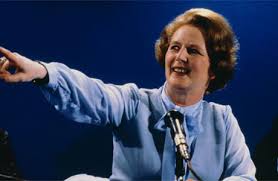
Republicans should remember Thatcher’s contribution to Peace.

This piece first appeared on www.openunionism.com

Sammy McNally is an itinerant Fenian scribbler… and a fictional prod character bestowed upon us by James Young. He has previously written for other blogs such as BangorDub, Three Thousand Versts and Slugger O’Toole. He describes his politics as “Republican lite”.

It is highly likely that Margaret Thatcher’s name will crop up at the Sinn Fein Ard Fheis, but highly unlikely that any pleasant words will be uttered by any delegates and even less likely that Gerry et al will mention that part of her legacy – support for low corporation tax – that has made its way into SF economic policy.

What will be discussed, of course, will be the hunger strikes, and as someone who supported the hunger strikers I think it fair to say that even from Thatcher’s point of view (which was more or less the same as the majority of Unionist opinion) –. that the hunger strikers had to be defeated and isolated as ‘terrorists’ rather than reconciled  – her policy failed, and the fall out arguably turned SF into a credible political force which in turn perhaps inevitably and eventually led them into government in Northern Ireland.

But Thatcher, the bête noire of Irish republicans, also signed the Anglo-Irish Agreement, which arguably made peace possible years later. On reflection Nationalists, and indeed Unionists and Irish Republicans, should give her credit for that (although perhaps not publicly). Just as with David Trimble years later with the Good Friday Agreement, Thatcher did the necessary ‘heavy lifting’.

She was a formidable and principled political opponent to Irish republicanism who sought to defend her ‘own’ country against a determined ‘insurgency’ and she played a significant role, both intentionally an unintentionally, in bringing about what seems to have turned out as ‘peace’. She should be viewed in that considered perspective, rather than through the lens of emotional self-indulgence which is bring so over-used by her opponents and detractors.

When we move off Ireland to Britain and the economy, the levels of hypocrisy from trendy, lefty bandwagon-ing ‘socialists’ sitting pretty in post-Thatcher Britain is running on overdrive as they seek to vilify her at the same time as hypocritical Tories (who stabbed her in the back) seek to deify her. It seems there is little chance of Thatcher’s legacy being considered simply on its merits.

So far, a quality debate. Not.

Share