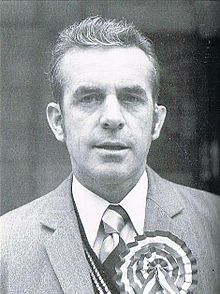
PUP Against The Maze/Long Kesh Site: Charlie Freel

The PUP has enjoyed a massive surge of support, as a result of Billy Hutchinsons sincere support for the defenders of the National Standard. He has successfully tapped into the sincerely held beliefs of the vast majority of the Loyalist Working Class.

Now as a result of the latest devious act of collusion by the IRA/DUP parasites up at Stormont, with regard to retention of the already existing shrine to Republican terrorism at Long Kesh, the PUP have the perfect opportunity to also gain the support and gratitude of the thousands of innocent victims of indiscriminate Republican  terrorism and the support of every decent person in Northern Ireland, by publically broadcasting their unconditional support for the complete demolition of the whole prison.

This act of public solidarity with the genuinely innocent victims of the conflict, would be prove the sincerity of the famous apology made on our behalf by Gusty Spence and expose the DUP as Republican collaborators.

Share

A Reply To Connal Parr: Pete Shirlow

A Reply to Connal Parr


Academics are notorious bickerers and can lapse into self-indulgent defence of their work and its ‘value’. Hopefully, at times they can challenge views and readings that they find difficult without falling into hapless folly.  Usually I have been challenged as a ‘terrorist’ fellow-traveller and myopic in my conclusion that there is a transforming loyalism. Water of a duck’s back given that such claims are motivated by well-established, regressive and ill-formed agendas.

Conall Parr’s review of my book The End of Ulster Loyalism? does not fall under that vein but I find his review to have missed out on what the book’s intentions were. In essence, few know off or appreciate the role of transformative loyalism and the impediments to it both internally and externally. This is clearly the aim and objective of the book but nothing in Connal’s review attends to that. He instead states that the book lacks ‘historical scope’ as it does not attend to the early violence of the Troubles, which is actually does on a chapter specifically on loyalist violence. An analysis that has never to my mind been completed before and which examines the diversity of such violence both spatially and over time and pinpoints that the violence of the late 80s and early 90s was tied to particular localised leaderships and to persons who were to be hostile to loyalist transformation. I am also derided for not looking at the violence of the 1920s and 30s. This is correct, but I am not a historian. Conall praises those who do not get ‘stuck in the well-established prison narrative’ but then follows this up with a paragraph on the ideas and personality of Gusty Spence that were developed via that very experience. Pot, kettle and black comes to mind.

I am further knocked for ‘jargon, using convoluted language about a subject which needs most of all to be understood’. Of course Connal’s own words such as ‘…is such an exotic notion in itself that it demands reiteration’  or  ‘….groups are so fissile’ is itself jargon-free! Such ‘jargon’ is intellectual language and in particular there are two roles and audiences for those, who are academics, who write on loyalism. One is to embed loyalism within academic language. Much of what is opined within academic literature about loyalists is that they are merely fascists at worst and state agents at best. In challenging that, the tool of an academic book must be to fashion and develop academic language on loyalism. There is an academic audience, to be convinced, which uses what Conall calls ‘jargon’ but what I understand as theory. The second audience is more popular and in my defence I have written and undertaking many interviews on loyalism which I hope Conall would appreciate has been done in a ‘jargon-free’ manner. That has included work on alienation, educational disadvantage and conflict transformation.

My thesis that there is a transformative and a regressive loyalism is according to Connal a thesis that is a ‘bit of a mouse’. To be honest I am not sure what that means. Again this goes back to the point of influencing a readership within which many have never considered that loyalists have diverse ideas, beliefs and opinions. Nor have they considered that positive loyalism is criminalised along with regressive loyalism, or that funding has been used politically to control the former. The thesis may be known to Conall but it is generally unknown beyond a minority. At no point does he explain that the book examines how ideas and beliefs that framed loyalist transition are dealt with.

I am also criticised for not naming all respondents. This is an issue of ethics and if a respondent wishes to remain anonymous there isn’t much one can do. People are nervous when discussing their opinions, some haven’t event told members of their families that they were ‘involved’ and others remain vulnerable and require protection. The Boston Tapes saga also holds out the need to take ethics seriously. I am not and never have been in the business of undertaking research that leaves respondents vulnerable, and neither do I pop into a community, take what I want and leave nothing in return. Research to me is a commitment to social justice and not a game, career-builder or fascination with balaclava studies. Therefore, ethics is vital and under no circumstances would I sit in the ivory tower and leave any person who helps my research in a vulnerable state or to be questioned by others.

With regard to what I see as ethics Conall develops the idea that anonymising respondents means that they sound the same and ‘speak with one voice and are broadly similar in mind and thought’. A conclusion which is hard to fathom given the voices presented that are hostile to progressive loyalism and those who articulate sectarian rhetoric. To call protecting respondents via the consideration of ethics as a ‘foremost error’ is simply wrong.  Conall does accept that the chapter on health, employment status and trauma based upon survey work produces ‘fascinating details’ but only speaks to the issue of home ownership, missing out on what is a study of need, suffering, family breakdown, strain, ordeal and doubt.

The use of the quote by David Ervine  “I don’t want to wake up every morning and ask myself ‘Am I British or Irish?’ I want to think ‘Am I late for work?’” is held up as contradictory to the ‘self-destruction’ of the flag protestors. I doubt that it is contradiction at all but instead it is an affirmative of alternative thinking between the strands. Many progressive loyalists took issue with the flag protestors and the nature and meaning of its leadership. To not acknowledge that is a refusal to accept such a thing as a progressive loyalism.

Progressive loyalists hold the line and what Conall calls a ‘grey area’ between progressive and regressive loyalists simply misses the nature and conduct of the former. Without a progressive loyalism there would have been retaliatory acts following ‘dissident’ republican violence, multiple punishment attacks, more civil disturbance and an undermining of the peace process. I understand the point he makes about the grey area but there is more difference between the two than he contends. When flag protestors state there is ‘nothing in our areas’ you can be sure that some of them reject projects such as Alternative, SKAINOS and Lisburn PSP which each aim for loyalist transformation and inter-community partnership building. During the flag protest when I contended, at a meeting in Belfast, that there were projects and initiatives led by progressive loyalists embedded within community the reply came back;  ‘sure we wouldn’t have anything to do with them. They just run around after Taigs!’ Evidently, a clear blue sea between such persons and the progressive minded.

The ultimate issue for me is the failure to even describe the vast bulk of what the book refers to. There is nothing in Connal’s review that relates to the evidence produced on loyalist violence, state collusion, the nature and forms of criminalisation, the debacle over CIT, the evaluation of restorative justice, the analysis of re-imaging, the destabilising impact of ill-health and alcoholism, loyalist feuding, C Company and the LVF or the context of idea building.


 Peter Shirlow is a Professor of Conflict Studies at QUB.

Share

Would The Real Unionist Party in Northern Ireland Please Stand Up?: John Coulter

JOHN COULTER’S MAY 2013 IRELAND EYE COPY FOR TRIBUNE

Would the real unionist party in Northern Ireland please stand up?

   Given the fragmentation within Ulster’s Pro-Union community, their Scottish counterparts must be secretly but highly relieved that the Northern Ireland unionist family is not trying to organise the ‘No’ campaign to Scottish independence.

Such has been the degree of splitting, defecting and realignment in unionism since the signing of the 1998 Good Friday Agreement that a new unionist movement seems to be unveiled every month.

The Belfast City Hall Union flag crisis, sparked when the centrist Alliance Party sided with Sinn Fein and the SDLP to vote for the flag not to be flown permanently at City Hall, but only on designated days, unleashed a loyalist mobilization of protest and rioting not witnessed since the Drumcree Orange parade stand-offs of the late 1990s.

From the Province-wide Union flag protest over the cold winter months emerged a militant grassroots movement known as the People’s Forum, which highlighted how much working class loyalists felt abandoned by the establishment Unionist parties, the DUP and UUP.

To combat this mobilised, yet directionless movement, the Unionist leadership unveiled the Unionist Forum series of debates to supposedly enable the UUP and DUP to re-connect with grassroots voters.

The crisis facing the pro-Union community is simple – voter apathy. Turnout in many Protestant working class areas averages 30 per cent; compared to around 80 per cent in Catholic areas.

The end result is that nationalists and republicans from the SDLP and Sinn Fein are winning seats in councils, the Assembly and even Westminster in areas which in the early 1970s were unionist strongholds and heartlands.

That crisis was emphasised during a recent Unionist Forum discussion event on Belfast’s Shankill Road, viewed as the heartland of working class Protestantism. While several hundred people attended, the glaring problem was the panel.

Had such a Forum taken place in 1963, the panel would have comprised a single representative from the establishment The Unionist Party.

The Shankill panel comprised the Ulster Political Research Group (political advisors to the UDA and UFF), the hardline Traditional Unionist Voice party; the Progressive Unionist Party (political advisors to the UVF and Red Hand Commando), DUP, UUP, the Orange Order, and Red Hand Comrades group. UKIP was invited, but did not attend. But which view is the real Unionist view?

When Unionist fragmentation because a serious electoral threat, people talked about the need for Unionist unity. That has now been downgraded to the concept of Unionist co-operation.

That Unionist co-operation has been further dented with the emergence of two more political parties in recent months.

Two liberal Ulster Unionist MLAs have quit the party over the concept of unity candidates to form their own, as yet unnamed, pluralist and centrist movement which bears a striking resemblance to the now defunct moderate Unionist Party of Northern Ireland, set up by former Stormont Prime Minister Brian Faulkner.

Union flag protesters have taken their street rallies a stage further by launching the very hardline Protestant Coalition party. It, too, bears a striking resemblance to the equally defunct Far Right 1930s organisation, the Ulster Protestant League.

Given the gains which UKIP notched up in the council elections in mainland Britain this week, it is inevitable the hardline Eurosceptic party will launch a massive recruitment drive in Northern Ireland.

What the pro-Union community also lacks is a coherent strategy. Protestants, Unionists and Loyalists – commonly called the PUL community, need to adopt the same tactics as the American civil rights movement in the Deep South in the Sixties. The PUL community must register its voters.

Registering is not enough; the Unionist parties must educate the PUL community to actually come out and vote. Then there is the dilemma of who to vote for. If too many Unionist candidates enter the fray, the vote will be so badly split that the so-called Pan Nationalist Front wins even more seats in PUL heartlands.

Since it entered a power-sharing Executive with Sinn Fein, the DUP has been suffering the same confrontational abuse from the Unionist grassroots as David Trimble’s UUP endured in the years immediately after the Good Friday Agreement.

Estimations now suggest the UUP will be obliterated electorally at the next Stormont poll from its highpoint of well over 30 MLAs in 1998 to half a dozen. If the PUL community turned its voting guns on Peter Robinson’s DUP in the same way it demolished the UUP, just who would that community vote for?

One strategy is clearly emerging from the Unionist Forum meetings. The main aim of the fledgling Unionist co-operation is to wipe out the centrist Alliance Party at the polls, one of the key parties to benefit from Unionist infighting and apathy over the years.

The vast majority of Alliance representatives get elected on transfers from Unionist parties. The Unionist Forum meetings are pumping out a clear message – don’t transfer to Alliance and destroy it at the polls!

This tactic, if it works, will leave another question to ponder – who will take over the mantel of the centre ground? Ironically, Unionist co-operation will crush Alliance, but it could let the Ulster Tories in instead. Thatcher the Snatcher’s ghost will be laughing at Northern Ireland Unionists again.

Share

REMEMBERING KEN GIBSON

At the moment there seems to be a resurgence in the fortunes of the Progressive Unionist Party–a Party that to some degree has fallen on hard times in recent years.  There are many reasons for this–too many to recount here–but suffice to say that the party has sunk to its knees in this past number of years.  Now with a new found will and a huge amount of application and dedication from many individuals their future certainly looks a lot brighter than previously.  Should they climb to former lofty heights many people will deserve the plaudits undoubtedly bestowed upon them.  But consideration should be given to those from a generation ago who took the bull by the horns–and an unprecedented gamble–not to mention flak from both friends and foes–to establish the Volunteer Political Party–the forerunner to the modern PUP.
One of those forward thinking pioneers was Ken Gibson.  Ken was an East Belfast man–born and bred in the Willowfield area.  From an early age it was apparent that Ken had staunch Unionist/Loyalist tendencies.  For a period through the sixties he was aligned to Ian Paisley through the Free Presbyterian Church but at the onset of the conflict in 1969 Ken seen through the bluster of the agitator and left his fold.  In the early seventies, in response to the republican onslaught against the Protestant community a revamped UVF was emerging.  Ken Gibson was in the front ranks of this movement.  Through the very early years of the Troubles Ken led from the front and was soon rewarded with a place on the UVF Brigade Staff.  In early 1973 not long after internment was introduced for those who were only trying to defend their country Ken made that trip to Long Kesh as Loyalist Detainee.  While there he was a great source of all things pertaining to loyalism and was a wonderful role model in particular to the younger prisoners who, of course were in abundance.  I was also noticeable during this period that Ken was one of the early thinkers within the ranks.  It wouldnt have been unusual to see him huddled over a table in the study hut or gathered around a bed space with Gusty, Billy Davidson, Geordie Orr and others.  Much of the forward thinking from this time emanated from these men–on the inside–and their compatriots on the outside.  Much of what they spoke about then is now is evident in the pages of the recent book–” Northern Ireland’s Lost Opportunity-The Frustrated Promise of Political Loyalism” by Tony Novosel. The thinking within the UVF ranks then was years ahead of anything else being offered at that time–from any quarter–but was disregarded because of the source.  Had the same thinking been emanating from mainstream unionism much of it would have been implemented then–much earlier then the Good Friday Agreement of 1998–and with it the possibility of many lives being saved.  It was in these early days of the coflict that the UVF recognised the need to steer a political path rather than one of armed defiance.  Upon his release in December 1973 Ken was one of those officers tasked with attempting to move the organisation in a political direction. The next year the Volunteer Political Party was formed with Ken playing a leading role as Chairman and with Hughie Smyth as a close compatriot.  In June 1974 Ken publicly stated that the VPP endorsed the idea of the establishment of an all party talks forum, a stance that was welcomed by the then British government.  The VPP campaign also focused on the abysmal social housing in the Shankill area and other relevant working class issues. Ironically because of this stance the party was attacked by a number of Unionist politicians.  Martin Smyth and John Taylor of the UUP were most vocal in their condemnation by declaring that the working class approach by Gibson and the VPP was akin to communism.  Gibson at this time also publicly disavowed the Ulster Nationalist ideas being propogated by people like Glenn Barr and Kennedy Lindsay who were reprentatives of the Vanguard party.
In October of the same year Ken Gibson stood for the VPP in the West belfast constituency for the General Election but he only managed to finish in fourth place with a total of 2,690 votes–well behind the DUP candidate Johnny McQuade and even further behind the winner of the seat, Gerry Fitt.  In the wake of this the VPP was dissolved and Hughie Smyth was elected to the Northern Ireland Constitutional Convention as an Independent Unionist.
No matter that the initial setting up of a political arm was doomed to failure–Ken Gibson, and others like him had the bravery and the foresight to attempt something in the face of many barriers and difficulties.  But it was through the pioneering efforts of him and others that would eventually pave the way for the reformation of the party under the title of the Progressive Unionist Party in 1979.   Ken Gibson should be commended for that.

Share

PUP STATEMENT AFTER MEETING WITH IFA.

Today, a delegation from the Progressive Unionist Party met with representatives of the Irish Football Association in relation to their decision not to play the National Anthem at the forthcoming Irish Cup Final between Cliftonville and Glentoran.

The PUP stated their disappointment at the decision not to play the National Anthem, as we believe, the IFA fall under the jurisdiction of the United Kingdom, and, as such, it should be played in keeping with the tradition of this event. It was however clear that, in line with IFA guidelines, this decision was taken by the appropriate committee and will not be reversed for this Saturdays game.

While disappointing, it was agreed by all, that this should not detract from the importance of this sporting event and that the partnership created to benefit Marie Curie, and most importantly, the spectacle of football on the field, should be the main focus of the day.

The IFA stressed, that this decision does not effect International games, where the traditional protocols will remain unchanged. It was also stated that making such decisions on a game by game basis, does not necessarily promote equality or good relations and the IFA have agreed to look at their policies after this event, with a view to providing extra guidance with regard to the playing of anthems and flying of flags at their sporting events.

The Progressive Unionist Party would like to thank the IFA for accommodating todays meeting and look forward to working with them in the future.

Share

IS THERE ANYTHING LEFT THAT’S NOT FOR SALE?

IS THERE ANYTHING LEFT THATS NOT FOR SALE?

First of all it was the arms, which, many of our former comrades lost their freedom and in some cases their lives obtaining, all sold for nothing. Now we are being asked to sacrifice the only thing that we still have left to be sold, our principles, but much more shamefully the principles of our Fallen Comrades.
We are perfectly capable of telling our own stories, in a historical site of our own choosing, without bending the knee for sponsorship from the farcical IRA/DUP government, Europe, or the cowardly British Government.
Plum and Billy Joe mistakenly believe that, our participation will ensure that there will be no Republican shrine to terrorism at Long Kesh. WRONG. It already exists and the pilgrimages have already started and will continue for as long as the eyesore H block and prison hospital remain standing. Our willing participation in a sham peace and nonexistent reconciliation, centre, alongside these grotesque monuments to Republican terrorism, will lend to them a creditability which they have never earned or deserve.
I don’t give a damn for the Johnny come lately empty Unionist Politicians who EPIC are shamefully blaming for EPIC’s own personal capitulation, I do however care about the genuinely innocent victims of the conflict, who have objected to this monstrosity from day one.  When Gusty made his famous unconditional apology on our behalf,  to the innocent victims of the conflict it was sincerely given and unconditional. What is being proposed by EPIC is I believe a complete contradiction of that apology and an insult to the genuinely innocent victims of the conflict. It appears to me that, it is now not just the IRA/DUP, that consider the innocent victims to have been no more than mere collateral damage and their present day spokespersons to be embarrassing inconvenience’s.
EPIC imply that there has been wide spread discussion and acceptance of their capitulation by many ex- UVF/RHC prisoners over the past three years, I would totally refute that claim.  I personally know of no other ex-UVF/RHC prisoner other than the few who have declared on this site, who have participated in, or agreed to the position that EPIC has adopted.   I sincerely believe that no ex-UVF/RHC Political Prisoner from compound 18, who had the privilege of serving under the sincere leadership of the late Danny Strutt, would be willing to sell his principles for paid employment in this IRA/DUP honeypot, nor any other pot of gold at the end of the green,white and gold rainbow.
Throughout the history of Northern Ireland, Loyalists have on many occasions found themselves with their backs to the wall, but safe in the knowledge that we have always occupied the moral high ground, because our cause was just, and all that we have ever sought to do is defend the democratic right of the people of Northern Ireland to decide their own future, we have always prevailed.
EPIC claim that it is too late to object, the door is bolted, that’s exactly what Lundy tried to tell the Apprentice Boys, when they stopped him from running up the white flag before the siege of Derry.

Charlie Freel.


Share

FROM THE SHIPYARD TO THE SOMME: JASON BURKE


FROM THE SHIPYARD TO THE SOMME – by Jason Burke
A number of excellent publications have been produced in recent years as interest in The Great War continues to grow, particularly as we are in sight of various associated centenaries However, drama has an equally (if not more) important role in telling stories of the past whatever they may be. Drama has an amazing ability to inject raw ‘reality’ into a story, it can bring a tear to one’s eye and put a smile on one’s face, and in many ways this is more powerful than a history book, it brings the history book to life in ways that nothing else can.  With this in mind I wish to place on record my delight that this play has come to fruition, I commend all those who have been involved from its inception to its execution before us in this theatre today.
For someone to have grown up recently in a unionist/loyalist community it would not be surprising if they were aware of the story of the‘gallant’ 36th (Ulster) Division at the Somme, a story involving heroic loyalty to king and country by volunteering for war and ultimately resulting in slaughter on the battlefields of France.  For other people, the same story will have had more depth, perhaps set in the context of the Home Rule crisis, the formation of the Ulster Volunteer Force, their ‘inevitable transformation’ into the Ulster Division, but crucially, the same outcome, slaughter on the battlefields of France.  Commemoration within the unionist community has a tendency to focus on the sacrifice of the Ulster Division, usually to the exclusion of other regiments who served in The Great War.  It’s time for a wider approach in terms of commemoration and I hope to display this stance in a book I’m currently writing; East Belfast and The Great War. We are equally as indebted to those soldiers who were not Ulster Volunteers or indeed did not serve with the Ulster Division as those men who did.  Not all U.V.F. men enlisted in the 36th(Ulster) Division, of the 100,000 strong U.V.F. there were only 17,000 men in the Ulster Division. David Fitzpatrick has claimed that only 48.7% of the Protestant enlistment figure had served with the U.V.F. before the outbreak of war.
Share

PEACE CENTRE OPPOSITION: TOM ROBERTS/EPIC

The recent organised political opposition to the development of a Conflict Transformation Centre at the former Long Kesh/Maze Prison site appears to be a classic case of “shutting the gate after the horse has bolted”.
The decision to develop the Centre involved all the major political parties, although some are currently distancing themselves from that decision making process. The gates of the prison had only just been closed for the final time in July 2000 when suggestions were made around some sort of museum / conflict resolution centre being developed on the site. One wonders why there wasn’t a sustained political campaign then to kill the plan at birth.
In a personal, informal contribution to “The Other View” magazine in the year 2000 my concluding paragraph read:

“What now for the future of Long Kesh? Personally, I would shed no tears if it were razed to the ground. Indeed that is what I would advocate. In recent weeks proposals have been made, particularly from Republican sources, to have it turned into some sort of museum. While I can understand their sentiments, I wonder, given their stance on Loyal Order parades, have they considered how the Unionist residents of the Maze would feel about what would be tantamount to a permanent Republican shrine in their midst.”


In February 2004, Martina Purdy wrote under an article “Maze of ideas for jail’s future”

“Local residents are not keen on the idea and Progressive Unionist Party’s David Ervine has suggested the old prison should be levelled.”


The Maze Consultation Panel which comprised an Ulster Unionist Chair, an SDLP Vice Chair and nominees from the DUP and Sinn Fein was established and had its inaugural meeting on 10th March 2003. EPIC in our submission to that body advocated that the prison should be demolished.


The panel’s final report was published in February 2005 under the heading “A new future for the Maze/Long Kesh”. In this report provision was made for the establishment of an “International Centre For Conflict Transformation” (ICCT). Clearly, the outcome of that consultation process did not reflect our viewpoint.

EPIC’s response to that report included the following points:

“EPIC, while having lost the argument that the site should be demolished, are keen to ensure that our constituency (former UVF/RHC prisoners) continue to be considered as key stakeholders.”

“There are deep concerns in our constituency around the format of exhibitions and tours. There is a fear that republicans would work actively to turn the site into a “shrine” commemorating the hunger strikers or some form of “Colditz” glorifying the 1983 escape. This would impact extremely negatively on the mission of the ICCT.”


Evidently, EPIC has articulated the concerns that our client base has in relation to the development of the centre and as late as August 2010 an interview for the News Letter under the heading “Demolish H-Block” included the following:

“the group was supportive of the proposed conflict resolution centre at the Maze but wanted to see the old buildings demolished.”


“For the international community, the two most significant events that took place in there would have been the hunger strike and the prison escape in 1983, so that is going to grasp the imagination of the international visitor.”


It has been thirteen years since the notion of the ICCT was mooted and now that it is almost “shovel ready” we have this belated political opposition. Surely, those political opponents who had a substantial mandate during the years of its development could have mounted a more effective strategy to prevent its progression.
As previously illustrated EPIC has been proactive since the outset in presenting the concerns of our client base in relation to the Long Kesh site, but having been politically overruled, we then had to work on the basis that the plans for the Centre were going forward.
Given that political reality a decision was taken in late 2010 that the best way to now address our concerns was to ensure that all relevant sectors are included in the development of the centre. That includes Loyalists, Republicans, Victims, Prison Officers, British Army, Police and residents of the Maze; indeed all communities whose lives were impacted upon by the prison camp. Failure to have done so would have left the door open for Republicans to present an unchallenged narrative on the history of the prison and the associated conflict; thus, making the likelihood of our fears being realised much more probable.
Therefore EPIC will continue to facilitate those UVF/RHC prisoners who wish to tell their experiences of Long Kesh and we have been cooperating with the Strategic Investment Board (SIB) to that effect since 2010 when a focus group of former UVF/RHC prisoners was established to advise and develop our contribution to Centre.


Tom Roberts

Director of EPIC


Share

Indicative of the Divisions in our Community. Ulster Star

           Mixed ReactionTo MLK Plans.

THERE has been a mixed reaction to the plans for a new Peace and Reconciliation Centre at the site of the former Maze Prison.


Planning permission was granted last week for the scheme, which will see the start of the major redevelopment of the site.

The proposals have been publicly supported by many politicians, however, some local people have mixed feelings about the design of the building.

Lagan Valley MLA Trevor Lunn said: “The redevelopment process of the Maze site has faced many delays over several years, so I welcome the decision to grant planning permission for this project.

“Despite the controversy, this has the potential to be a major tourist attraction and information centre, much as other redundant prison sites such as Alcatraz, Robben Island and Kilmainham have become.

“By having a peace building and conflict transformation centre, we can have a focal point for all those who wish to visit Northern Ireland to learn about our peace process, as well as being a valuable information source for students.

“This should provide a central location for all the expertise we have built up in peace building, especially in our community and voluntary sector.

“There has been an increasing interest in this redevelopment and with the granting of planning permission I hope that the development can move ahead to satisfy this interest.”


Read more »

Share

Struth’s Diamond Ring, A Bowler Hat and A Labour of Love.


Struth’s Diamond Ring, a Bowler Hat and a Labour of Love: Interview with David Mason (Official RFC Historian)

By  Gary Havlin

In a year that saw an SPL Commission fail to ‘steal’ Title wins from our history books, and a campaign by supporters of lesser clubs’ to have the Advertising Standards Agency rebuke the club for advertising ‘140 years of History’, never has it been more important to celebrate and educate Rangers fans on the heritage and traditions of our wonderful club.

From the Founders Trail and the Gallant Pioneers Website to articles written on various Fans’ Forums, from the sterling work done by the Rangers Media Team to brilliant books on all facets of Rangers history, it’s clear that Rangers fans have an insatiable interest and a deep sense of pride in the story of the Rangers, from the Founding Fathers to the present day.

David Mason, the Official Club Historian, has played an enormous part, spanning nearly 3 decades, in ensuring that the history of Rangers is maintained and historically significant artefacts are brought back to life, whilst enabling those who strive to tell the Rangers story to a wider audience to do so with great accuracy.

David will be familiar to us all this season as the Club Official who led the Toast to Her Majesty at The Loving Cup Ceremony, and led the Blue Room guests in a rousing rendition of our National Anthem, a tradition which David himself decided to bring back after many years of being omitted after the toast!

With some spine-tingling tales, what better person to tell us of his favourite Rangers artefacts, anecdotes and life as a Rangers fan…
GHWhat was the first Rangers game you can remember going to and were you a regular at Ibrox before being appointed Club Historian?

DM– I can’t recall the first game I went to because, quite simply I was just a baby, but my father told me it was Rangers v Third Lanark at Cathkin. There then followed another at Firhill. The first matches I recall were at Ibrox when I was about 7 and then the first big match that really turned my head was the 1964 Scottish Cup Final. I can recall standing down by the wall on the track, in the enclosure under the old Grandstand. I remember the goals and the Dundee keeper Bert Slater who had a great match. However, what remains vivid in my mind is the lap of honour the team took – with Davie Wilson sporting a bowler hat. Ironically, I was to receive that same bowler hat some years later, from Jimmy Millar and today it hangs in the Manager’s office at Ibrox.

The hat worn by Davie Wilson, now hanging in the old Managers Office
Share