Sinn Feins Cultural War on Unionists Will Only Intensify: Connal Parr

The Good Friday Agreement diminished the violence but not the conflict.
The leadership of the Republican movement realized – though it will never be admitted – that they were unable to achieve their objectives militarily and gradually surrendered.

But very quickly culture itself was seen as a new sphere to continue the struggle, promoting nationalist views while traducing those of their opponents. In the writing of history too, through the changing justification for deadly action and whitewash of past atrocities, the war shifted from bombs and bullets to literature and books.

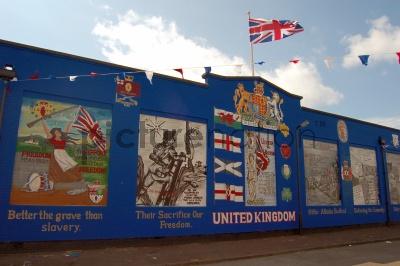
Recent gestures – of removing cherished symbols and naming children’s playgrounds after murderous hunger strikers – are only the beginning. Unionists must brace themselves for further provocation, of primary schools named after Provisional IRA bombers and whole streets called after the victims of one community alone. One of the reasons Republicans are resorting to such a campaign is, with the union secure, it is quite simply all they can do.

It was always naïve for Unionists to think their culture would be respected post 1998 –whatever inconsistent rhetoric Gerry Adams feeds the conference faithful – and they should not be surprised that Sinn Féin wants to demean their sensibilities. They’ve been doing it for just over a century now. Yet there is a viciousness in today’s cultural taunting which is calculated to inflict maximum offence.

In perhaps the hardest dilemma for Unionism, Irish nationalists are lawfully entitled to fight such a battle. It is infinitely preferable to the killing and sectarian bloodshed definitive of their yesteryear. Therefore Unionists must find another outlet for their fury outside of aggressive street protest; a way of engaging in cultural resistance themselves.

This is intrinsically related to depicting their stories and narratives. Long ago Republicans understood that the arts offer an ideal stage to present their case. It does not make for good art because you know the way each poem, play or film is going to end: with the dream of Irish unity as the only way forward. But in perhaps their most spectacular propaganda victory, Republicans convinced not just their base but a great number of Protestants themselves that the arts represent a distinctly nationalist forum and are not for them.

On the political front it is essential – as some have already recognized – to get people registered to vote, elected, and back into influence at Council and Assembly level. Culturally it entails advancing a programme and vision through books and the arts. The recent exhibition of prisoner painting in the Crumlin Road Gaol highlights how Loyalists are movingly capable of creative effervescence. Another channel is the theatre group Etcetera, which aims to stage plays directly highlighting the Protestant working-class experience.

This dynamic need not be the preserve of one group. Something which reaches back to the essence of Protestantism itself is the force of the individual conscience – inspired dissent – which contrasts with the uniform identity cloak of Irish nationalism.

This is, in the end, as vital as Unionism’s collective resistance in the North’s ongoing cultural warfare.

Connal Parr is completing a PhD at Queen’s University Belfast on Protestant working-class politics and culture, and serves on the board of the Etcetera theatre company.

This article first appeared online at www.newsletter.co.uk on Wednesday 12th June 2013.

Share

Justice Again? by Gaudeamus Igitur

Justice Again?

Alan Erwin run an article in the Belfast telegraph on 7.6.13 about Bobby Rodgers and his failure to be granted a pardon for the killing of Eileen Doherty.  This whole issue of dealing with the  past  continues to loom large in our society today. This case raises important issues. However even before the article begins I note the headline  which starts, “He shot this 19 year old girl..”   Actual coverage of Bobby’s trial and even the article (see paragraph 6) says that he did not shoot the girl but the court found that he was there. How can the headline say HE shot the girl when even a judge says he did not?  It reminds me a bit about the Nazi propagandist, Josef Goebbels and I paraphrase;  ‘if you are going to tell a lie, tell a big one’. It is a sad forerunner to the rest of article.

Mr Erwin says that it was a murder that shocked the community. No less shocking that the murder of James Larkin and Ivor Vennard. No more shocking than the previous 10 women killed in the Troubles prior to this. No less shocking than the all the children killed by the IRA, the loyalists and security forces up to this date. Any more shocking than the people left lifeless and mangled on the 21 st July 1972? If there is one thing about the article it is the complete and utter lack of context about those dark days.

I have said it before  but it is a shame and painful loss for all the lost lives in the troubles. The unseen damage and the unmeasured hurt.  The British system of justice has its balance of prosecution and defence so it was with interest and surprise that I read about the prosecuting Q.C. saying that it was his submission that Bobby not serving time for the killing was “unconscionable”. I am going to assume that this term is used in its legal sense which means that;

When a court uses the word unconscionable to describe

conduct,  it means that the conduct does not conform to

the dictates of conscience. In addition, when something

is judged unconscionable, a court will refuse to allow the

perpetrator of the conduct to benefit.


And also;

The doctrine is applied only where it would be an

                           affront to the integrity of the judicial system..”


Seems fair enough but not so secure when one looks at various other aspects of the wider legal system. Is it unconscionable to consider a state agent being present when a man and woman are about to be shot in the head for alleged touting? It is unconscionable when a system gears up to put innocent people in jail of the best years of their lives? The Birmingham 6? How did the judicial system feel when after the Good Friday agreement men were released from prison, well before their release dates because it was part of the deal? What about the horse dealing behind closed doors that operates?

I accept Justice Treacys line that there is no amnesty. That’s a political reality, despite there being precedent in this country after previous terrorist campaigns. But what’s hard to live with is, people like Bobby, both loyalist and republican, that have served their time and made constructive and positive use of their lives after their release, will still be put in prison despite the political reality. I have of course not mentioned those involved in terrorist acts that are now politically untouchable i.e the 2 Gerrys. No matter what they have done there will be a political veto on their arrest or conviction.  I can hear the denials already.

What I want and what I have said already is a clear line in the sand. Anybody, including security forces, who were involved in the Troubles before the Good Friday agreement should not be prosecuted now. But if we are to deal with those acts then let us deal with them all. And just on that topic could we look at those people who helped create the conditions and environment for the mess that the young people of this country walked into? Bobby, myself, fellow prisoners did not benefit, earn big money or have a happy time through all the years of violence and then years of imprisonment.  Does anybody want to address this?

I understand that the British government are walking a tightrope. They are managing a political reality, balancing, quite properly, the rights and feelings of victims with the need to nurse ‘peace’ along.

Bobby will be welcomed home (again) by his family, friends and local community. Not because of what happened in 1973/74. He will be welcomed home because of the person he is today. The fact that he advocated non-violence with young loyalists who would be out on the streets creating mayhem. The fact that he was presenting a better way of resolving differences by talking and not using violence. The fact that he was using his experience to  teach young loyalists not to walk the way many of us did in horrible times.

I will finish with a Bob Dylan lyric that Bobby would recognise;


Couldn’t help but make me feel ashamed to live in a land

Where justice is a game.

Now all the criminals in their coats and their ties

Are free to drink martinis and watch the sun rise.


P.S. James Larkin was shot dead 5 days before Eileen Doherty was killed. Mr Larkin was 34 and a father of 2.  Ivor Vennard was shot dead 3 days after Eileen Doherty. He was 33 married with 2 children.  263 people would die in 1973 due to the Troubles.

Gaudeamus Igitur

Share

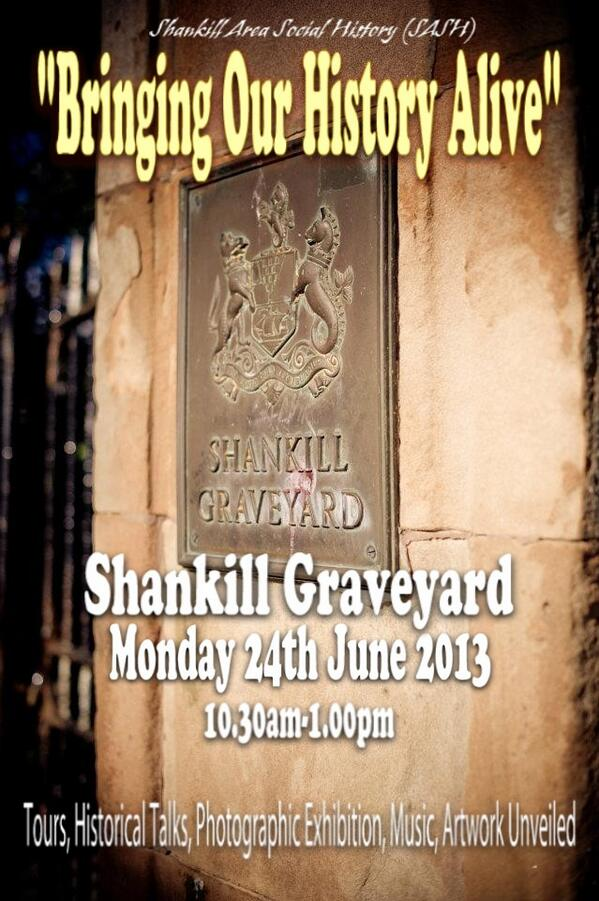
Bringing Our History Alive: SASH Group

Where can you find millionaire business men, with the poor and desolate, war heroes and traitors, Loyal Orangemen and a Nationalist MP all together? 

Answer – SHANKILL GRAVEYARD


Date for your diary

MONDAY 24th JUNE-10.30am-1.00pm at SHANKILL GRAVEYARD


“Bringing Our History Alive” is a Shankill Area Social History (SASH) event for all ages that will bring the fascinating history of the Shankill Graveyard and the people buried there to the local community. Through music, art, guided tours, historical talks, archive photographic exhibition, and characters in period dress, your history will be brought alive for the day.


The proceedings will involve the unveiling of a striking ceramic art piece which SASH have been working on with artist Daniela Balmaverde highlighting the Graveyard’s history.  The unveiling will be by renowned local poet and historian Albert Haslett who may even treat us to a wee reading of one of his many poems about the Graveyard or the history of the Shankill.  Music will be provided by local musician and song writer Jackie McArthur who has written many songs about the social history of the Shankill.  Informative and engaging tours of the graveyard will be provided by local historian Bobby Foster and you may even bump into a few Victorian gentry, soldiers or mill workers while on the tour.  The event will conclude with talks on significant characters from the area and a photographic exhibition in the neighbouring St Mathews Parochial hall.  Throughout the event there will be food and refreshments and best of all everything is free and everyone is welcome.


Shankill Area Social History (SASH) is a voluntary based historical group who aim is to promote the history & culture of the Shankill. The group meet every Monday morning 10.30am in the Spectrum Centre 133 Shankill Road and is open to all who have an interest in the Shankill.  SASH group activities involve regular guest speaker on historical themes, visits to historical sites, and a range of projects such as community archive, art projects and social media to promote the history & culture of the Shankill and its people.

To contact SASH group about this particular event or if you are interested in becoming involved please use the following contacts

Rev Jack Lamb (Chairperson) mob: 07720293941

Billy Drummond Tel: 028 90311420

Twitter: twitter.com/shankillhistory

Email: sashgroup@hotmail.co.uk

Website: www.shankillhistory.com

Facebook: Shankill Area Social History


Share

STRIKE UP THE BAND

STRIKE UP THE BAND


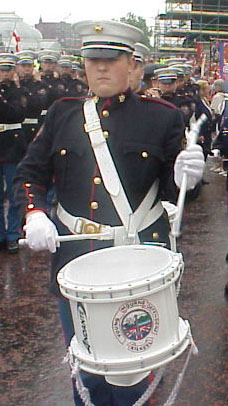
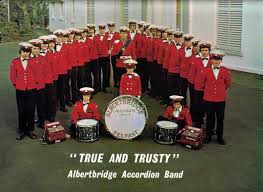
In the coming weeks www.longkeshinsideout.co.uk will be presenting a new feature were we will be looking at some of the bands from around the province and indeed from further afield.  We hope to have new guest contributors to present short histories of their own chosen bands.  Marching bands—be they flute—accordion—silver or pipe form a huge part of our cultural identity and all too often are portrayed in the wrong light or given bad press for the most dubious of reasons.
The Protestant band culture go’s back a long, long way—Churchill from Londonderry can trace their origins back to the 1830’s—and there are many fascinating stories behind the formation of some.  We hope that this short series will inspire others to relate the history of “their” band.  All future entries will be welcomed.  The difficult task is to whittle a very long list down to a manageable short one…but we have to start somewhere!!  The series will contain historical précis’ of twelve bands—most of them household names.  Don’t be offended if your own particular favourite doesn’t appear—it may well do in the future.

Share

Loyalists In Last Chance Saloon: Dr. John Coulter

Loyalists in Last Chance Saloon


                                        (John Coulter, Irish Daily Star)

Loyalists have entered the Last Chance Saloon with the unveiling of the new liberal McUnionist Party fronted by Basil and wee Johnny.

Ex-UUP members McCrea and McCallister can put whatever spin they like on their new media-cuddly party, but unless they push their bucket-load of new exciting policies into the loyalist working class, their party will crash and burn in the next Stormont poll in 2016.

The secret of who speaks for Unionism will be decided by the Protestant working class as former MLA Billy Hutchinson’s Progressive Unionists seem to be enjoying a loyalist revival.

But the PUP cannot become a leading voice in Unionism without a strong Protestant middle class showing.

Look at how the Shinners politically gobbled up the Stoops’ traditional middle class Catholic support to become the North’s number one nationalist party.

Hutchinson has what the McUnionists need – a solid loyalist working class voice.

And McCrea and McCallister have what Hutchinson needs to become a major Stormont voice of opposition to the Robbo/McGuinness Executive partnership – clear middle class and media backing.

Provided the McUnionists can control their toffee-nosed Fur Coat Brigade, a sensible, realistic coalition would involve a new Gang of Three – Hutchinson, McCrea and McCallister.

The sceptics will say – such a merger will never work as earlier plans to form a partnership between the PUP and UUP floundered because of the former’s links with the loyalist death squads, the UVF and Red Hand Commando.

But look at what the PUP/McUnionists have to contend with; hardly a major mountain to climb.

The DUP is locked in a tight coalition with Sinn Féin.

The UUP is in meltdown and will probably only exist as a fringe movement by 2016 with no more than half a dozen MLAs.

Jim Allister’s TUV, in spite of winning the vote on Ann’s Law, is still a one-man band.

The Northern Tories have shot themselves in both feet by supporting gay marriage in a country where the Christian Church vote holds major influence.

The anti-European Union UKIP is a one-trick pony, simply wanting to take the North out of the EU.

Independent Unionism is a lone voice with East Derry MLA David McClarty.

The hardline Protestant Coalition party formed by the flag protestors lacks sensible policies.

Alliance, often viewed as a ‘soft u’ Unionist Party has committed political suicide with its disastrous Belfast City Council Union flag vote.

Basically, Unionism is in a real mess, so the PUP and McUnionists must strike while the iron is hot and get as many potential voters registered.

Expect mainstream Unionists to step up a very negative propaganda campaign that the McUnionists are going nowhere.

But establishment Unionists need to remember the old proverb, a new broom sweeps clean. Maybe what the Unionist voters want is a new start – and Hutchinson, McCrea and McCallister?

As for republicans, they must be banging the bin lids with joy at yet another split in the Unionist family.

Nationalist tactics will be simple – transfer to the McUnionists to keep Robbo’s DUP out.

But the key question is – do McCrea and McCallister have the political courage to invite Hutchinson’s working class loyalists into their overtly middle class fold?

June 11, 2013________________


This article appeared in the June 10, 2013 edition of the Irish Daily Star.

Share

The Books Have It-3 —by William

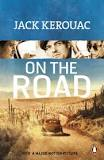
Your book articles have certainly brought back old memories Billy Joe and it would be great to hear of a few others commenting such as Charlie did given that there was an abundance of books passed through the jail and compounds about ‘everything under the sun’.  I have to say, I can’t argue with your recollections of you having lent many a book and never had them returned but I hope you are not including me in that category!  Just think, had you have operated a more organised lending service you could have made a fortune in people owing fines for late returns. Well I finally got round to writing this last week and have to start (reluctantly) by agreeing with you about Tarantula.  However, I should add that since it was written in the mid- sixties when the music drug scene was at its height I can forgive Dylan with writing only what can be described as a book about chaos.  That said, I have read it six times and currently have two different copies. As a genre, the book is hard to define but is filled with literary references to fictional and factual characters, such as Rain Man and President Plump or Ezra Pound and T. S. Eliot which always intrigued me and sent me on searches to find out more about what I’d read.  In an era before the internet, books (and for me the music of Dylan) was our font of learning which opened a new world inhabited by the likes of Wood Gutherie’s ‘Bound for Glory’ and Kerouac’s ‘On the Road’.  Likewise, it was music that directed me to a lot of books I would otherwise probably not have heard of or never have read, such as, William Blake’s ‘Songs of Innocence and Songs of Experience’ very influential in the music of Van Morrison and Arthur Rimbaud’s ‘Je est une autre’. A lot of the books you mentioned I now recall reading particularly those whose topics were of common interest to us all.  I’m thinking about the many Vietnam books (I bought Herr’s Dispatches last year), the prison ones of Jimmy Boyle (I still have both of those) and the boxing biographies with ‘The Sixteenth Round’ having a special interest for me for the connection between Dylan and Carter.  From the vast range of books you recall Billy Joe we could never be accused of limiting our reading, (even though yours was an acquired taste), but it’s hard to ignore the common interest we all had in certain topics such as you have mentioned about the Mossad as Charlie did about the general history of Israel.  In fact, the fascination we all seemed to have with The Six Day War meant many a book on the topic was well circulated and I recall reading Moshe Dayan’s ‘Story of my life’ in which it was well documented if memory serves me well. My dad was an avid reader and used to pass them in to me when he was finished.  In the ‘First Blood’ style, you may recall one he sent me called ‘Open Season’ by David Osborn which was adapted also into a film with William Holden and Peter Fonda.  A fascinating book he also got me was by Daniel P. Mannix called ‘Those about to die’.  It was a factual account of the Roman arena and the gladiators which gave a chilling description of the Roman’s thirst for blood sports.  In fact, it’s a collector’s item now and he paid seventy quid a few years back for a first copy.  It inspired me to learn more about ancient history and I sat an ‘O’ Level in the compounds on the subject. A number of books with a connection to incarceration I found interesting and memorable.  A novel by Jack London springs to mind – ‘The star rover’ was a work of fiction about a guy on death row but it still intrigues me how I’m able to recall the opening lines when the author writes, “All my life I had an awareness of other times and places.  I have been aware of other persons in me”.  I think this particularly resonated with my own experiences which ultimately led me to incarceration and was in fact a significant feature in me wanting to record the narratives of other prisoners, which you know I did at length.  In fact, this is also true of the previous work of Rimbaud which I mentioned as the French title means ‘When I is another’.  This fixation on prison is also found from a different point of view in the Albert Pierrepoint biography.  Britain’s infamous hangman, I have since learned, ironically was opposed to capital punishment.  More fascination with death and murder nudges me to Bugliosi’s ‘Helter Skelter’ or ‘In Cold Blood’ by Truman Capote.  Again, this is an example of literature which has ‘stuck’ with me as I can also recall in the inscription in Capote’s inside cover, two lines of  which reads “Freres humains qui apres nous vivez, N’ayez les cuers centre nous endurcis”.  Now I’m not well versed in French but again I have been directed through books to want to know more and this was from Francois Villon, the 16th Century poet who wrote this in prison before being executed, and translates into “Human brothers who live after us, Do not have your hearts hardened against us”.  How relevant is that today?

Share

People of the Arches by Bobby Cosgrove

Continuing the fascinating insight into the years gone by in East Belfast through the eyes of local historian Bobby Cosgrove.

PEOPLE OF THE ARCHES


Having written about the early days of Newbridge Village & The Holywood Arches and how the area was developed from a few cottages into one of the major industrial areas in Ireland. No story of districts like the Arches would not complete with out talking about the people and what life was like for them living in an industrial area like Connswater.

Most of what you will read is from my personal memories as a boy growing up at the Arches, and also those of others from the area as one told me we were not just neighbours but a large family “That tells all”


Early Memories.


One of the first and lasting memory is that of noise, and people on the move all the time, noises like the banging of the riveters hammers while they were building the great ships in the yards of H.W, or the wee shipyards of Workman Clarke. Then of course there was the wonderful sound, and sight, of steam engine trains travelling along the high embankments, on their way over the Hollywood Arches and on to places like Comber, Newtownards, & Donagadee, not forgetting the line to Ballygowan and on to Newcastle. Another series of noises that would bring back memories is the factory horns, each company had a different sounding horn, and some like the Rope works give two blasts, the first was called the minute’s horn giving their workers a two-minute warning to report for work. The second blast was the starting horn, and if you were not in through the gate when this horn sounded you were locked out and a days pay was lost.  These sounds along with the noise of the trams going along the Newtownards Road, and also the clatter of horses hoofs going over the square sets on the streets, meant that everyone looked forward to Sunday a day of not only rest but peace and quiet.


Hard Life / Wonderful People


Life even at this time was still very harsh, as wages were still very low, and the housing was no better than slums, but the people were wonderful and the comradeship and community spirit, that was shown at times of need were unbelievable, with the motto being “we have nothing but will share it with you”. One story often told was of two men who broke into a house in Oakdale St, but instead of stealing anything they left a 10 bob note on the mantle piece, with a message that stated, your are worst off than us this will help you put food on the table. My Great Grandmother Rowley lived at number 10 Manderson Street, which is off Townsley St, the last Street on the left hand side of the Newtownards Rd just before the Hollywood Arches, and I myself along with my parents also lived in this Street at no 16, these two streets even by Belfast standards was unique as they consisted of 19 houses, 3 stable yards, 1 boat yard, 1 bookies, and the rear entrance to 2 pubs, it also had a blacksmiths shop, with the N.I labour party rooms above it. This was what in Belfast terms was called a dead end Street, as there was only one way in and the same way out, today they would be called “cul- de-sacs” to-day.  The boat yard is still producing boats after 75yrs, and although Harland & Wolff and the Workman Clarke yards have now all but gone the art of boat building for so long the life blood of East Belfast workers and their families, is still carried on by the Duffin family in Manderson Street

The Toss, the Peelers, and the Lookouts.


The bookies which was owned by Clarke Groves, was a house to the front but inside it was large as an extension was build out the back of the house into Holland’s yard.   On a wet Sunday this became our indoor soccer pitch, as we would have helped Sammy Allen to clean the place and as a reward he would let us play football with a tennis ball in the bookies shop. Almost every Saturday afternoon there would be a “pitch & toss”, this was held on the embankment of the now defunct railway track and embankment at the rear of the houses, at times you would also have had the Crown & Anchor board man.  Both these forms of gambling were illegal, and the people that ran them paid the young lads from the street to keep a lookout for the peelers coming, if the Police came to make a raid it was usually along the railway line, the lookout job was to shout out a warning. When this happened they would lift the linen sheet, or newspapers with the money on them, and take off over the nearest yard wall, and through someone’s house into the street, sometimes there would be police in the street to catch them, but most times they would have got away, and the lookouts would then lift up the odds that were left lying, as they made their escape from the police. Many a fish supper or and ice cream was bought on a Saturday night when this happened, of course when people like Hughie Bowers did lookout, the shout of here comes the peelers was called every time, Hughie had it sussed out how to get extra money from the toss.

Drinking & Bare Knuckle Fist Fights.


Manderson Street was notorious on a Friday & Saturday night for its bare knuckle fist fights at the rear of the Bloomfield Bar, and quite a sight it was to see two hard men striped to the waist fighting with bare fists only, as the use of anything else, i.e. feet, head, or weapons were not excepted. When it was over they shook hands and went back into the bar were the loser bought the drink. There was many a bet placed on these fights and some of the fighters made a name for themselves as a hard men. One of the hardest men associated with the fighting was Walter Cunningham a brother of Hard Screw Cunningham one of the most famous characters in the Area.

Well Known Characters


Pastor Joe Glover was a well known character in the east end of the city, he worked as a bag filler in the coal quays and enjoyed his drink at the weekends he had a family of 5 and his wife Martha was born in the street he also had a small stable and kept a donkey and trap. There are two different stories as to how he got the name Pastor, the first is that it was because of the wide brimmed hat he wore when he got dressed up in his Sunday best clothes this was the same as that worn by Pastors. The other story is that every now and again Joe would get religious, he had joined the Coalman’s Mission and would along with Martha be seen standing outside the Clock & Bloomfield bars handing out tracks and was giving the nickname Pastor by the locals. But the truth is that Joe was the son of a Pastor.


Others that were well known in the area would have been Winkie Bowers, Rocky Burton, Freddie (Blowie up) Robinson—he was a big man who cried at the simplest thing, one day he called at our house to see my budgie and on hearing that the cat had killed it he cried like a baby, and every time he passed my house on his way to his brothers house, down the street he cried for Joey the budgie. The reason he was nicked named blowie up was because he drank cheap wine called blowie up wine.

From Ashdale Street there was a man called Hardscrew Cunningham you could fill a book with what this man did but one story is about a wake for an uncle of mine called Co Magill of Oakdale St, it seems that Hardscrew visited the house to wake the deceased with a few drinks in him and brought in fish & chips he sat on the stairs beside the coffin he asked for salt & vinegar but was only given the vinegar and on being told there was no salt he said that’s alright. He then reached over and took some salt out of the bowl of salt that had been placed in the coffin to ward of evil spirits; he then sprinkled the salt on his chips and eats away at them.

Another great story is that while attending a funeral of a relative of Winkie Bowers and as the procession moved through Ballyhackmore, and on towards the green fields of Knock, on its way to Dundonald Cemetary, Hard screw suggested to Winkie that they should have a farewell drink with the deceased, as he would not be coming back with them, so they all retired to Paddy Lambs Pub with the coffin and had a farewell drink

The last story about Winkie again relates to a friend of his that died, and when he went round to the house of the deceased there was only the brother of the deceased in. Winkie then decided to play a trick on the mourners. Once again the coffin was placed beside the stairs and he placed a piece of thread around the little finger of the corpse, he then worked it up into the front bedroom where he lay in wait as the house filled up with family and an friends. When someone said he looks so peaceful and happy hardscrew pulled the thread and as the arm of the deceased was raised the room emptied in two seconds flat, these are just a few of the many stories that can be told about him.

We cannot leave this part without mentioning the hobby horse man, William “Bull” Ellison, this man was running hobby horses for years before the late Mickey Marley got on the road. The bull was a veteran of the bore war, and kept stables in the street that housed many horses, and a number of carts, traps, and of course the famous Hobby Horses.

Ghosts, Food, & Entertainment.


Millen’s supper saloon at the bridge was our fast food outlet, and a penny worth of broken biscuits from the Inglis biscuit factory shop, or the Home & Colonial Stores was our treat, ice cream or hot peas from Fuscos, “boy how the Italians could make ice cream” this was our heaven. Sweets from Maureen’s newsagents, and toys from Barlow’s fancy goods & toys shop. Our meat was from Thompson’s, the largest butchers shop in Belfast. Carryouts of the cheap wine came from Courtney’s off license at Westminster Ave at the bottom of which was a number of aluminium bungalows. As I was saying earlier about noise the same can be said about smells, and if anyone ever smelt the connswater on a summer day at low tide the stink was revolting, but the sweet smells from the biscuit factory made up for it we, also had a resident ghost in the building that housed Irvines Shoe shop at the bottom of Bloomfield Avenue this lady was seen on a number of occasions walking round the upper rooms of the building.

Pigs feet and bacon ribs were another Friday & Saturday night favourite and a man used to go round the bars on a bike with a basket on the front selling them to the patrons, Our escape was the Saturday morning minors club with Uncle Mac in the A.B.C. Strand or the New Princess with its wooden seats and of course Costa Victoria with its outdoor swimming pool and boating lake once you had a swim in the pool at Victoria you could have swam in the Artic in the Autumn was up to the big houses in Strand town to collect the windfall apples falling in the orchards (sounds better than raiding the orcies) and of course in July collecting for the bonfire took up a lot of our time. The 1st of July was always a great night with the Orange Parade coming down through the Arches on its way back to Templemore Ave the music from the bands the wonderful colours on the banners, families out together in a carnival mood sucking on ice creams from Fuscos and eating Fish & Chips from Millen’s this was utopia.

We also had our own all year round toboggan run as we would sit on tin sheets, and go sliding down the railway embankment, of course on going home we would get told off for having ripped the arse out of our pants. Their was no ice cream that night, other lasting memories were the site of thousands of bicycles on the Roads and Streets, as men made their way to work in the shipyards, Shorts men went by bus or car.  The Rope works produced many characters and one of the most famous was a man known to one and all as Daft Eddie, famed for wearing safety pins all over clothes— it was claimed he would do anything for a pin. The Ropeworks employed most of the women from the area and without there income many people would have even in the 50s starved.

I hope you have enjoyed this trip around the Arches of yesteryear to those who lived around the Arches it is a living memory and to those others who did not, I hope it has given an insight into life in Belfast Streets in the 50s & 60s and I also hope that any names given will not cause offence to any living relatives.

Bobby Cosgrove

Share

SOUTH BELFAST ACT INITIATIIVE

South Belfast Action for Community Transformation

by

I want to inform readers that SBACT are currently engaged in active work throughout South Belfast. This work includes the positive re-imaging of communities assisting local artists to display culturally acceptable murals and paintings. Other work includes engaging with ther communities on interface areas to reduce the tension and explore community problems and issues. This work is ignored by our friends in the media who unfortunately want to highlight brazen lies in an attempt to damage lifelong relationships. Its not working.

This week South Belfast ACT (a fully constituted part the the ACT Initiative) will invite residents of Donegall Pass to share their concerns about housing issues and to inform each other of those persons not able to get a tenancy. Other local housing issues will be heard and a plan developed of how this disadvantaged community can address te housing issues that impact upon them. Volunteers from ACT delivered 500 leaflets on a door to door basis to inform residents. The meeting will take place in Donegall Pass Community Centre on Wed 05 June at 7pm. Its important we encourage residents to come along and air their views. Well done to the organisers of this meeting. A report will follow the meeting so watch this space.

South Belfast ACT

Share

Where Is The Loyalist Rebellion Going?–Dr. John Coulter

WHERE IS THE LOYALIST REBELLION GOING?

The Union flag dispute has sparked a Loyalist Rebellion. Former Blanket columnist and Radical Unionist commentator, DR JOHN COULTER, maintains that this Loyalist Rebellion must follow a democratic path to avoid the creation and eruption of a violent dissident loyalist movement. In this exclusive article for Long Kesh Inside Out, Dr Coulter outlines the political routes for the Loyalist Rebellion.

This year will be crucial in the direction which the Loyalist Rebellion takes, and the burden of responsibility could fall on the shoulders of three Unionists – Billy Hutchinson, leader of the Progressive Unionists; Lagan Valley MLA Basil McCrea, and South Down MLA, both leaders of the so-called McUnionist Party.

This unlikely Gang of Three will have a key role in persuading those involved in the Loyalist Rebellion to pursue an entirely democratic route. The Loyalist Rebellion erupted last December with the totally crazy vote of Belfast City Council to remove the Union flag over City Hall from all-year round to designated days.

Since the signing of the Good Friday Agreement in 1998 and the subsequent St Andrews Agreement in 2006, the loyalist community has watched as year after year, the republican movement has scored concession after concession for the Catholic community.

While mainstream Unionism argues over which party represents the natural successor to Edward Carson and James Craig, Provisional Sinn Fein worked tirelessly to secure considerable financial benefits for its people.

In the late 1960s, the Catholic community took to the streets using the ethos ‘enough is enough’, taking part in the so-called Caledon Squat, then forming the Civil Rights Movement, which was later hijacked by the Official and fledgling Provisional republican movements.

A generation later in 2012, the loyalist community uttered the same sentiments of ‘enough is enough’ when the Union flag was removed from City Hall. Perhaps the analogy facing the loyalist community could be best summed up from the classic war film about the Japanese attack on Pearl Harbour in 1941, entitled ‘Tora, Tora, Tora’.

At the end of the film, rather than being jubilant about the success of the Japanese air attack on the American fleet, one of the Japanese commanders laments that all the raid accomplished was to awaken a sleeping giant. How right he was following the total defeat of Japan four years later after the atomic attacks on two Japanese cities.


Read more »

Share

THE BOOKS HAVE IT–2.

THE BOOKS HAVE IT….2.

Being a voracious reader on the outside my introduction into remand in Belfast Prison—firstly in 1972—and once again for most of 1975—meant that it was a constant search and struggle to find suitable reading material.  You accepted books from any source possible—once from an IRA prisoner I met during a dental visit—and many times from screws.  Sometimes—many times in fact—you read books for the sake of reading and in many cases books you would normally give a second glance to.  There were books that did the rounds and were read by virtually everyone.  There were others that became coveted and were worthy of multiple reads.  I saw books torn in half when a reader got to a certain point to allow a friend to commence it while he finished.  There were fads, habits, rituals, penances, recommendations and duties.  There was the obligatory scan of the Bible—usually when ensconced in the punishment cells where other books were like gold dust and as obtainable as something pleasant to eat.
Remand time to me seemed to consist of a lot of down time when we were locked up quite a bit with virtually no recreational facilities—no television—and usually limited access to a transistor radio—so reading was one way of passing the time.  “C” Wing in the early seventies wasn’t exactly a haven for books—good or otherwise so basically you accepted what came your way.  I was seventeen years old during my first remand and many of the others were of a similar age—but most of the books were hand me downs from the older remand prisoners and these tended to be Westerns or War novels.  It was here I was introduced to JT Edson and became familiar with Dusty Fog and the Ysabel Kid.  Jack Schaffer’s Shane was much read and was passed about quite a bit.  Louis L’Amour was another favourite of the time—books of his that readily spring to mind are The Ferguson Rifle—Shalako—and the Sackett novels.  As Gaudeamus previously mentioned the Sven Hassel books were particularly widely read and became the topic of many conversations over a cup of tea or a dander round the exercise yard.  It was common to hear the prisoners relate the exploits of Porta, Tiny and Julius from the Panzer division full of renegade soldiers who no one else wanted. Legion Of The Damned is the one Hassel book I remember most.
By 1973 I had been shifted—against my wishes it has to be said, but on the back of a 4 year sentence—to Long Kesh and into Compound 11.  There were more like minded people here and many who read much more than I did.  The substantial Compound library was supplemented by books sent in through the Welfare system on the outside.  You still had the usual Westerns and War novels but increasingly, to me it became noticeable that many other more enlightening types of books were being read.  One of the first books I remember borrowing was Dee Brown’s Bury My Heart at Wounded Knee and also around this time I started reading Venceremos by John Gerrasi—the writings of Che Guevara.  I have to say that at this particular time I found it a little hard going and it was quite a while before I revisited that particular book.  Suddenly I was spoilt for choice and time permitting—because by now I had a routine that gave very little free time during the day—I read as much as possible.  Because of a new awareness and promptings from the more politically astute comrades my reading became more selective—although I still enjoyed the escapism of novels—I went through most of the Harold Robbins novels up until that date—A Stone for Danny Fisher and Never Love A Stranger were the best of these.  Politically the stand outs were ATQ Stewart’s The Ulster Crisis—greatly read throughout the compound—The Making of Modern Ireland by JC Bekett, that to me gave a different perspective on Irish history—and a biography of the great preacher Charles H. Spurgeon—loaned to me by one of the “good living” prisoners.  “A lie can travel halfway round the world while the truth is putting its shoes on”….was a memorable quote from Spurgeon.  Throughout the years I was in Compound 11 and subsequently 18 and then 21, I have to say that I got through a huge amount of reading.  More than most but certainly not as much as some—like Billy Strain who was prolific.  It wouldn’t have been unusual for Billy to go through 2 or 3 novels daily!!  Books that were of particular interest to me tended to be read and re read.  Ones that fell into this category were Mario Puzo’s, The Godfather—which remains one of my personal fiction books.  Again like Gaudeamus I went through the Vietnam thing.  Dispatches by Michael Herr remains one of the greatest books about combat I have ever read.  I have lost count of the copies I have gone through—lending them out never to be returned.  I still have a copy today!!  If I Should Die In a Combat Zone—Nam—Sand in the Wind—A Rumour of War—Dien Bien Phu—Going After Cacciato—the list is long.  In between all the serious or academic reading much of my time was devoted to novels of all descriptions. Recommendations from others or trying someone new—it didn’t matter.  What you did find was that a good book passed round like wildfire and if you read a new author you tended to go through their catalogue quite quickly.  Stephen King—Robert Ludlum—Jack Higgins—Joe Poyer—all had their fans.  Wilbur Smith was an author who caught the imagination of many.  Maybe it was because he related to the adventure of the wide open spaces—usually in Africa—something that wasn’t attainable to the “captive readers”.  Like most others I read them with relish and would have no problem still revisiting the trilogy of When The Lion Feeds—The Sound of Thunder and A Sparrow Falls relating to the lives of the rival families The Courtneys and The Ballentines.  Superb!!
I developed quite an interest in American Crime novels around this time—an interest that has grown with age.  My introduction to this genre was through reading a fine novel called The Friends of Eddie Coyle—later turned into a movie with Robert Mitchum—by George V. Higgins.  I was hooked from the start and after going through his catalogue I branched out to—James M. Cain—Jim Thompson-Ross McDonald-Donald E. Westlake.  I was insatiable.
Books—whether they were factual or fiction-which were prison related always held an interest and some were more memorable than others. Previously you have read about the Jimmy Boyle books—both essential reading as was–A Day In the Life..No matter how depressing it was!!  Others that stand out include Midnight Express—Go Boy by Roger Caron, a story of a number of Canadian institutions visited by the author throughout his life—The Executioners Song by Norman Mailer—the trial, imprisonment and public execution of multiple killer Gary Gilmore and Brubaker—the story of the Arkansas State Prison scandal of 1967 uncovered by author Tom Murton.
It is impossible to pick any one book throughout my time in the Compounds that I could say was my favourite.  Suffice to say that I read thousands—many forgettable but many more I remember fondly.  Life in Long Kesh would have been much more difficult without the endless supply of books and for this avid reader, it made a Life sentence at least a little more attractive.


Billy Joe

Share