The Battle At Oldbridge: Beano Niblock

Battle at Oldbridge


On the slopes of Tullyallen at a bend in the River Boyne
Thirty thousand true and loyal men with William did enjoin
To face and fight rebellious might, no thoughts that they might die
They stood as one with pike and gun on the Eleventh of July.

Assembled on the other bank the Jacobites prepared In Oldbridge town their plans laid down and offered up their prayers
As night wore on toward a sunny dawn in God they placed their trust
When the warm mist cleared and judgment neared James waited on the thrust.

On the stroke of ten from a wooded glen six pounders paved the way
In Greenhills’ field, forced to yield, the Papish army fled
In disarray and with much dismay James tried vainly to recoup
Brave Schombergs’ troops—a valiant group—were intent to win the day.

As James ran scared bold William dared to consolidate his rank
He sent his best to Slane due west to confuse and to outflank
The Blue Guards forded the shallow stream, advanced as one, complete
They stood their ground while Papish hounds retreated towards Duleek.

The flintlocks roared, the twelve bore scored and bullets found their mark
The Orange camp did not relent and dashed the Papist horde
A dark brown horse traversed the course—William led the day
And James he fled—white paper splayed–with dead along the way.

In mid July, the battle cry was for Country and for King
And proud to fight for Williams’ cause, and wear that sprig of green
The battle raged, they did engage, they held their standards high
They fought the fight and gained the Right—on the Twelfth day of July.

Beano

Share

The Death of Schomberg.

DEATH OF SCHOMBERG

‘Twas on the day when kings did fight Beside the Boyne’s dark water And thunder Roared from every height And earth was read with slaughter; That morn an aged chieftain stood Apart from mustering bands And, from a height that crowned the flood Surveyed broad Erin’s land
His hand upon his sword hilt leant His war-horse stood beside And anxiously his eyes were bent Across the rolling tide; He thought of what a changeful fate Had born him from the land Where frowned his father’s castle gate High o’er the Renish strand
And placed before his opening view A realm where strangers bled Where he, a leader, s carcely knew The tongue of those he led; He looked upon his chequered life From boyhood’s earliest time Through scenes of tumult and of strife Endured in every clime
To where the snows of eighty years Usurped the raven’s strand And still the din was in his ears The broad-sword in his hand; He turned him to futurity Beyond the battle plain But then a shadow from on high Hung o’er the heaps of slain
And through the darkness of the cloud The chief’s prophetic glance Beheld, with winding-sheet and shroud His fatal hour advance; He quailed not as he felt him near The inevitable stroke But dashing off one rising tear ‘Twas thus the old man spoke:
“God of my fathers! Death is nigh My soul is not deceived My hour is come, and I would die The conqueror I have lived! Four Thee, for Freedom, have I stood For both I fall to -day: Give me but victory for my blood The price I gladly pay!
“Forbid the future to restore A Stuart’s despot gloom Or that, by freemen dreaded more
The tyranny of Rome! From either curse let Erin freed As prosperous ages run Acknowledge what a glorious deed Upon that day was done!”
He said–fate granted half his prayer His steed he straight bestrode And fell as on the routed rear Of Jame’s host he rode; He sleeps in a cathedral’s gloom Amongst the mighty dead; And frequent o’er his hallowed tomb Redeedful pilgrims tread:
The other half, though fate deny We’ll arrive for one and all And William’s Schomberg’s spirits nigh We’ll gain or fighting fall!

Share

EQUALITY NEEDED AT THE MAZE SHRINE; DR. JOHN COULTER

A shared shrine at the old Maze jail, jointly commemorating both the Provos and the Tans is the perfect solution to the peace centre debacle.

   Just as Unionists have to recognise the role which the IRA and INLA played in the Troubles and how important a shrine is to republicans, so too, republicans cannot ignore the role of the Black and Tans during the War of Independence.

The only solution is a ‘one shrine fits all’. If President Barack Obama’s ‘shared future’ is to become a reality and not some fancy G8 rhetoric, then the Maze shrine will have to be a memorial to EVERYONE who died in the Irish conflict over the generations.

The Shinners cannot mouth off about equality and there being no hierarchy of victims and then try to airbrush the Tans out of Irish history.

The last time I tried to suggest a recognition of the Tans’ contribution to the Irish conflict, I was branded a “war criminal” and threats made against me.

Of the estimated 8,000 Tans who served in Ireland, almost half were killed, yet there is no significant memorial to them.

The South is littered with memorials to dead Anti-Treaty IRA men who were killed or executed during the Tan and Civil wars.

The Maze shrine could also remember the more than 70 IRA men who were executed by Free State forces during the Civil war. It should also remember the Free State soldiers murdered by the IRA in that conflict.

Hopefully, too, the Maze shrine will commemorate the two policemen murdered by notorious IRA killer and TD Dan Breen, who started the War of Independence with the Soloheadbeg ambush in 1919.

Breen was head of the feared IRA’s Third Tipperary Brigade and he went to his grave boasting about the people he murdered.

Many people are having a go at republicans as if the Maze shrine will be a ‘nationalists only’ memorial. What about the hundreds of loyalists who were killed, jailed or played a significant role in the conflict.

Any shared Maze shrine must include references to dead loyalists like UFF commander John McMichael, UVF Shankill Butchers boss Lennie Murphy; LVF founder Billy ‘King Rat’ Wright’, and the mastermind behind the Dublin and Monaghan no-warning bombs, Robin ‘The Jackal’ Jackson.

Republicans certainly don’t hide behind any hedges when it comes to honouring their so-called ‘war dead’.

The Ballyseedy memorial in Co Kerry is certainly very impressive, listing the names of well-known Anti-Treaty IRA men who were executed in March 1923 by the Free State forces. Nine were tied to a landmine, which was then detonated, killing eight.

And let’s not forget the thousands of innocent civilians and members of the security forces from both sides of the Border who died during the recent conflict. Their names must also be included in the ‘one shrine for all’ at the Maze.

One murdering butcher whose name will definitely be on the IRA’s Maze shrine is that of East Tyrone terrorist Jim Lynagh, who was killed with seven other Provos in the Loughgall ambush. Lynagh once came within 10 minutes of murdering one of my close relatives.

If Lynagh’s name is on some Maze plaque, then so must my RUC Reserve cousin Arthur Henderson, who was killed in Stewartstown in an IRA booby trap car bomb.

What is needed is equality at the shrine. When people visit, they must see the whole picture of the conflict, and not simply the 10 IRA and INLA 1981 hunger strikers.


Share

The ACT Initiative – Greater Shankill


‘Communicating culture’

The July celebrations are approaching, flags are flying and band music is in the air. The people of the Shankill are proud of their culture, and celebrate it well…but how much do our young people know about our culture? How many opportunities to learn about our culture are young people offered? Who shares their knowledge of culture with our young people?

Read more »

Share

The Importance Of Celebrating Culture: Jason M.

Hi Jason,

      Thank you for your ‘Somme Burnout’.  A very well constructed article but I am somewhat unclear as to the main thrust of your argument.  But first a few points. I assume one element of your argument is that there is too much emphasis now on this battle. You outline the significance, context and relevance to us very well but describe it as abnormal. What about a comparative aspect to this? What of other celebrations? And I take you point about banality on board. Having stood in many graveyards in the Somme area I despair at the efforts to make money from trinkets when one considers what those ordinary men endured and suffered.

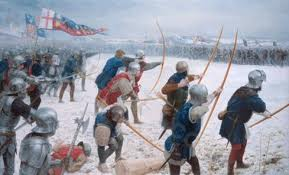
In terms of recalling or celebrating battles we need go no further than that oldest of feuding neighbours England and Scotland.  But first an internal English contest in 1461. Towton does not jog the memory like other battles but it had a huge impact on England and its history. It was the final slaughtering match in the War of the Roses. Recently a newspaper lamented the wilful forgetting of the battle but you can goggle the Towton Battlefield Society who are now actively bringing this battle back into public consciousness.

The list of English-Scottish battles is well documented. I have stood on Culloden(1746), walked Bannockburn(1314) and crossed Stirling Bridge where the Scottish defeated the English in 1297. While in Scotland I was not surprised to hear both talk and song recalling these battles. Granted, no big street demos and parades but remembered after hundreds of years. If something is burned into the memory and it means something then it will be remembered. It cannot be undone in the years to come. It is a fact.

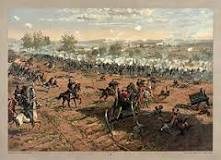
On the international stage we have the Americans recalling Gettysburg (1863) the turning point of their civil war. They love to have their actual re-enactments. Is that trivialising the slaughter? The Russians have celebrated the 300th anniversary of the Battle of Poltava in 2009 with T.V. shows, reports, conferences, etc.  September the 8th is a national holiday in Malta relating to the victory over the Ottoman Turks in 1565. Perhaps the 1st July as a public holiday here?

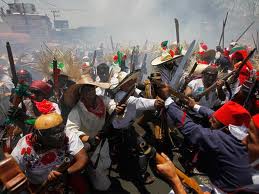
The Mexicans celebrate with style, colour and noise the Battle of Puebla over 150 years ago. On May 5th 1862 the Mexicans defeated a much superior French force.  The French proved much stronger as the war went on but this victory was seen as a morale booster in the Mexicans fight for survival. Simply Google ‘Cinco de Mayo’, and then look at images and get ready for a riot of colour. It makes the Orange day look positively drab.

The remembrance of an important battle is not some quaint ‘Proddie’ thing and I would argue that it is most definitely not an Irish phenomenon.

I do agree one hundred per cent that education is vital around the whole idea of history and celebration. I use the 36th Ulster Division to tell anyone who will listen about the 10th and 16th Irish Divisions. And I hold with respect all those Irishmen who went and fought against a common foe. I respect and visit the monuments and graveyards in France and Belgium that holds those soldiers. Maybe both sides of the community could do more to recall them with pride?

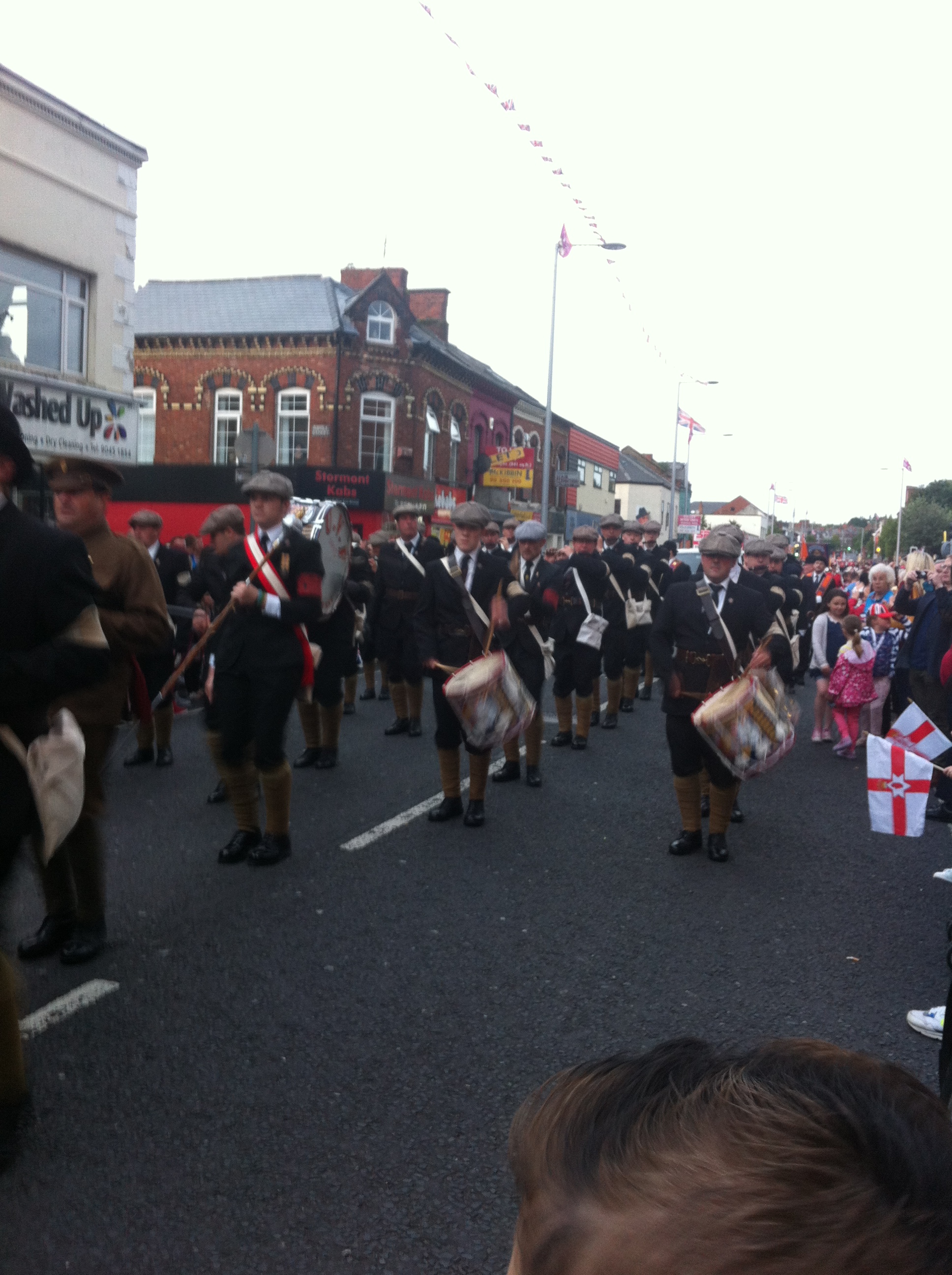
You say about how the Great War has slipped from living memory. Surely your article contradicts that with a picture of a uniformed band marching down from the Albertbridge Road nearly 100 years on? And as a young boy I was fascinated meeting my great uncles when they came to talk to my granny. Their brother, my great uncle, lies buried in France at the Somme having died there in 1916. That event, their brother, their loss, was a real thing in the family. It is with pride and dignity that they recalled him and their precious memories. I have stood at his grave a number of times and hope to do so in the future.

Yes, there will be a high level of interest in 2016. Yes, human nature is that it will wane over the following years. However human nature also is that, with the will, memories of past failures and victories will carry on for as long as people want.  Who knows the social, cultural, and political changes over 2 centuries? Maybe someday the Somme battle remembrance will supplant the Boyne celebration?


Share

A Response To Jason Burke’s ” Somme Burn Out”: Billy Joe

Somme Burn Out

This article gives food for thought. Although he 1st July parade through parts of East Belfast has always been a commemoration of the Somme battle in 1916, in many ways it is only in recent years that the empahasis has been on that.
When I was young and growing up in the sixties, fully immersed in both the Orange and Band cultures i wouldnt have been aware of why I paraded on the 1st of july. Indeed I can remember discussing it with others of my age and the consensus was that the battle of the Boyne was actually fought on the 1st but it took 11 days before the news reached Belfast!! There has been a great resurgence within the loyalist/unionist communities of late to learn about the First World War in general and the Somme in particular. So much so that many would disregard much of the other history of that time to concentrate on this one battle. It is understadable why when you consider the heroics of those who fought and died that day in an act of utter folly. Jason is correct when he says that we need to educate people further and in a more expansive way. In many ways this is already happening–the rise of Somme and similar societies–pilgrimages to the battlefields–lectures etc:but there is a need to widen the scope. Jason is also right to point out that there may be a heightened interest in the Somme which may dwindle after the 100th anniversary in 3 years time. it is debatable if it will be remembered in the way that the victory at the Boyne still is today over 300 years later.
An interesting aside in this article was Jason mentioning the names of the streets around the Upper Cregagh Road where he grew up–Bapaume–Somme etc: Across the city there was another cluster of streets also named in remembrance of victories and characters of another British Army campaign as part of an alliance that fought the Russian Empire during the Crimean War of 1853-1856. You had Balaclava Street–Inkerman Street–Alma Street–all named after battles. Sevasatapol Street named after the siege–neighbouring Raglan Street called after the Commander of British Forces during the Crimean War. These streets were all situated in the Lower Falls area, but I doubt they would have held the same amount of interest or importance to the residents as those on the Cregagh did.

Billy Joe

Share

South Belfast Young Conquerers Flute Band

South Belfast Young Conquerors F.B.


South Belfast Young Conquerors Flute Band was formed in September 1977 after the breaking up of Donegall Pass Defenders FB. Some remaining members held the band together and with community support a new band was formed and the marching season of 1978 saw the arrival of South Belfast Young Conquerors…

The band to this day is still situated in Donegall Pass the small and often forgot about loyalist enclave off the Lower Ormeau Road.

Over the years the band has attracted members from Lisburn, Newtownards and as far away as Castlederg…

The band was also the last loyalist band to walk up and down the Lower Ormeau Road accompanying Ballynafeigh LOL District number 10 to their annual church service in Belfast’s Ulster Hall…

For the last 24 years South Belfast Young Conquerors have had the pleasure of accompanying LOL 890 Kane Memorial to the field on the 12th of July. These numerous years have seen a bond created which hopefully will last for many years to come.

In 1981 the band was presented with standards of the 2nd Belfast Battalion Ulster Volunteer Force, to this day these standards and battle honours are carried with pride and dignity…

South Belfast Young Conquerors FB is an integral part of the Donegall Pass community and are participants in many community events throughout the year. We also hope that one day we can have our own premises in Donegall Pass as the places we use do not always meet our needs.

South Belfast Young Conquerors would like to thank member’s families, LOL 890, 2nd Belfast Battalion Ulster Volunteer Force and the loyalist people of Donegall Pass, Scotland and England for their continued support, it is very much appreciated.

Any person wishing to contact the band can visit their facebook page;

 www.facebook.com/pages/South-Belfast-Young-Conquerors-Official

No Surrender

Share

Are We On The Verge Of A Somme Burnout?: Jason Burke

Are We On The Verge Of A ‘SommeBurnout’?

Posted by on Jul 2, 2013 in The Great War | 0 comments

120184425__421123c

Monday 1 July 2013 marks the 97th anniversary of the opening day of the Battle of the Somme in 1916.   The opening day of the Somme battle is regarded as the most catastrophic episode in the prestigious history of the British army with 57,470 casualties on the first day alone and over 350,000 British casualties during the remainder of the battle which lasted until November of that year.  However it is clear that the Somme and the legacy which surrounds it can mean different things to different people, this could be said of all historical events but in the Irish context the Somme resonates more than most due to the cultural and political importance attached to it.  For this reason it seems that in Northern Ireland we are more exposed to memory and commemoration of the Somme, but how long can this continue?

On 1 July 2013 in East Belfast, Number 6 District of the Orange Order paraded the streets in what is known as the largest and longest running commemorative parade to mark the Somme in the world.  Simultaneously the nationalist residents of the Short Strand protested against this commemoration due to the fact that the parade passes near to their homes.  This powerful imagery encapsulates the variance in attitudes towards the Somme, even in one district of Belfast.  On one hand the unionists of East Belfast actively remember, while the nationalists of East Belfast actively remember to forget.  For those who actively remember it would not be unusual to commemorate the Somme several times per year, every year, not to mention the occasional active commemoration of other battles.  It is the Somme however which generates by far the most interest, and an abnormal focus, but there is a very good reason for it.

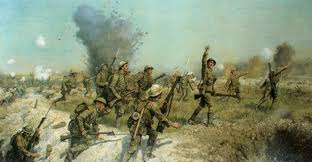
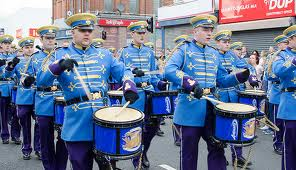
Ulster Volunteer Flute Band, East Belfast take part in the annual Battle of the Somme commemoration parade in First World War British Army Uniforms.

Ulster Volunteer Flute Band, East Belfast take part in the annual Battle of the Somme commemoration parade in First World War British Army Uniforms.

The Great War, and in particular the Somme battle, possesses a unique significance to Ulster Protestants, its context of the Home Rule crisis in Ulster and the existence of the U.V.F. gives it a definite political overtone.  Just as the Irish Volunteers had provided a ‘blood sacrifice’ in the name of the Irish Republic the Ulster Volunteers have created a similar legacy in the name of King, country and resistance to Home Rule.  This ‘blood sacrifice’ formed part of the psyche and the DNA of the newly created Northern Ireland state, and from this point onward the Somme would always have a special place in the hearts of the Ulster people.  It placed them firmly amongst a UK/European wide commemorative community which has provided a form of legitimacy to an insecure Protestant/unionist heritage.  By comparison the Battle of the Boyne celebration, now into their 323rd year, is an almost exclusively Irish phenomenon.  The Boyne is an example of an event which makes Protestantism/unionism feel unique and triumphant but inevitably comes with an isolation and a vulnerability which allows it to be bullied for being different by those who have been alienated by it.

Is it realistic to assume that the Somme will be commemorated with the same vivacity in 200 years as the Boyne?

As memory of the Boyne continued to age and became evermore distant it was timely that the Somme should provide an alternative and fresh focus, particularly for a fledgling nation.  The Somme fitted a deliberate unionist narrative, of that there can be no doubt, it continues to fit that narrative in 2013 by means of conflict resolution.  Where once there were masked gunmen on the gable ends of loyalist areas they have been increasingly replaced by effigies of Ulster Division soldiers charging across gable walls presumably towards the German enemy.  Where once we had combatants emerging from a conflict which ripped Northern Ireland to pieces we now have the 36th Ulster Division Memorial Association or ‘Somme societies’ which are seen as quasi ex-servicemen’s association for a section of those ex-combatants.  A Somme Association was created in 1990 ‘to ensure that the efforts of Irishmen to preserve world peace between 1914 and 1919 are remembered and understood.’  They did this by restoring the Ulster Tower at Thiepval and built the Somme Heritage Centre in County Down.  In the souvenir shop of the Somme Centre you can buy, Somme mugs, Somme pens/pencils, Somme keyrings, Somme ties, before leaving the shop with your goods in a Somme carrier-bag (presumably for an extra 5p)  Professor Keith Jeffrey has written of a visit to loyalist souvenir shop in East Belfast where he was able to purchase a Somme greetings card with James Beadle’s painting on the front, ‘On the outside was 1 July 1916-when the British Army suffered its greatest ever losses on a single day-and inside it read ‘Many Happy Returns of the Day‘.  These strands of our society (murals, societies, merchandise etc), however welcome they may be, have generated an infatuation with the Somme which puts us all in severe danger of a ‘Somme burnout’.  There are dozens of Somme based murals which remind us every day of the battle, dozens of Somme societies who host and take part in dozens of parades, services and commemorations which consistently keeps the Somme at the forefront of our thoughts, but crucially this is at the expense of other battles and even other wars.

While growing up in the Cregagh area of East Belfast I regularly played on the streets which were named ‘Somme Drive’, ‘Thiepval Avenue’, ‘Picardy Avenue’, ‘Albert Drive’, ‘Hamel Drive’, ‘Bapaume Avenue’ all names from the Battle of the Somme in 1916 and it was those street names which caused me to ask questions and gave me an initial interest in all things Great War related.  In Cregagh there is what’s known as a ‘colony’ of houses-homes fit for heroes-built for ex-servicemen by the Irish Sailors and Soldiers’ Land Trust in the 1920s.  Professor Keith Jeffery has commented on these same homes, ‘What is remarkable about these battlefield placenames is the way in which terrible sites of death and destruction are commemorated in what have become prosaic home addresses.  The French have a word for it: banalisation… But, all the same, one wonders how it was for those veterans returning from the horrors of war to be reminded of the trenches and the slaughter every day, with places where comrades had died becoming a mere address where people live.’

I somewhat suspect that those who organised the first Somme commemoration parade all those years ago in Ballymacarrett district would not have envisaged its format in 2013 where the alcohol consumed by the spectators and the joyful scenes along the route would lead one to assume that 1 July 1916 had been a resounding success.  If I were to conduct a very simple survey with the parade spectators how many would be able to tell me the basic facts about the Battle of the Somme? How many would tell me that the UVF fought at the Somme?  There would be those who would try to tell me that the UDA fought at the Somme.  How many would be of the belief that the Somme was a success?  Education is the key if we are to move in a direction which resembles forward.

My guess is that this frenzy of Somme related activity will intensify as we approach the centenary in July 2016.  I suspect that the momentum of this will carry through for a few more years before the focus begins to wane.  Elements of our recent troubled past will soon be commemorated as ‘history’ by our younger generation which will further divide their attention from the Somme and from the Boyne.  It is inevitable that these new generations will leave the Somme legacy behind as part of a natural and generational phase out over time, we are at pains to stop this because the Great War has quietly slipped from living memory.  What we can do however is educate our young people to commemorate in an appropriate and inclusive way, one which is forward thinking rather than backward facing, and one which has a wider scope than just the Ulster Division on 1 July 1916.

Share

Come Gather Round My Comrades On This First Of July Morn.

COME GATHER ROUND MY COMRADES ON THIS FIRST OF JULY MORN.


I was on the Progressive Unionist Party website this morning and discovered that they have posted the incorrect version of the above song, now widely known as England’s Treachery.

The reason I bring this to light, is because, this incorrect version contains inaccuracies which Republicans have used in recent years, in their attempts to belittle the sincerity of the sacrifice, described within the song.

The actual wording of the song, which was in fact written by a Loyalist Prisoner in 1973, is as follows.


Come gather round my comrades, on this first of July Morn.

When Ulstermen are rightly proud, of the Land where they were born.

I’ll tell you of our Volunteers, of how it came to pass.

Of how they rushed to England’s aid, so far from old Belfast.


It was in the dark uncertain days, of early World War 1,

When England’s shores where threatened, by the jackboot of the hun.

When England’s cry for help was heard, we bade them have no fears.

We sent across to Flanders fields, The Ulster Volunteers.

It was at the Somme that summer morn, the first day of July.

That twenty thousand Ulster Men, prepared to fight and die.

They proudly charged over no man’s land, the Red Hand flying high.

Their cries were No Surrender Boys, Old Ulster’s Battle Cry.

The Germans in their trench’s deep, could scarce believe their eyes.

When they saw those Ulster Men emerge, When they heard their Battle cries.

What kind of men are these they said, who would leave their Native Land.

To die upon a foreign soil, and what is that strange Red Hand.


So on and on they charged alone, where no one else could tread.

On the wire and in the mud, they left behind their dead.

The only Flag to fly that day, behind the German lines.

Was the old Red Hand of Ulster, with its shamrocks, IT HAD NINE.


Now those who lived, came home again, but what a change to find.

SOON the counties that made Ulster up, no longer numbered nine.

Three Counties they were sold away, by those they had fought to save.

Yes, this was England’s gratitude, for the sacrifice they made.


So gather round my comrades, on this first of July Morn.

When Ulster Men are rightly proud, of the Land where they were born.

Never more be led away, to fight in foreign lands.

Nor to die, for someone else’s  cause, at an English mans command.

NOR TO DIE, FOR SOMEONE ELSE’S CAUSE, AT AN ENGLISH MANS COMMAND.


How do I know the correct wording? I was that Prisoner. Charlie Freel.

Share

The Impotence Of The Orange Order: A response to John Coulter

John Coulter has the knack of creating stimulating debate in his many articles.  This latest should fare no different than anything that has went before. John argues that the Orange Order needs to play a more active role in influencing and in many ways leading a Loyalist revival.

Being a former member of the Junior Orange and for a very short period in the early seventies the Orange Order I have my own views on this.  I left a flute band as a sixteen year old in 1971 and within a year–following an ancient family tradition joined a local East Belfast lodge.  Within months however I was destined for Long Kesh. On July 12th 1972 I–along with my best friend who I grew up with–carried the banner for the first time–to the old field at Finaghy.  One year on and I was part of the Long Kesh LOL 11–at its inaugural parade around the Compound–replete with banner and band.  But the similarities between the two lodges stopped there.  Despite the fact that most of those men marching on the inside–to uphold their culture and tradition and to show solidarity to our Brethern on the outside–and apart from giving 2 fingers to the authourities–were Orange Order members–they had already been disowned by the powers that be in OO Headquarters. To be a Loyalist prisoner then was a total anathema to the OO.  Many individuals were expelled from lodges and the OO distanced itself from any of the paramilitary organisations.  Some ex prisoners upon release organised protests against the Orange and many were scathing of their non stance on the Loyalist predicament.  In the years to follow the OO were conspiciously missing on all fronts relating to the conflict.  Where they should have been leading they were skulking away.  Rather than this huge influential organisation lead from the front–they didnt even bring up the rear–they hid at a time when their influence would have been priceless.  In more recent times we have seen how they have mismanaged virtually every situation they have found themselves in.  On the Drumcree issue, when the world was calling for the OO to engage with residents groups–who they could easily have exposed as being nothing more than fronts for the IRA and who had no interest in compromise–their intransigence saw them prorcrastinate–to a point where that particular parade was lost for ever and many others suffered accordingly.  At this time the Apprentice Boys of Derry played a masterstroke in engaging with residents groups there and gave a lesson in how to play such situations.  My opinion now is that the OO are slowly beginning to realise that they are an organisation stuck in the dark ages–reticent to change–especially when asked to–and are trying to make up for all those lost opportunities dating back almost half a century.  I am also of the opinion that they will only engage when it suits them and will not dance to anyone else’s tune.  And sadly I firmly believe that despite it’s size and seeming influence in Protestant or Loyalist culture–they now have very little to offer.  I think there is an undercurrent of feelings amonst the Loyalis population that the OO had their chance–chances–and on each of those occasions abrogated their responsibilities–to a community that for a long time was rudderless and adrift.

Share