Category Archives: Current Affairs

For God And Ulster: Traditional Loyalism in Modern Society: Jamie Bryson

This article first appeared on www.jamiebryson.blogspot.co.uk

For God And Ulster- Traditional Loyalism in Modern Society

I have been greatly disturbed in recent months by a small but significant number of loyalists attempting to fundamentally alter the founding elements of traditional loyalism in the name of ‘evolving’ or ‘modernising’. This has ranged from a subtle but significant separation between God and our cause with many taking the view that Bible believing Protestantism should be kept separate from the cause of loyalism.
There has also been a rise in extreme socialist and liberal politics which is anathema to the reformed faith of Protestantism and even at times there have been attempts to use elements of traditional loyalism to justify this sharp shift to the extreme left of the political spectrum.
The notion that left wing politics are the only kind that is acceptable and/or beneficial to the working class is a carefully constructed mis-truth.
Loyalisms natural home is within Bible based Protestantism, it is this faith that has provided the moral and spiritual backbone to our cause for generations. It is from this reformed faith that sprang the motto ‘For God And Ulster’ that is proudly carried on our standards and engraved upon our murals and headstones all over this Country.
Attempts to pursue political or social aims that quite clearly undermine the word of God subsequently cast a dark shadow over the religious element of our cause.
It is a indisputable fact that the majority of those within loyalism would not be practising Protestants however it is important to keep in focus the moral and social stability that is provided from a continued reliance on Biblical principles.
Aside from the religious side of things, the attempts to dilute loyalism to become a ‘please everyone all of time’ modern liberal identity is the very thing that will sow the seeds of the ultimate destruction of the loyalist identity.
The attempts to re-brand loyalism into some kind of ultra accepting, liberal identity of appeasement and compromise with a strong reliance on extreme left wing politics will perhaps attract some young ‘hug the world’ type of voters, it will however more tellingly alienate the core base of traditional loyalists, many of whom whilst being a long way from practising Protestants, would still draw strongly on moral Biblical principles and would still argue fiercely for the merits of Protestantism and faith in God underpinning our cause.
This section of loyalism would be described as ‘intransigent, dinosaurs, bigots, sectarian, homophobic’ to name but a few tags that would be thrown towards us.
These words play to one of the fundamental truths of communication, words matter.
The use of these words has an automatic stigma, an automatic turn off affect in the minds of the majority of the population.
The truth of the matter is that it is very easy to throw these labels towards people who refuse to compromise their core beliefs. It is an easy way to discredit political arguments that do not embrace the ‘hug the world’ attitude. It is a favourite tactic of liberals and socialists.
There is no shame in refusing to compromise your core beliefs and there is no merit in diluting or changing your cultural or religious identity so as to ensure you offend no one or to appease those that wish to force change upon you.
Many men fought and died ‘For God And Ulster’ and it is proudly carried on many of our modern and traditional standards. A political move away from the social principles of Gods word towards a liberal and socialist doctrine of removing all traces of God from politics and society in general is a move that will provide for nothing but disaster.
Loyalism springs from the well of Biblical Protestantism, to try and dilute this to create some new brand of loyalism that is all embracing progresses so far from our traditional identity one could argue it is no longer even loyalism.
This new brand of loyalism that some are promoting has little that separates it from extreme socialism and given that I would contend that Sinn Fein and the SDLP are both Nationalist Socialists, when you take away the constitutional issue and cultural issues (which most of the tree huggers will readily compromise if they are forced to in the name of ‘equality’)  then there is very little that will separate the new brand of ‘loyalist’ from those who seek to destroy our Country.
They will find common cause in extreme left wing politics which will remove every trace of Godly principles from society, schools and Government and eventually provide the destruction of the stable communities and society that have served the United Kingdom so well for Centuries in exchange for a atheist ‘anything goes’ society without parameters or boundaries and where everything that anybody says makes them happy is accepted in the perverse name of ‘equality’.
This type of ‘Unionism’ has already been seen in all it’s glory with John McCallister, Basil McCrea and their NI21 party. This is the trajectory of attempts to liberalise loyalism and shift it sharply to the left of the political spectrum.
The traditional ‘loyalism’ and ‘Unionism’ was strong and uncompromising.
It was based and relied heavily upon biblical and Godly principles.
The Solemn League and Covenant which has been often described as the Birth certificate of Northern Ireland placed strong emphasis on many principles of the reformed Protestant faith.
Contrary to recent assertions the majority of the signatories of the Ulster Covenant would not have been left wing socialists but instead working class centre right Bible believing Protestants.
The attempts to turn a Solemn promise to strive for ‘Civil and Religious liberty’ into a weapon to be used in campaigns to undermine God’s word under the cloak of equality is a perverse and gross mis-interpretation of the original meaning.
Does anyone seriously contend that those who framed the Covenant would have in any way supported undermining Gods word in the name of ‘equality’. This Covenant was drawn up by those steadfast and resolute in their commitment to the reformed faith and therefore the Civil and Religious liberty they spoke of was not to be taken as ‘anything goes as long as it makes people happy’. It has to be taken in the context of the Christian context in which it was written.
The anchor of loyalism has always been the ‘For God’ element based within Bible believing Protestantism which has provided a stable backbone to the Loyalist cause.
This is not to say that every loyalist even believes in God, but the majority would have some resemblance of Protestant faith, especially older generations.
The argument I make is that if loyalism abandons the word of God it abandons everything it stands for and it abandons the fundamental principles that our forefathers fought and died for.
In one recent example a loyalist said to me ‘Yes but when you are saying For God And Ulster you just mean your God, what about all the other Gods?’
This is an example of how the liberalising of loyalism could lead to a frightening dilution of our identity.
Entwined within Loyalism is Protestantism, to crystallise the point I am making, the attempts to create a liberal socialist Loyalism will seek to separate loyalism from Protestantism. This would depart from everything that our forefathers fought and died to maintain.
To stay true to our founding principles we must stay true to the genuine principles of the Ulster Covenant and robustly challenge any attempts to dilute them or ‘evolve’ them to suit modern whims.
Loyalism does not need to move forward any further, we need to go back to what loyalism really is and what it always has been. It is based in the Protestant faith and it carries the motto For God And Ulster.
Stay true to who we really are.
FOR GOD AND ULSTER
 
Jamie Bryson
Share

Those Guilty of PIRA Genocide Should Stand Trial: David Nicholl

This article first appeared on ulsternews@live .com

Those Guilty of PIRA Genocide Should Stand Trial

Crimes Against Humanity

      Crimes Against Humanity

Guest writer, David Nicholl, former UDP political advisor for Londonderry & North Antrim, puts forward the case for war crimes’ charges against the PIRA leadership. 

“War must be, while we defend our lives against a destroyer who would devour all; but I do not love the bright sword for its sharpness, nor the arrow for its swiftness, nor the warrior for his glory. I love only that which they defend.” .  J.R. Tolkien

Geneva Convention states:

Genocide is “the deliberate and systematic destruction, in whole or in part, of an ethnic, racial, caste, religious, or national group”, [Article 2 of this convention defines genocide as “any of the following acts committed with intent to destroy, in whole or in part, a national, ethical  racial or religious group, as such: killing members of the group; causing serious bodily or mental harm to members of the group; deliberately Inflicting on the group conditions of life, calculated to bring about its physical destruction in whole or in part.

Now having read the above, what do you think has been happening to the Protestant Unionist People of Northern Ireland over the course of the past 4 decades and more? Is it not the case that the leaders of Sinn Fein/Provisonal IRA are and have been involved in acts that have the intent to destroy, in whole or in part, our nation; which contains our ethical , racial and religious ways, indeed the substance  of our being on this island?

I am sure, like me, many of you will agree that they have indeed engaged in such acts and continue to wage war against our people. This being the case, the question has to be asked, “why are these war criminals in Government and not on trial for offences against Humanity?”  Raphael Lemkin, in his work Axis Rule in Occupied Europe (1944), coined the term “genocide” by combining Greek genos (γένος; race, people) and Latin cīdere (to kill).

Lemkin defined genocide as follows:

“Generally speaking, genocide does not necessarily mean the immediate destruction of a nation, except when accomplished by mass killings of all members of a nation. It is intended rather to signify a coordinated plan of different actions aiming at the destruction of essential foundations of the life of national groups, with the aim of annihilating the groups themselves. The objectives of such a plan would be the disintegration of the political and social institutions, of culture, language, national feelings, religion, and the economic existence of national groups, and the destruction of the personal security, liberty, health, dignity, and even the lives of the individuals belonging to such groups.”

The Nuremberg Trails brought charges of crimes against the peace which sought and obtained convictions on the grounds of an unethical war,  waged on criminal grounds. These were based on a number of principles that are now enshrined in international law. They are:

Nuremberg principles

Principle I states, “Any person who commits an act which constitutes a crime under international law is responsible therefore and liable to punishment.”

Principle II states, “The fact that internal law does not impose a penalty for an act which constitutes a crime under international law does not relieve the person who committed the act from responsibility under international law.”

Principle IV states: “The fact that a person acted pursuant to order of his Government or of a superior does not relieve him from responsibility under international law, provided a moral choice was in fact possible to him”.

(a) Crimes against peace:

(i) Planning, preparation, initiation or waging of a war of  aggression or a war in violation of international treaties,  agreements or assurances;

The war that was rage on the people of Northern Ireland, regardless of their background, was done so in breach of all aspects of international law and, as such, those who pursued such a war a guilty of infringement on the articles set out. The fact that those who now sit in government are guilty of:

(ii) Participation in a common plan or conspiracy for the accomplishment of any of the acts mentioned (i).

And of using that conspiracy to murder large numbers of civilians in breach of Rome Statute of the International Criminal Court Article 8(2)(b)(iv), which “prohibits actions where the anticipated civilian damage outweighs the anticipated military advantage.”

What is now needed is a full investigation into the actions of the Irish Government and the leadership of the PIRA.  This would have to be an international body as the British and Irish governments are unwilling and unable to search out the truth

Share

Talking at Newtowncunningham: Dr. Anthony McIntyre

An analysis on the state of modern day Republicanism through the eyes of journalist and commentator Anthony McIntyre.  This speech was delivered to an audience in Netowncunningham Orange Hall on Thursday 26th September and certainly makes for very interesting reading.


What is it to be an independent republican? It merely underscores the point that within republicanism there is no one size fits all pigeon hole into which everyone can be neatly and conveniently slotted. There is a wide range of republican independents who hold to the view that partition should be ended, Ireland should be united, that the British state should have no presence other than diplomatic in the country, and that while the British remain it is wrong for republicans to become part of the British administrative system. It does not follow that they believe in armed struggle as a means to achieving those objectives. Since the Omagh bombing in particular there has been a lazy but often conscious attempt to create a discourse which would characterise all republicans opposed to the peace process as being in favour of armed strategies. While that has certainly been ruptured by the sheer diversity of republican voices critical of the peace process it nevertheless needs to be stressed that many republicans are supportive of the peace but not the process. Frequently, they object to the peace process because all too often the process has been strategically used to subvert the peace.


Read more »

Share

Newtowncunningham 1063: Dr. Anthony McIntyre

This article was originally posted on 27th September on www.thepensivequill.am

Anthony McIntyre is a former IRA life sentence prisoner who currently works as a journalist and researcher.  Upon release from Long Kesh in the early 1990’s he studeid at Queens University eventually gaining a PhD in History.  He is highly critical of the modern Sinn Fein and is the author of the book The Good Friday Agreement: The Death of Irish Republicanism published in 2008.
Anthony is the moderator of the blog The Pensive Quill.


I don’t recall having been inside an Orange Hall before. Unless somebody surprises me with something I have completely forgotten about childhood jumble sales or the like being held in these places, NewtownCunningham would, I am certain, be my first visit to one.

I had been invited there to speak at a seminar as part of the Creating Space for Learning and Sharing Programme, put together by the Community Foundation for Northern Ireland, and financed by the International Fund for Ireland. These days I try to speak at public events as little as possible, much the same for TV appearances. Unfortunately the Boston College affair intervened, compelling me to rise from my self-imposed torpor and go and bat at the crease. I have been told I have a good face for radio so I don’t mind doing that so much.

Since moving South the value of anonymity has made itself felt. There is much to be said for a quiet life, free from rows and controversy: a setting where children can walk the streets or go to school and not be made to feel uncomfortable because their parents don’t vote Sinn Fein.

Seeing no future for the republican project as an answer to the question of partition – and having grown disenchanted by the amount of energy and resources expended by so many in flogging a single dead horse – the need to further comment on republicanism just never seemed as pressing. Even post-Blanket blog writing was rarely carried out with the same enthusiasm or rigour: a certain lackadaisical property had embedded itself in the psyche, and in my mind my own writing had gone off the boil.   These days it is a rare occasion that I put in an appearance at much: my dubious logic for being an inveterate funeral evader is that as I won’t be going to theirs because they won’t be going to mine.

But yesterday I did turn up at Newtowncunningham Orange Hall, having been invited to speak there on the topic of independent republicanism.  I arrived after a four hour bus journey the previous evening from Dublin to Letterkenny during which I finished off Midwinter Sacrifice by Mons Kallentoft and then immediately started a review copy of You are Mine Now by Hans Koppel. On the blurb the husband of the central character is called Lukas, whereas in the book he is Magnus. Unproofed but hardly unread.  My passion for Scandinavian crime fiction remains unbounded. The thought of meeting Donegal Orangemen was not going to prevent me from going down my traditional reading route.

That evening in the Donegal home of a friend he and I drank whiskey and chewed the fat on all manner of things, even theology. I told him I hadn’t seen him in years to which he responded I had seen him in Belfast in January. Memory and its vagaries! I no longer trust it as I once did.

I had no sense of trepidation about speaking in an Orange Hall. If they listened, they did; if they hooted and tooted, they would do that too. Either way I would deal with it. Ultimately I anticipated no hostility and was not proved wrong. The hosts were graciously hospitable, brimming with rural charm and bonhomie. They served up a scrumptious breakfast before the business of the day began.

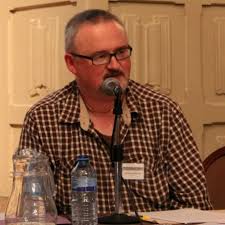
After a brief introduction to the history of Orange Lodge 1063 by two of its members, I took the podium. I gave a 20 minute talk which I had prepared in advance. It was a collection of ideas that I had given expression to over the years but had not pulled together in one piece. I sought to address what I considered to be the redundancy of the republican meta narrative and to outline one, inter alia, independent republican position. It seemed to go down well enough if the question and answer session that followed was anything to go by. I sensed that the Orange Order in Donegal felt it was tolerated rather than accepted as part of the community; that discrimination was insidious.

I was followed by Quincey Dougan, a marching bandsman from Armagh’s Markethill. He explained something of the culture of these bands of which he had been a member for 27 years. He readily acknowledged that he was a loyalist, even an extreme one, although what he had to say was delivered without any of the venom we have come to associate with extreme loyalism. Here was an articulate advocate of loyalism making arguments that republicans and nationalists at least need to hear before they decide to deconstruct and dismiss.

While listening to Quincey I got a phone call from the Irish News, which sort of surprised me as I thought they were not talking to me these days. While I might have problems with policy and procedures at the paper I would never snub its journalists and remain prepared to talk to all at the paper if they talk to me but not down at me. The journalist in question wanted to talk about Priory Hall. While not expecting to be treated fairly by the paper these days, I still spoke to her.  I see no reason not to talk to any particular journalist if they are news gathering. Later I was told I should have given it a miss as they would stitch me up. That remains to be seen. I am more than capable of battling my corner. But I didn’t feel I could stand speaking in an Orange Hall and get all high and mighty when asked to speak to a journalist from a paper I have some as yet unresolved difficulties with.

After feasting on some tasty Orange cuisine for lunch I wondered how it was possible that there could be any slim Orangemen. I was tempted to ask facetiously if we were simply the papists being fattened up for the kill that afternoon by a blood curdling mob screaming ‘for God and Ulster.’ The staff for the day were the essence of hearth and home.

Tommy McKearney took to the podium immediately after lunch addressing from a different angle the theme of independent republicanism that I had tried to cover in the first session of the morning. His argument while not altogether dissimilar to my own was more upbeat, stressing the plurality of key strands within republicanism; that it was not partition fixated. His emphasis was shaped by his strong affinity with the Left. I wondered to what extent some people were eager to speak rather than listen, if they even followed the news or simply wallowed in their own prejudices. Tommy was told that his party, to which he has never actually belonged, had only 2% of the vote. Some people might not always go back as far as 1690 but they seem to prefer the past to the present.

The last speaker of the day was Gary Moore, a former UDA prisoner. A somewhat pronounced Ballymena accent and an affected shambling demeanour did not disguise a very astute intellect that outlined the work he was doing in the loyalist community, much of it in the area of Ulster Scots. It was easy to detect a disdain in him for big house unionism as he narrated his impoverished upbringing.  One point that struck me was when he spoke of the killing of Robert Bradford and how that had impacted on perceptions. He fully understood how republicans viewed Bradford and his death but 2 elderly women, one of whom was his granny, if I am right, said that ‘if they will kill a pastor they will kill us all.’

The impact of that on a child growing up can only be formative. From that moment on life in an armed loyalist body was the pathway he felt destined to tread along. Republicanism will be enhanced by trying to understand the multiplicity of factors that feed into the motivation behind people embracing loyalism.

Time to leave, when it came, was hopefully only a temporary parting of the ways. I had met too many unionists in my day to think they were all monsters impervious to reason. I am as easy in their company as I am in the company of others I disagree with politically. There are many from the unionist community who happen to be much more liberal in outlook than some I have come across on the nationalist side. No side can claim a monopoly on tolerance and intellectual pluralism.

Apart from the virgin territory of an Orange Hall there was nothing new in it to me. I have been exchanging views with loyalists and unionists for two decades and have spoken to unionist audiences. The Orange were probably less familiar with it than ourselves. They had agreed to welcome two former IRA prisoners into their hall, and then found they got two atheists as well. If it was a bit much for god fearing, devil dodging Ulster Protestants they didn’t show it, bantering and joking with the rest of us. What did strike me perhaps more than anything else was the sense of humble pride they took in their own history: proud of their family and proud of their lodge. Neither brash nor boastful, they were people I could feel absolutely no enmity towards.

On departure, rather than spend four hours on the bus from Donegal I took a lift over to Monaghan Town where I could catch the Letterkenny bus on its return leg to Dublin later in the evening. On our way there I asked Tommy to show me the Omagh street where the effects of armed republicanism were all too poignantly felt in 1998.  I had visited many republican graves in Tyrone with Tommy shortly after my release from prison and curiosity rather than any sense of balance prompted my request on this occasion. Yet, visiting the street where republicans had wreaked so much devastation, I felt that if ever there was a spot to anchor the never again sentiment it was surely there. Perhaps the greatest besmirchment to the memory of the dead of Omagh was that physical force republicanism did not die the very same afternoon.

The events of Newtowncunningham Orange Hall reminded me not to mistake the margins for the centre. Northern society is a wide ocean where each side looks across at the other, seeing the turbulent waters that separate them as being of either an orange or a green hue with each trying to dilute the colour not to its liking. Yesterday’s seminar sends only a small ripple into the vast turbulence, and one that might as easily be forced back to shore come the next tide carrying a surfing flag waver of whatever colour.  Peace there might well be, but it is far from tranquil.

Still, I thought it worth a shot … of a different type.

Share

LOYALIST HAASS TALKS COULD BE BLUEPRINT FOR SYRIA: DR. JOHN COULTER

LOYALIST HAASS TALKS COULD BE BLUEPRINT FOR SYRIA


The forthcoming Haass talks to resolve the peace process crisis provide Loyalism with the perfect platform to become a template for a diplomatic solution to the Syrian crisis. Radical Unionist commentator and former Blanket columnist, DR JOHN COULTER, outlines his controversial thinking.

Not one drop of Ulster military blood must be spilt in Syria!

At first reading, this article may seem as going totally against my stance that the United Kingdom should have used tactical nuclear weapons against Saddam Hussein in Iraq, the Taliban in Afghanistan, and if the Western powers had needed – used nukes against North Korea.

I am completely against any Allied attack on Syria, not because I have become some kind of trendy, liberal peace campaign, but because it would be a huge tactical error and a complete waste of previous troops, many of whom will have Northern Ireland connections.

Just as the Irish conflict has been a sectarian was within Christianity – Protestants against Catholics – so, too, the Syrian crisis has become a vicious sectarian conflict within Islam, especially between the majority Sunni Muslim faction in Syria, and the Middle Eastern state’s minority Shia Muslim community.

Given this scenario, why would American President Barack Obama want the green light to send in his bombers against Syrian dictator Bashar al-Assad, thereby embroiling some of the Allied powers in what is only a muslim civil war?

If Iraq and Afghanistan are benchmarks, air raids will soon be followed by ground troops and the Yanks will commemorate the 40th anniversary of the start of the Vietnam War by invading yet another nation and butting their noses into a religious conflict.

‘Basher’ Assad is kicking the asses of the radical Muslim Brotherhood-run Free Syrian Army.

Okay, Shia Muslim ‘Basher’ may allegedly be using chemical weapons against the Sunni Muslim rebels, but if Obama’s planes begin bombing, the real people to suffer will be Syria’s 2.5 million Christians, who comprise 10 per cent of the country.

Ironically, ‘Basher’ Assad has a reputation of being more tolerant of Syrian Christians than the fanatical Muslim Brotherhood leaders of the anti-Assad rebels.

Many American and British troops are of Irish and Ulster decent. How many Irish and Ulster families lost loved ones in the needless conflicts in Iraq over Weapons of Mass Destruction which did not exist, and in Afghanistan to eliminate the heroin poppy industry?

We should not forget, that in many global conflicts, Ulster-born or Ulster-related troops have paid a key role. In 2016, the island of Ireland will commemorate the centenary of the opening day of the bloody Battle of the Somme on 1st July, 1916, when the British forces suffered some 56,000 casualties.

The 36th Ulster Division – formed from Lord Edward Carson’s Ulster Volunteer Force – suffered particularly horrific losses with some 5,500 casualties. Indeed, many Catholic nationalists who had signed up for the Crown and fought with the 10th and 16th Irish Divisions also suffered terrible casualties.

As the current Syrian crisis deepens on a daily basis, even with Obama struggling to compile a fledgling alliance to gain support for either bombing raids or missile strikes against Damascus, we should remember the words of the United Kingdom’s famous Second World War Prime Minister Winston Churchill – it is better to jaw jaw than war war.

If the Loyalist delegations at the Haass talks on issues affecting Northern Ireland can bring about an agreed solution which maintains the peace process, then the Loyalists’ Haass solution could become a major template for the Syrian crisis.

If the Haass talk run aground, the peace process will be in serious jeopardy, especially with discontentment in the Loyalist community running at an all-time high.

All the indications point towards the fact that a violent dissident loyalist terrorist network is emerging in the aftermath of the recent Marching Season and Union flag riots.

Indeed, a new dissident loyalist terror movement of three-man cells is being formed to attack the police, Sinn Fein, and Parades Commission members, according to a key loyalist strategist behind the new movement.

Speaking exclusively to me, the loyalist source revealed the cells also planned to attack a future republican parade – preferably a dissident one – with snipers.

In an equally chilling warning, the loyalist strategist behind the planned movement said that some DUP politicians “who have let the loyalist people down” would also be targets.

“Unionism needs strong leadership at this time from the top. We are not getting this from either the DUP or UUP. We need a traditional unionist from the old school of Unionism to lead us.

“We cannot see the point of attacking the Irish Republic as the battle will be in Northern Ireland. There is no point in adopting the republican view that one bomb in London is worth 100 in Belfast. We will get no support if we target places in Great Britain.

“The DUP is heading for a downfall because it has lost the discipline at grassroots level. The PSNI cannot live in Protestant areas without the support of the Unionist people.”

Referring to the recent riots around a contentious anti-internment rally in Belfast by republicans, the loyalist strategist said: “It seemed initially that loyalist tactics were working – flood the centre of Belfast with loyalists and bring the place to a literal standstill.

“But then the police began attacking our people with batons and water cannons. If our snipers have to shoot at the police, they will.

“This is not like the early Drumcree standoffs where many of the police officers were locals and known to people. Many of these riot cops used against the loyalists are from outside Northern Ireland, so we won’t be shooting our own.”

Another loyalist source not connected to this new dissident loyalist network had claimed that gunmen armed with M16 automatic weapons were among the loyalist crowd in Royal Avenue ready to shoot republicans if the anti-internment parade made it to the city centre.

There have been unsubstantiated claimed these gunmen were from the banned UVF. During disturbances following that anti-internment parade, more than 50 officers were injured according to PSNI Chief Constable Matt Baggott.

The loyalist strategist’s chilling warning sparked memories that the first police officer to die in the past Troubles was 29-year-old Protestant Victor Arbuckle who was shot dead by the UVF in the loyalist Shankill during serious rioting.

My source claimed the key pulses of the new loyalist dissident movement would be East Belfast, the Shankill, Whiterock, Carrickfergus and Coleraine.

“Sinn Fein is trying to create a situation whereby dissident republicans fall into line behind the mainstream republican movement. The effect of our campaign will be to bring British troops back onto the streets of Ulster – which is what Sinn Fein certainly doesn’t want.

“But the gamble we are taking is that if the Army does come back, would they start shooting at us loyalists?

“Loyalism is facing new threats from republicans. Take their Tyrone Volunteers parade. It was always held in a solidly republican area. Now they want to push the barriers that wee bit further by bringing the parade to a Protestant area.

“We have to be very careful how we organise as loyalism – like the dissident republicans – has been totally infiltrated by MI5 and MI6. There are people in loyalism who would sell themselves for a pint of beer.

“The lone wolf tactic of a single terrorist acting alone, which is favour by the extreme Right, is no use as people are not fully trained.

“The dissident republicans use cells of five members, but these can be infiltrated by the security forces, so we will use cells of three. MI5 and MI6 are now so sophisticated that you can no longer use conventional electronic devices.

“We want to base our network on the Greek terrorist structure – teams of three not known to each other. Even if one cell is taken out, it does not mean the end of the organisation.”

This was a reference to the Greek Cypriot terrorist group, EOKA, formed in the 1970s against British rule in Cyprus. EOKA stood for Ethniki Organosis Kipriakou Agnonos, which is Greek for the National Organisation of Cypriot Struggle.

“It’s like the honeycomb effect – just because you empty one comb, doesn’t mean the whole honeycomb is emptied. The smaller the cell, the more effective we become. The weakness will always be on how we train a cell.

“Once an overall training network is set up, that’s when it becomes infiltrated by MI5 and MI6.”

This is not the first time a dissident loyalist terrorist group has been established. In the aftermath of the original loyalist ceasefire in 1994, the leading Mid Ulster UVF terrorist Billy ‘King Rat’ Wright split from the Belfast-controlled terror group to set up his own Loyalist Volunteer Force.

After the 1998 Good Friday Agreement, other dissident loyalist groups emerged including the revamped Orange Volunteers, the Red Hand Defenders, and the Real UFF.

While mainstream loyalists rallied to the banner of the Combined Loyalist Military Command which called the 1994 ceasefires, dissident loyalists formed their own umbrella group called the Protestant Military Alliance.

The challenge, therefore, facing any Loyalist delegations at the Haass talks is to ensure that this emerging dissident Loyalist genie is returned to its bottle and the lid on that bottle firmly sealed.

Even if the Loyalists succeed in restoring peace in Northern Ireland as a result of the Haass initiative, it may not be enough to be a successful negotiated blueprint for the Syrian – and indeed, the wider – Middle Eastern crisis.

The influential Egyptian Society of Northern Ireland has its finger on the pulse of the crisis. In July 2012, there was a cautious welcome for the then Muslim Brotherhood-backed President Mohamed Morsi, who had overthrown the dictatorship of Hosni Mubarak.

But Morsi is out of power and the remnants of the Brotherhood have resorted to a vile terror campaign against the police and army in Egypt. As the Brotherhood has lost its street support, its more militant members have formed a brutally violent dissident Islamic faction, with some linked to the al-Qaeda terror network formed by the late Osama bin Laden.

The Muslim Brotherhood was formed in Egypt in 1928 by an influential religious leader, Hassan al-Banna. Rather than a political movement, al-Banna wanted the Brotherhood to become an Islamic religious organisation which would spread a militant Muslim message well beyond the boundaries of Egypt.

Ironically, just as in 1928, the modern-day Brotherhood aims to put in place an agenda which is attractive to young Muslims. Its leadership wanted the Brotherhood to spread globally under the banner that it was a radical religious movement to combat the spread of atheistic communism.

In Egypt, the Brotherhood was blamed for an unsuccessful assassination bid on one president and the successful murder of another. Under Morsi, the Muslim Brotherhood came to power for the first time after years of persecution, but quickly began to mishandle the situation in the country.

Morsi’s major problems stemmed from the fact that he began to release Muslim Brotherhood prisoners similar to the way in which in Northern Ireland, Loyalist and republican inmates were given early release under the terms of the 1998 Good Friday Agreement. As with Northern Ireland, this created a lot of concern in Egypt.

Morsi was also hit with a petition signed by 22 million Egyptians calling for him to call a referendum if he should serve his full term as President, or should be call elections and step aside immediately. Morsi’s refusal to grant a referendum sparked the second student-dominated revolution which overthrew both Morsi and the Muslim Brotherhood.

The Muslim Brotherhood would never accept offers of talks, demanding that Morsi be re-installed as President before any negotiations for a new Egyptian constitution could begin – a demand the majority of Egyptian people rejected.

The Muslim Brotherhood still see Morsi as the rightful President. Initially, the Brotherhood’s sit-ins were peaceful, but soon guns were produced at the ensuing riots. The Egyptian army took decisive action to dissolve the Brotherhood sit-ins, but the Brotherhood began arson attacks against police stations in retaliation.

With the arrests of the Brotherhood leaders, the organisation is becoming more hard core and more violent. Essentially, the Muslim Brotherhood is trying to convert the political situation into a religious crisis.

In Syria, the people of the Free Syrian Army don’t want to talk politics – they want to talk about the situation as if it is a religious conflict among Muslims.

Two Cairo university students, brother and sister Bassem and Nouran Fawzy, told me how they risked their lives to take part in the two Egyptian revolutions, firstly against Mubarak and then against Morsi.

They want the liberal politician Mustafha Hegezy to become president as he is a big hit with Egypt’s youth. Just as we have the scourge of the ‘brain drain’ in Ireland where thousands are leaving the island, so the common chant of many Egyptian young people is – ‘happiness is leaving Egypt’.

While the Egyptian and Syrian conflicts are internal, Northern Ireland should not tumble into the pitfall of dismissing them as a Middle Eastern problem. Like both world wars of the 20th century, there is the real danger Syria could escalate into a global conflict.

Many in the anti-Morsi camp suspect the Brotherhood has been funded to the tune of eight BILLION dollars by Obama, who basically wants to use the Brotherhood to control as many states around Iran as possible.

Obama has been left with egg on his face because the Brotherhood has lost power in Egypt.

Many Egyptians draw a comparison with the Americans trying to run the Brotherhood with the way in which the British manipulated Sinn Fein through agents, informers and funding to eventually run a partitionist parliament at Stormont.

Allied involvement in Syria is only a springboard for the real offensive – the invasion of Iran. The US wants to use its manipulation of the Muslim Brotherhood to control the Middle East.

The Brotherhood now has significant grip in Libya, Tunisia, and Yemen, with links to the al-Qaeda movement.

Obama’s billions were to be used by the Brotherhood to placate Israel by expanding Gaza and the Sinai area for the Palestinians.

The Syrian conflict is an inter-muslim civil war between the Yank-funded Brotherhood and its pals in Hamas, and ‘Basher’ Assad with his Shia mates in Iran and the radical Hezbollah terror group.

To bring real peace to Syria, if the Assad regime is toppled, it would be best if a moderate Sunni Muslim became the new democratically elected President. The Muslim Brotherhood in Egypt – because it is closely aligned to the Muslim Brotherhood in the Free Syrian Army – wants the US to strike in Syria.

Liberal Egyptians activists who do not support the Muslim Brotherhood warn that the Brotherhood has been attacking Christian churches, cathedrals, shops and homes when it was in power in Egypt. The same fate awaits Syria’s Christian population if the US and UK backed Free Army wins in Syria.

Throw into this mix that the US can use Syria to attack Iran. American forces may even use its NATO bases in Turkey to attack Syria.

Iraq is already descending into an Islamic civil war, and Afghanistan is going the same way. While an Egyptian royal family exists in exile, young anti-Muslim Brotherhood activists insist any return of the monarchy is a non-starter.

Clearly, too, some of the Gulf states, such as Saudi Arabia, are worried by the spread of the Muslim Brotherhood and especially at Obama’s perceived support for this radical Islamic movement.

Let’s hope Obama has a Biblical-style Road to Damascus conversion about bombing Syria, because like many wars over past centuries, it will be people from Northern Ireland who will do the fighting and dying.

Could hope be on the horizon? If the Loyalists can use the Haass initiative to bring an end to the sectarian strife in Northern Ireland around parades, flags and emblems and the street protest, then just maybe more Ulster lives can be saved if that template can be applied to Syria.

It does seem very strange, however, that supposedly Christian Western leaders are backing the vehemently anti-Christian Muslim Brotherhood in the Syrian crisis. The bottom line is, Syria is really only a training exercise for the real agenda – the full-scale invasion of Iran. Then again, at what point does Israel decide to enter the conflict?

And just because the Haass talks yield results in Northern Ireland, does not mean success in Syria.

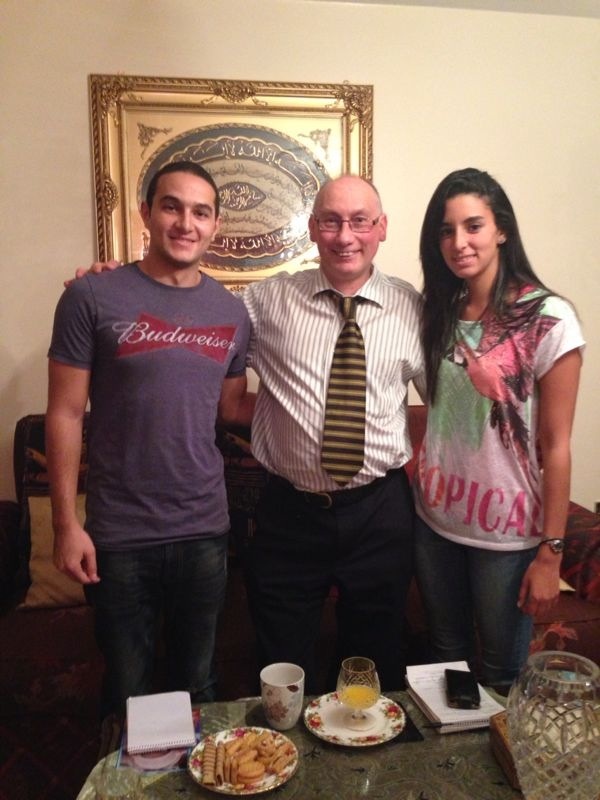
Our caption shows Radical Unionist commentator, Dr John Coulter, (centre) with Cairo university student activists who took part in both Egyptian revolutions, brother and sister Bassem (left) and Nouran Fawzy.


Share

The ACT Initiative – Greater Shankill

Three years ago the Springmartin community in West Belfast decided to build a small garden of reflection to remember the sacrifice of those who fought at the Battle of the Somme. The stunning 3 column monument was the work of local artist Ross Wilson, the columns remembered the men of the 10th and 16th Irish Division, the West Belfast Volunteers and the 36th Ulster Division.
Read more »

Share

East Belfast Festival

‘Pieces of The Past’ is a partnership project.  There are seven groups involved.  Chartner NI, Forbairt Feirste, Shankill Women’s Centre, Failte Feirste Thiar, Epic and Belfast Taxis Community Interest Company all working with Falls Community Council’s Duchas archive to gather oral history interviews and work across divisions. Part of the work is to organise events relating to our history.  The sixth and most recent is this one advertised at the East Belfast Network Centre, Templemore Complex in partnership with the East Belfast Festival.  Come along if you can.

Share

DUP/SF: Strange Bedfellow’s: Billy Joe

DUP/SF: Strange Bedfellow’s: Billy Joe


If it’s not Parading Issues it’s Educational Bills.  If it’s not Victim’s Rights it’s the MLK shambles. There’s flags, and culture and shared space and Spad’s and spats and all sorts of shenanaigans between the two most powerful political parties in Northern Ireland.  It’s generally a case of -“you say Tomato, I say tomato”-and if we didnt know any better we would think that both parties actually had a dislike for each other.  On the one hand we have a political machine who have powered their way to the top and brushed all nationalist opposition aside in the process.  In the wake of the Hunger Strikes of 1981 and the reconstruction of the Sinn Fein movement that would pave the way to Irish unification in record time it is ironic that this parties current suichan na cumhacta seems to be at BT4 3EX–and with no apparent sign of relocation.
On the other hand we have in many ways another powerful machine who have muscled their way to the pinnacle as far as “unionist” votes go-by hook or by crook.  Along the way they have bulldozed aside the mostly puny opposition and have usurped and cajoled as they went. The only thing that hasnt changed about this party in their forty odd years of existence is their willingness to treat the working class electorate with absolute disdain and disrespect.
Both parties are extremely well matched.  Both have a ruling junta that controls and manipulates the minions and equally have a win at all costs manifesto.  Public opinion is lost on both amidst their arrogant supremacy.  Both are dogmatic in their assertions but with the added proviso that their disciples not only believe–but that they believe what THEY want them to believe.
This poem aptly describes this unholy alliance and goes some way to illustrating their conniving ways.


A Lovely Shade of Khaki.

Vibrant hues—views from two sides—once a million miles apart
Tones garish in their stance—reluctant to depart
Attitudes entrenched—centuries in the making and staining
Those disciples –with discolouration of the heart.


A new alliance—an association with an underlying pact
Defraud the five eighths and withhold from them the facts
Painting pretty portraits with their broad and ample brush
And glossing over a canvas to conceal their filthy tracks.


The Orange—men and women immersed in a self made mix
Of distrust and hatred and disdain for those of a different shade
And Green—equally as disparaging—who treat tradition with contempt,
And feign an interest in anything that is opposition made.


The blend–a tertiary concoction—an unpalatable tone
A dull and tedious tinge manufactured for themselves alone
Dirty brown in colour–mucky in texture—unpleasant to the touch
Repellent to the thinking man who won’t be thrown a bone.

                                                                Beano Niblock 2012


Share

Walls Do Not A Prison Make

They said that it could not be stopped, they said that everyone else was aboard, they implied that we, the Old Volunteers of the seventies would have to abandon our principles and the cause for which our Fallen Comrades died, by colluding with the IRA/DUP in a sham peace and nonexistent reconciliation, centre at Long Kesh, or else our story would be falsely told by civil servants.

Our reply was simple, we the unrepentant Old Volunteers of the seventies, who still remain willing defend the democratic right of the Loyalist Working Class, to defend, by use of force if necessary, the democratic right of the People of Northern Ireland to decide their own future, are the only people creditably qualified to tell our story.

If our story and the sacrifice of our Fallen Comrades is truly worthy of remembrance, then it will be reverently remembered by Future Generations of our  Own People where it matters most, in our own localities, totally untarnished by collusion with our unrepentant enemies, who are still trying by deception to usurp the democratic right of the People of Northern Ireland , to decide their own future.

If our story and the sacrifice of our Fallen Comrades is unworthy of remembrance, then it will die in the grave with us, the Old Untarnished by collusion, Volunteers of the seventies.

Charlie Freel.

Share

Northern Ireland: History’s Hard Lessons: Guardian Editorial

Northern Ireland: history’s hard lessons

It takes generations, even centuries, before the wounds heal sufficiently for rival communities to share a historical narrative


      It seemed like a good idea at the time. Northern Ireland‘s Maze-Long Kesh prison, scene of the IRA’s bitter 1980s hunger strike, was once  synonymous with conflict. But in 2000, in the wake of the Belfast peace agreement, the former prison, with its once-famous H-blocks, closed for good. In 2006, demolition of most of the old buildings began and, earlier this year, Northern Ireland’s power-sharing government finally announced plans to develop the site. Where prisoners were once held, there would now be an agricultural show arena and an international peace centre, with designs by Daniel Libeskind, architect of the rebuilt Ground Zero site in New York. Some £300m would be invested and there would be 5,000 permanent jobs. It was, said first minister Peter Robinson in April, “a fantastic outcome”.

      But that was then and this, a mere four months on, is now. Yesterday, that same Mr Robinson suddenly slammed the brakes on the peace centre part of the huge 350-acre site, a piece of real estate four times larger than London’s Canary Wharf, saying that his Democratic Unionist party could no longer support it. His reasons belonged to Northern Ireland’s era of conflict, not to today’s era of peace. Fears, eagerly fanned by rival unionist parties, that Sinn Féin would try to turn the surviving prison buildings into an IRA shrine have undermined the first minister’s ability to deliver on the peace centre. Mr Robinson has not lost confidence in the wider Maze redevelopment project. But a peace centre is simply now too hot to handle.

      This is a depressing development. Cross-community co-operation in Northern Ireland is actually stable and well-embedded. A peace centre at the Maze, with or without an inescapably sensitive permanent exhibition addressing the province’s divided history, would be an actual and symbolic part of embedding it further. But it is not to be. The subject is simply too sensitive. The suspicions, some of them mischievously promoted, are very potent. It is another corrective, in a year with too many of them for comfort – recent showdowns over marches among them – to the belief that Ulster’s sectarian divides have somehow been magically banished from the scene.

      But perspective is also in order. It takes generations, even centuries, before the wounds heal sufficiently for rival communities to share a historical narrative. Think how difficult it is for Spaniards, Americans, or the English to agree accounts of their own civil wars, even today. The people of Northern Ireland are no different in finding these things hard – and have had a lot less time. Fewer suspicions and more co-operation would obviously be desirable. But in context, even now, the big reality is not Northern Ireland’s enduring divisions but the progress still being made to reduce them.

      www.theguardian.com


        Share