Category Archives: prison life

The Books Have It-3 —by William

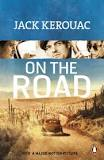
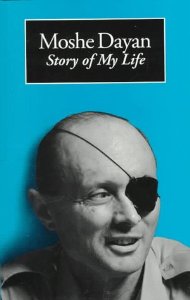
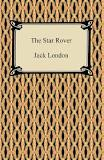
Your book articles have certainly brought back old memories Billy Joe and it would be great to hear of a few others commenting such as Charlie did given that there was an abundance of books passed through the jail and compounds about ‘everything under the sun’.  I have to say, I can’t argue with your recollections of you having lent many a book and never had them returned but I hope you are not including me in that category!  Just think, had you have operated a more organised lending service you could have made a fortune in people owing fines for late returns. Well I finally got round to writing this last week and have to start (reluctantly) by agreeing with you about Tarantula.  However, I should add that since it was written in the mid- sixties when the music drug scene was at its height I can forgive Dylan with writing only what can be described as a book about chaos.  That said, I have read it six times and currently have two different copies. As a genre, the book is hard to define but is filled with literary references to fictional and factual characters, such as Rain Man and President Plump or Ezra Pound and T. S. Eliot which always intrigued me and sent me on searches to find out more about what I’d read.  In an era before the internet, books (and for me the music of Dylan) was our font of learning which opened a new world inhabited by the likes of Wood Gutherie’s ‘Bound for Glory’ and Kerouac’s ‘On the Road’.  Likewise, it was music that directed me to a lot of books I would otherwise probably not have heard of or never have read, such as, William Blake’s ‘Songs of Innocence and Songs of Experience’ very influential in the music of Van Morrison and Arthur Rimbaud’s ‘Je est une autre’. A lot of the books you mentioned I now recall reading particularly those whose topics were of common interest to us all.  I’m thinking about the many Vietnam books (I bought Herr’s Dispatches last year), the prison ones of Jimmy Boyle (I still have both of those) and the boxing biographies with ‘The Sixteenth Round’ having a special interest for me for the connection between Dylan and Carter.  From the vast range of books you recall Billy Joe we could never be accused of limiting our reading, (even though yours was an acquired taste), but it’s hard to ignore the common interest we all had in certain topics such as you have mentioned about the Mossad as Charlie did about the general history of Israel.  In fact, the fascination we all seemed to have with The Six Day War meant many a book on the topic was well circulated and I recall reading Moshe Dayan’s ‘Story of my life’ in which it was well documented if memory serves me well. My dad was an avid reader and used to pass them in to me when he was finished.  In the ‘First Blood’ style, you may recall one he sent me called ‘Open Season’ by David Osborn which was adapted also into a film with William Holden and Peter Fonda.  A fascinating book he also got me was by Daniel P. Mannix called ‘Those about to die’.  It was a factual account of the Roman arena and the gladiators which gave a chilling description of the Roman’s thirst for blood sports.  In fact, it’s a collector’s item now and he paid seventy quid a few years back for a first copy.  It inspired me to learn more about ancient history and I sat an ‘O’ Level in the compounds on the subject. A number of books with a connection to incarceration I found interesting and memorable.  A novel by Jack London springs to mind – ‘The star rover’ was a work of fiction about a guy on death row but it still intrigues me how I’m able to recall the opening lines when the author writes, “All my life I had an awareness of other times and places.  I have been aware of other persons in me”.  I think this particularly resonated with my own experiences which ultimately led me to incarceration and was in fact a significant feature in me wanting to record the narratives of other prisoners, which you know I did at length.  In fact, this is also true of the previous work of Rimbaud which I mentioned as the French title means ‘When I is another’.  This fixation on prison is also found from a different point of view in the Albert Pierrepoint biography.  Britain’s infamous hangman, I have since learned, ironically was opposed to capital punishment.  More fascination with death and murder nudges me to Bugliosi’s ‘Helter Skelter’ or ‘In Cold Blood’ by Truman Capote.  Again, this is an example of literature which has ‘stuck’ with me as I can also recall in the inscription in Capote’s inside cover, two lines of  which reads “Freres humains qui apres nous vivez, N’ayez les cuers centre nous endurcis”.  Now I’m not well versed in French but again I have been directed through books to want to know more and this was from Francois Villon, the 16th Century poet who wrote this in prison before being executed, and translates into “Human brothers who live after us, Do not have your hearts hardened against us”.  How relevant is that today?
Share

THE BOOKS HAVE IT–2.

THE BOOKS HAVE IT….2.

Being a voracious reader on the outside my introduction into remand in Belfast Prison—firstly in 1972—and once again for most of 1975—meant that it was a constant search and struggle to find suitable reading material.  You accepted books from any source possible—once from an IRA prisoner I met during a dental visit—and many times from screws.  Sometimes—many times in fact—you read books for the sake of reading and in many cases books you would normally give a second glance to.  There were books that did the rounds and were read by virtually everyone.  There were others that became coveted and were worthy of multiple reads.  I saw books torn in half when a reader got to a certain point to allow a friend to commence it while he finished.  There were fads, habits, rituals, penances, recommendations and duties.  There was the obligatory scan of the Bible—usually when ensconced in the punishment cells where other books were like gold dust and as obtainable as something pleasant to eat.
Remand time to me seemed to consist of a lot of down time when we were locked up quite a bit with virtually no recreational facilities—no television—and usually limited access to a transistor radio—so reading was one way of passing the time.  “C” Wing in the early seventies wasn’t exactly a haven for books—good or otherwise so basically you accepted what came your way.  I was seventeen years old during my first remand and many of the others were of a similar age—but most of the books were hand me downs from the older remand prisoners and these tended to be Westerns or War novels.  It was here I was introduced to JT Edson and became familiar with Dusty Fog and the Ysabel Kid.  Jack Schaffer’s Shane was much read and was passed about quite a bit.  Louis L’Amour was another favourite of the time—books of his that readily spring to mind are The Ferguson Rifle—Shalako—and the Sackett novels.  As Gaudeamus previously mentioned the Sven Hassel books were particularly widely read and became the topic of many conversations over a cup of tea or a dander round the exercise yard.  It was common to hear the prisoners relate the exploits of Porta, Tiny and Julius from the Panzer division full of renegade soldiers who no one else wanted. Legion Of The Damned is the one Hassel book I remember most.
By 1973 I had been shifted—against my wishes it has to be said, but on the back of a 4 year sentence—to Long Kesh and into Compound 11.  There were more like minded people here and many who read much more than I did.  The substantial Compound library was supplemented by books sent in through the Welfare system on the outside.  You still had the usual Westerns and War novels but increasingly, to me it became noticeable that many other more enlightening types of books were being read.  One of the first books I remember borrowing was Dee Brown’s Bury My Heart at Wounded Knee and also around this time I started reading Venceremos by John Gerrasi—the writings of Che Guevara.  I have to say that at this particular time I found it a little hard going and it was quite a while before I revisited that particular book.  Suddenly I was spoilt for choice and time permitting—because by now I had a routine that gave very little free time during the day—I read as much as possible.  Because of a new awareness and promptings from the more politically astute comrades my reading became more selective—although I still enjoyed the escapism of novels—I went through most of the Harold Robbins novels up until that date—A Stone for Danny Fisher and Never Love A Stranger were the best of these.  Politically the stand outs were ATQ Stewart’s The Ulster Crisis—greatly read throughout the compound—The Making of Modern Ireland by JC Bekett, that to me gave a different perspective on Irish history—and a biography of the great preacher Charles H. Spurgeon—loaned to me by one of the “good living” prisoners.  “A lie can travel halfway round the world while the truth is putting its shoes on”….was a memorable quote from Spurgeon.  Throughout the years I was in Compound 11 and subsequently 18 and then 21, I have to say that I got through a huge amount of reading.  More than most but certainly not as much as some—like Billy Strain who was prolific.  It wouldn’t have been unusual for Billy to go through 2 or 3 novels daily!!  Books that were of particular interest to me tended to be read and re read.  Ones that fell into this category were Mario Puzo’s, The Godfather—which remains one of my personal fiction books.  Again like Gaudeamus I went through the Vietnam thing.  Dispatches by Michael Herr remains one of the greatest books about combat I have ever read.  I have lost count of the copies I have gone through—lending them out never to be returned.  I still have a copy today!!  If I Should Die In a Combat Zone—Nam—Sand in the Wind—A Rumour of War—Dien Bien Phu—Going After Cacciato—the list is long.  In between all the serious or academic reading much of my time was devoted to novels of all descriptions. Recommendations from others or trying someone new—it didn’t matter.  What you did find was that a good book passed round like wildfire and if you read a new author you tended to go through their catalogue quite quickly.  Stephen King—Robert Ludlum—Jack Higgins—Joe Poyer—all had their fans.  Wilbur Smith was an author who caught the imagination of many.  Maybe it was because he related to the adventure of the wide open spaces—usually in Africa—something that wasn’t attainable to the “captive readers”.  Like most others I read them with relish and would have no problem still revisiting the trilogy of When The Lion Feeds—The Sound of Thunder and A Sparrow Falls relating to the lives of the rival families The Courtneys and The Ballentines.  Superb!!
I developed quite an interest in American Crime novels around this time—an interest that has grown with age.  My introduction to this genre was through reading a fine novel called The Friends of Eddie Coyle—later turned into a movie with Robert Mitchum—by George V. Higgins.  I was hooked from the start and after going through his catalogue I branched out to—James M. Cain—Jim Thompson-Ross McDonald-Donald E. Westlake.  I was insatiable.
Books—whether they were factual or fiction-which were prison related always held an interest and some were more memorable than others. Previously you have read about the Jimmy Boyle books—both essential reading as was–A Day In the Life..No matter how depressing it was!!  Others that stand out include Midnight Express—Go Boy by Roger Caron, a story of a number of Canadian institutions visited by the author throughout his life—The Executioners Song by Norman Mailer—the trial, imprisonment and public execution of multiple killer Gary Gilmore and Brubaker—the story of the Arkansas State Prison scandal of 1967 uncovered by author Tom Murton.
It is impossible to pick any one book throughout my time in the Compounds that I could say was my favourite.  Suffice to say that I read thousands—many forgettable but many more I remember fondly.  Life in Long Kesh would have been much more difficult without the endless supply of books and for this avid reader, it made a Life sentence at least a little more attractive.


Billy Joe

Share

The Books Have It….

The Books Have It.

One of the common items throughout my life sentence was books. From the moment I went on remand in the Crum to the very last days I was able to read. I’m writing this article to ask other ex 21ers what books they recall from their stay in C21. Or indeed any of the cage men.  When I first entered the Crum it was said that I was under a threat from the Provos. As a result I ended up in protection in ‘B’ wing with Basher and Billy from the Shankill. It was here I was first able to read the Roman Catholic bible. I had heard that the two bibles were different so now I had a chance to read those books that had been dropped from the Prod bible. To be honest the Apocrypha didn’t exactly rock my world, just raised questions as to who selected what books did, or did not, go into the Bible.

The Crum was a hellhole in the ‘70s and so it was with suspicion that I took a book offered me by a screw.  It was ‘Run Baby Run’ by  Nicky Cruz. Basically this was about gangs in New York and one finding god and salvation while he lost his great friend.  It was a good book. When I got to Compound 21 one of the first books I was given was ‘Discourses’ by the philosopher Rene Descartes. Quite a step up from the Beano and Dandy.  Education had a strong base in Compound 21 so it was easy getting hold of good books.

There was any amount of books in the cage and besides needing books for studying there was a library which we all shared.  At one time a number of men got together and formed a book club. Money was chippe din books bought and then everyone would have access to those books. Any of us could get books left in our parcels. I was able to read many books but a theme was the Vietnam War. One of the best books for me was ‘Dispatches’ by Michael Kerr. It was early 1980s and the summers, as I recall, were far better than today. I was able to sit out on a flat roof reading this brilliant account of the Vietnam War and I could see and listen to the British army helicopters lifting in and out of the Kesh. Talk about creating an atmosphere. One book that was widely read (but now we are not so sure how much it is fact or fiction) was the ‘Devils Guard’ by George Elford. Basically this was about Vietnam after the French had got involved but before the Americans got embroiled. The twist here is that the story centres on ex Nazis who had skipped the end of the Second World War and could use their experience in this theatre of war. There are plenty of dirty deeds and a different way of fighting terrorists. On the lines of war there was a curious link with the Book ‘Firepower’. What links an ex British soldier (who was Greek), turned mercenary, the Troubles and the Angolan Civil war? The self-styled Colonel Callan (he was a corporal) led a bunch of mercenary’s during  Angola’s bitter civil war in 1975.  Callan was infamous for committing a few atrocities along the way. When captured the government could not break him. In order to do so (the story goes) they dug up Callans best friend and threw the remains into the cell with Callan who proceeded to crack up. His link to the troubles is that he, with some loyalists, committed an armed robbery around the Bangor area which led to him being booted out of the British Army. Callan was shot by firing squad in 1976.

Another main theme of books and closely related to what we were doing there was the Troubles both current and previous. I read every book I could on the Troubles.  From Sarah Nelsons, ‘Uncertain Defenders’ to Rona Fields who wrote,  “Children of the Troubles. A society on the run”.  I actually met with Rona on a visit one day when she was over from the USA.  The First World War loomed large in C.21. I lived in the middle hut which was called Passchendaele after the battle. There were quite a few books on the subject. It was amazing years later to actually stand on the places like Messines, Albert and Thiepval that I had only read about before. There was the essential ‘History of the 36th (Ulster) Division’ by C. Falls. ‘The Ulster Crisis’ by ATQ Stewart.  Again, I had learned nothing about this history in school and yet it had meant so much to our society today.

However the book that stands out for me was George Dangerfield’s ‘That Damnable Question’.  (the title is  a quote from Winston Churchill) It’s about the 1916 – 1922 period and it was amazing for me to read. We were taught no Irish history at all in our school. A common experience for both RCs and Prods I have found out! This was an effort to record events properly and not with a bias to one side or other. Although it’s a debate whether history can be written with total impartiality. Politics was another big aspect of life for me. I recall being in the hospital for a period when the Governor walked in to do his rounds. He saw a copy of the ‘Crossman Dairies’ on my bed. He appeared quite surprised for me to be reading that. Richard Crossman was a leading Labour MP for years. Apparently his diaries formed part of the basis for the funny TV show ‘Yes Minster’.

On one occasion in the boards (punishment cell) I was able to get the book “10 Rillington Place” about the English killer John Christie. When the door was next opened I handed the guard the book. “Not like it” he says. ‘No. Finished it. Anything else?’ Amazing what you can read when you have the time. One book that was linked to my psychology studies which I have since borrowed again was ‘War on the Mind’ by G Watson. Incredible book and based very much in the real world. I recall in the book the actual World War 2 story which is the basis of the film ‘Dirty Dozen’. Serving prisoners and convicts in America  were given the chance to fight in Europe. Most did so,  many with distinction.

Science fiction was one of my favourite genres. No better way to escape for a while. I had all the usual from Arthur Clarke, Le Gunn, Bradbury, Heinlein and Asimov.    I suppose the best that stands out for me because it was sent from America by a pen pal and it is a great story is ‘Childhoods End’ by A. Clarke which was first published in 1953.

Another theme in book (and film) was about prison and other peoples experiences of prison. Again there is too many to go over but the book Bandito was the experience of a white man who fought on the side of the ANC. He relays his experiences of a South African prison. It is not pleasant reading. One of the best factual books was by the Andrew Beevor. ‘The Fall of Berlin’ is a great book. Why it stands out for me was that I read it in a day. I had a usual routine of running, gym, studying, cooking, cleaning, etc but that day I just read the book straight through. A bit of a labour of love was Solzhenitsyn’s,  ‘The Gulag Archipelago’. Heavy stuff but interesting. His ‘Cancer Ward’ was a book to far. Another great Russian writer was Fyodor Dostoyevsky.  His ”House of the Dead” is about prison and he used his own experience of Russian prison to write the book and make it very realistic.

I actually had a signed copy of Jimmy Boyles book a “Sense of Freedom” plus his follow up ‘The Pain of Imprisonment’. Well written with some things I could totally empathize with. He was a Scottish life sentence prisoner who ahd a very violent past but completely changed and went on to have books and TV shows about his life.  Another great book by a serving prisoner although of a totally different world was by Gordon Liddy. For those who grew up with ‘Watergate’, ‘President Tricky dickey Nixon’, deleted tapes, etc, this was a book from one of the central characters that was involved in the scandal. The book “Will”, is a great read.

There was loads of fiction from Steven King, Wilbur Smith, James Clavell, Higgins, Leon Uris and so on.  One great book was ‘Sand in the Wind’. Again Americans in Vietnam. This was by  Robert Roth.  The book’ Lighter than a Feather’ by   David  Westheimer was a fictional story of what would have happened if the Yanks had to go into Japan without the  use of the atomic bomb. Another great read.  I of course have to mention the great military history books by Sven Hassel. Ahem?

So any of the ‘special cats’ reading this, what was your favourite book  and why?


Gaudeamus Igitur.


Share

Why A Peace Centre Can Help Us Move On: William Plum Smith


On the 28th March 2013, I had the privilege to introduce the launching of the Loyalist Ex-Prisoners Art Exhibition in Crumlin Road Gaol. I opened the occasion with the following speech.

“First of all on behalf of the Ex-Loyalist Prisoners Community I would like thank you all for coming to the initial the Launch of the Ex-Loyalist Prisoner Art Exhibition.

EPIC (Ex-Prisoners Interpretative Centre) is an organisation that represents the constituency of RHC/UVF Ex-Prisoners. Over the course of the conflict more that 10,000 Loyalists ended up incarcerated in the Prisons and Prison Camps of Northern Ireland and beyond. Almost every one of them passed through the gates of this prison at some time. Each one has their own story, their own experiences and each had their own way of dealing with the sentences handed down to them from the courts.  Many political prisoners took up various positive and constructive pastimes and careers while they were incarcerated including, music, arts, writing, handicrafts and education. Some, like Danny Strutt and Tommy Cull, were even more creative by designing their own early release scheme when they escaped from these walls in 1973.

Today we present a small example of the work of three ex-loyalist prisoners who took up art and honed their talents by painting and sketching their way through their years of imprisonment. Upon their release they continue to paint and sketch, some as a pastime and some as a profession.

Their art is also a record of their time in prison a pictorial history captured by vivid imagination captured by the stroke of a pencil or the swish of a brush. There is an ocean of talent and exhibits hidden within the wider ex-loyalist prisoner community and by launching this exhibition we hope to stimulate more of the ex-loyalist prisoner community to come forward and display whatever creativity or talent they developed while they were imprisoned during the conflict.

Today I can see ex- loyalist and ex-republican prisoners in the audience as well as the general public. I think both ex-prisoner communities can agree for the benefit of the general public that it certainly wasn’t like this when we were last in here. The samples of art you will see here covers over three decades of the conflict and a message and lesson to us all.

As 16th Anniversary of the Good Friday Agreement has just passed the beauty of these paintings and sketches also tells the story of thousands of young men, thousand more young families and loved ones who endured the suffering and penalties of incarceration during the course of the conflict. We must all tell our stories whether it be through art, literature, poetry or whatever medium so that future generations will never have to endure the suffrage of our generation.”

The Launch was attended by over 100 people and was on display for 4 weeks during which time 200 people viewed the exhibition. Seven Thousand Tourists visiting the Gaol for tours also were able to view the exhibition. Every comment from people from Northern Ireland and all around the World were positive and praiseworthy.

EPIC is a non-political organisation and will continue to collect stories, artefacts and promote the positivity of the ex-Loyalist prisoner community. I would encourage all ex-loyalist prisoners to come forward to their relevant bodies with any references or accounts of their experiences and opinions while they have been incarcerated over the decades of the conflict. The 10,000 ex-loyalist prisoners and the 40,000 plus families and loved ones who made that weekly trek to Crumlin Road, Magilligan, Long Kesh and the Maze must make sure that their experiences are not airbrushed or minimised from the annals of history, propaganda or political manipulation. That appeal also goes out to Prison Officers, Soldiers, Policemen, Victims and General Society. Everyone must be afforded the avenue and ability to express their feelings in a mature and constructive manner.

However, as we must remember the past and we must not forget the past, also the greater must is that the future must not be held hostage to the past. The unscrupulous politicians and opportunists who deliberately create a kneejerk reaction to every imagined and real emotion offer nothing to our children or the future.

Our youth and our children are our future and they must supersede the anguish of the past. The millstone of the past must be lifted from around our children’s necks by us the adults from whatever community, the politicians from whatever political party or we all become complicit in condemning future generations to a purgatorial country with a past but no future.


Share

Loyalist Art/Crumlin Road Exhibition

Last Wednesday night, a group of the old Volunteers of the early seventies met up again, at the front gates of Crumlin Road Prison to view the Ex-Loyalist Prisoners Art Display.

It was brilliant to meet up again with so many sincere old comrades, in much better circumstances than when, we had last unwillingly been together in the same old building at  Her Majesties Pleasure.


Thanks to the fantastic artwork of Geordie Morrow we were able to review our incarcerated past, preserved for future generations by Geordies totally realistic paintings.

These paintings are not copies from pictures, memories, or fantasies, they are factual periods in time capsulated forever, as they actually happened thanks to Geordie Morrows artistic talent and foresight.

I looked on with pride as my ageing comrades studied their place in history, entranced and reinvigorated again by the memories and enthusiasm of their youth.

It brought home to me the importance of preserving and displaying all the artwork of our past for the benefit of the future generations, who are already starting to be deceived by the whitewashed version of the past that is being portrayed by, the poor perpetually victimised and of course totally innocent, barbaric ethnic cleansers of the republican movement.

Geordie Morrow has many other periods of our past capsulated forever in paint still to be displayed. Beano Niblock has written a vast quantity of poetry and literary art, I believe that there is a massive pool of as yet untapped Loyalist artwork, poems, songs, paintings, and craftwork, lying nearly forgotten about and unpublished in the homes of many ex-prisoners.

Thanks to, “Wee lonely pint” Plum Smith, the work of co-ordinating all this material  into what should become a permanent home and rolling road show, has just hopefully just began.

This permanent Loyalist Exhibition should be situated in a Loyalist Working Class area and definitely not in association with the Republican Shrine, that is to be erected at Long Kesh.

Charlie Freel.

Share

Loyalism and The Hunger Strikes

This is a first time contribution from a young girl who is currently  third year student at Ulster University Jordanstown.  She is conducting research for an undergraduate dissertation which forms a significant part of her final degree mark.  She is studying politics and criminology–her dissertation tutor is well known and distinguished writer, Henry Patterson.
This girl has a particular interest in Loyalist thinking around Hunger Strikes.  Not just the 1981 Republican strike but others throughout the conflict.  She would be interested in hearing from anyone in relation to this, and I can pass any details on if you contact this site through the comments section.  Hopefully this student will get the assistance she needs.

I am currently carrying out research into Loyalist and unionist perspectives of the 1981 Hunger strikes.  As you are well aware the main bulk of research regarding the Hunger strikes in 1981 is mainly Republican views with very little attention given to loyalist prisoner’s opinions.

I want to attempt to find out if loyalist prisoners supported the Republican prisoners in their strike. If so then why were the loyalists not striking too? I am aware of Gusty Spence’s hunger strike in the bid to obtain political status, the UDA hunger strike and the other number of protests in order to obtain segregation.


I want to try and unearth (if there are any) differences in opinion between loyalist prisoners inside the prison and loyalist outside the prison. I also want to show the difference in opinion of the working class loyalists and the unionist politicians. While showing the difference in opinion I hope to prove there is a difference between ‘loyalism’ and ‘unionism’.


I would be interested in any personal experiences that people have encountered and none of the information which you would provide me with will be used without full permission. I would greatly appreciate any response from this site and thank you for taking the time to read this.

Share

Loyalist Ex Prisoners Art Exhibition

Pictured here is one of the many fine paintings by an ex UVF/RHC prisoner.  It is part of an extensive collection of similar works of art which form the basis of the inaugural  Epic Exhibition due to take place in Crumlin Road Gaol on Thursday 28th March at 12 noon.  On show will be a number of paintings and sketches showcasing 3 exceptional artists and covering many years on incarceration particularly in Long Kesh Compounds and Blocks.  This is a not to be missed exhibition and one that we are sure will prove popular and successful–which will enable Epic to replicate in the future.

Share

Prisoner Profile from Magahaberry

This is the forerunner of, hopefully a series of profiles of some ot those political prisoners currently incarcerated in Northern Ireland’s prisons.  The first of these offers an insight into Mark, a Portadown man currently held in Maghaberry.  He has served five months of a five year sentence.

Name: Mark
DOB: 3rd April 1975
Home: Portadown
Sentence: 5 Years
Employment:  Worked as part of a family business and luckily the job is secure for when he is eventually released.

Read more »

Share

Thomas-Tucker-McKeown.

TUCKER McKEOWN


Last Monday, we the old Volunteers of the early seventies, had the privilege of providing a Guard Of Honour at the final parade of our fallen friend and loyal comrade Tucker McKeown. Tucker entered Crumlin Road and Longkesh as an eighteen years old RHC Volunteer in early 1973 in the company of his equally young friend and comrade the late, Volunteer Noel Baker. Tucker arrived in C wing complete with his trademark crombie overcoat, with the statutory red hankie in its top pocket, wide skinner jeans with the statutory braces hitching the wide bottoms of the skinners up above the top of his big DM boots and a Billy Connolly style, headfull of wild long frizzy hair, amusing now but the height of fashion back in 1973.
You won’t read about Tucker, in any of the books relating to the troubles, he didn’t leave behind any statements of  profound political literacy, or poetry but just like his big friends and fellow comedians, the late Davy Kirkwood and the late Sam Ferguson, Tucker was an essential component part of compound 18.      During the dark stressful early days of Political Status and the battles for political segregation and humane prison conditions, when confrontation with the army and the prison authorities was a regular occurrence, it was often the banter and pranks from these three loveable eejits, that made life bearable and victory achievable.
It was Tucker who nicknamed the Late Davy Ervine, “the Professor,” because of Davys love for big books and even bigger words.  He reverently nicknamed the late, Gusty Spence, “the auld boy”, he christened Fergie Robb the “Clumsy Drug, the Late” Billy Hammill “CoCo” and myself “Charlie Brown”. Billy Hammill got his revenge by nicknaming Tucker “Corporal Clott”, because of Tuckers obsession with always trying to please our compound 18 Commander, the Late Danny Strutt.
From shortly after his release and for the rest of his life Tucker suffered from serious illness, but in the true spirit of the old Compound 18 battle cry, “Get yer boots on”, Tucker battled on regardless and never let his illness stop him from living life to the full.   Right up until shortly before his death he was still working at house renovations with his life time friend and fellow comrade Fergie Robb, who he was still bantering right up until the very end from his hospital bed.

 STAND AT EASE, STAND EASY OLD COMRADE, WE WILL REMEMBER.

Share

UVF/RHC Prison Life Document 1998

Introduction

This publication is part of an ongoing project into various prison-related issues.  For the past thirty years there have been thousands of Loyalists incarcerated in Northern Ireland’s prisons and yet very little has been written about the subject.  That neglect is all the more noticeable when one considers the number of books and other publications which have appeared dealing with Republican prisoners.

This document is a socio-political history of events which occurred in our prisons throughout three decades of conflict, focusing primarily on Loyalist politically-motivated prisoners.  Due to limitations of time and resources, it is very much a general overview of the Loyalist prison experience, and cannot hope to do justice to the numerous individual memories retained by ex-prisoners, or adequately relate the many experiences they have had, some of which differed greatly depending on which prison each prisoner was incarcerated in or the time period during which the imprisonment took place.

The research involved in-depth interviews with numerous ex-prisoners and their families, and, as the author of this document, I wish to express my appreciation for the time and hospitality I was given.  If anything, the research and interviews only served as a reminder that the great bulk of the prison ‘story’ is still to be recorded, and it is to be hoped that this publication will encourage more ex-prisoners, and their family members, to come forward with their personal testimonies.

During the entire period of our present ‘Troubles’ the conflict which afflicted Northern Ireland was mirrored by constant strife within the prisons, whether that involved fighting for better conditions, political status or segregation.  More significantly, however, the politicisation which occurred among many prisoners has been acknowledged by most commentators to have been one of the few really positive products of the Troubles, and the impact which ex-prisoners have made, and continue to make, at community level is now well established.

[Indeed, the ‘story’ of the growth of prisoner support networks would require a document on its own: from the early days of the Orange Cross, which was a small family-orientated group of people who set about raising funds and making up food parcels, through the establishment of the Loyalist Prisoners Welfare Association (LPWA) which sought to co-ordinate the efforts made to cater for the welfare of the vastly increasing prisoner population, to the formation of EPIC, which concentrates on the reintegration of prisoners, a role which has taken on greater significance in recent days.]

Just as remarkable has been the crucial impact former prisoners and their associates have made upon the political process – a process once kept remote from working-class aspirations and interventions.  Within the Loyalist working-class community parties such as the Progressive Unionist Party and the Ulster Democratic Party have done much to help move this entire society away from the politics of intransigence and violence to the politics of accommodation and dialogue, while proving that no surrender of identity or aspiration need be involved in the process.

With the Good Friday Agreement and the present commencement of the accelerated release of prisoners it might seem that a ‘chapter’ of Northern Ireland’s history is drawing to a close.  Such a perception would be greatly misplaced, however, for there is much hurt within this whole society, in different sections of our community, and it will take much patient and sensitive work if our wounds are ever to begin to heal.

It is with the intention of creating a greater awareness of prisoner-related issues – and in the hope that this can assist in the healing process – that these EPIC research documents are being produced.

Marion Green

Research Co-ordinator, EPIC


Read more »

Share